AAP moves to disqualify rebel members in Rajya Sabha, warns ‘murder of the Constitution will not be tolerated’
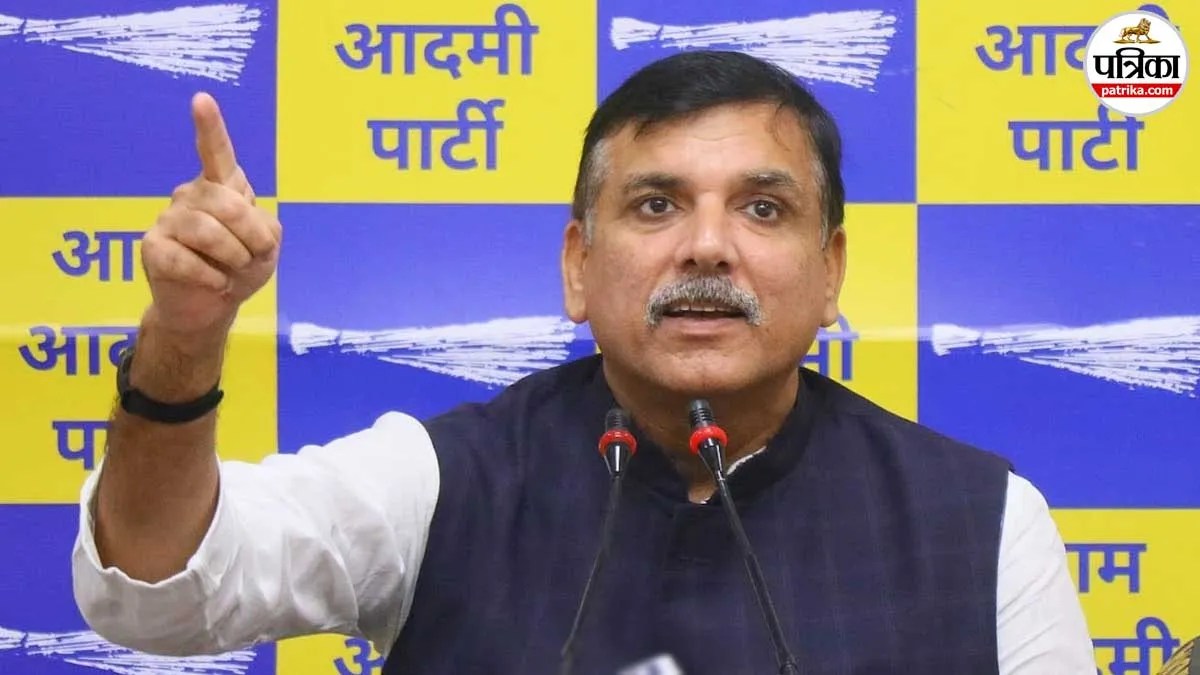
Sanjay Singh Letter to Vice President: The Aam Aadmi Party (AAP) has prepared for major action, calling the joining of seven rebel Rajya Sabha members into the Bharatiya Janata Party (BJP) ‘unconstitutional, illegal, and against the rules.’ AAP Rajya Sabha member Sanjay Singh held a press conference on Saturday and said that the murder of the constitution will not be tolerated.
Sanjay Singh said that yesterday, April 24, seven Rajya Sabha members—Raghav Chadha, Swati Maliwal, Harbhajan Singh, Sandeep Pathak, Ashok Mittal, Vikramjit Singh Sahni, and Rajendra Gupta—announced joining the BJP. These members represented 7 out of AAP’s 10 seats. AAP has now been reduced to just three members in the Rajya Sabha (Sanjay Singh, Sant Balbir Singh Seechewal, and N.D. Gupta).
Anna Hazare
Sanjay Singh said that yesterday, seven people unconstitutionally announced joining the BJP. Today, I will give a letter to the Chairman of the Rajya Sabha and the honorable Vice President, citing all relevant rules, demanding the termination of their membership. He described this as part of ‘Operation Lotus’ and appealed to the people of Punjab that these ‘traitors’ should never be forgiven.
AAP argues that this is a violation of the anti-defection law (10th Schedule). The party claims that the seven members voluntarily gave up their original party membership, so they should be disqualified. Opposition parties are calling this internal strife within AAP and a BJP conspiracy ahead of the Punjab elections (2027).
Former AAP member Swati Maliwal said that due to Arvind Kejriwal’s corruption, hooliganism, and lies, Raghav Chadha and other members joined the BJP. Maliwal said that she had been working with Arvind Kejriwal since 2006. She left her home, quit her job, lived in slum areas for seven years, and supported him in every movement. Repeating her allegations from 2024, she further said that Kejriwal had his associates brutally beat her at his home. When she tried to file an FIR, she was threatened and intimidated. Over the past two years, she has been pressured multiple times to withdraw the FIR. She also accused Kejriwal of being anti-women.
Raghav Chadha
Rajya Sabha
The Rajya Sabha, or Council of States, is the upper house of India’s bicameral Parliament, established in 1952 following the adoption of the Indian Constitution in 1950. Unlike the Lok Sabha, its members are not directly elected by the public but are chosen by state legislatures and presidential nominations, representing the states and union territories. It serves as a revising chamber, providing legislative review and representing regional interests in the federal structure of Indian governance.
Bharatiya Janata Party (BJP)
The Bharatiya Janata Party (BJP) is a major political party in India, founded in 1980 as a successor to the Bharatiya Jana Sangh. Rooted in Hindu nationalist ideology, it rose to national prominence in the 1990s and has since become the country’s dominant political force, leading the central government under Prime Minister Narendra Modi since 2014. The party advocates for cultural nationalism, economic development, and strong national security.
The Rajya Sabha, or Council of States, is the upper house of India’s bicameral Parliament, established in 1952 under the Constitution of India. It represents the states and union territories, with members elected by state legislatures and appointed by the President, ensuring a federal balance. Unlike the Lok Sabha, it is a permanent body not subject to dissolution, with one-third of its members retiring every two years.
Bharatiya Janata Party (BJP)
The Bharatiya Janata Party (BJP) is a major political party in India, founded in 1980 as a successor to the Bharatiya Jana Sangh, which was established in 1951. Rooted in Hindu nationalist ideology, it advocates for cultural nationalism and economic development, and has been the ruling party of India since 2014 under Prime Minister Narendra Modi. The BJP’s rise reflects a significant shift in Indian politics, emphasizing strong national security and pro-business policies.
Indian Constitution
The Indian Constitution is the supreme law of India, adopted on January 26, 1950, making the country a sovereign, socialist, secular, and democratic republic. Drafted over nearly three years by a Constituent Assembly led by Dr. B.R. Ambedkar, it is the world’s longest written constitution, incorporating elements from various global legal systems. It established fundamental rights, directive principles, and a federal structure, shaping India’s governance and identity after independence from British rule.