A national government collects and analyzes information to protect the safety of its people. There must not be any violation of their human rights.
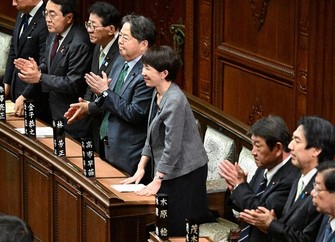
The first in a series of bills aimed at strengthening the Japanese government’s intelligence capabilities has passed the House of Representatives with a majority vote from the ruling parties and major opposition parties. The bill is expected to clear the House of Councillors and become law. Moving forward, the ruling parties aim to introduce anti-espionage legislation and establish a foreign intelligence agency to conduct intelligence activities overseas.
The latest bill is designed to create a “national intelligence committee” chaired by the prime minister and upgrade the Cabinet Intelligence and Research Office to a “national intelligence bureau” as its secretariat. At the request of the committee chairperson, the National Police Agency, the Ministry of Foreign Affairs, the Ministry of Defense, the Public Security Intelligence Agency and other bodies will be required to provide information to the committee.
It has long been pointed out that agencies handling classified information regarding terrorism and espionage activities by foreign countries are beset by sectionalism, where each agency hoards information and does not share it with other agencies. The bill’s aim is to enable comprehensive coordination across the entire government and utilize this information in policy decisions.
Strengthening intelligence agencies has been a pet idea of Prime Minister Sanae Takaichi. During a Diet session, she argued that the measure is necessary to address complex and elusive threats, citing cyberattacks, the spread of disinformation and the leak of research findings concerning economic security.
However, concerns also abound. There is a risk that intelligence agencies might collect excessive amounts of information at the request of the prime minister or provide only information that is convenient to the administration.
It has been pointed out that this could lead to greater surveillance of the public. In the past, it came to light that the Self-Defense Forces and police had been collecting personal information on residents who opposed the dispatch of the Ground Self-Defense Force to Iraq and the bid to construct a wind farm in Gifu Prefecture. The courts have ruled that these actions violated people’s privacy.
There has also been speculation that the Cabinet Intelligence and Research Office has been conducting surveys on voter trends during national elections and that the administration uses the information in its campaign strategies.
Takaichi has clearly stated that such activities will not be carried out, but in the first place, it has remained unclear what sort of information the government is collecting on a regular basis.
The latest bill does not include any mechanism to oversee the activities of intelligence agencies. In other countries, there are systems for their parliaments and third-party bodies to monitor such activities. It is also essential to establish a system for information disclosure that allows for retrospective verification.
The opposition parties shifted their stance to support the bill on condition that a supplementary resolution be adopted requiring due consideration to ensure that citizens’ rights are not infringed upon and political neutrality is not undermined. The Diet has a duty to ensure that this is carried out without fail.
Self-Defense Forces
Iraq
Self-Defense Forces
Iraq
Gifu Prefecture
Related news

Tokyo’s Shinagawa Ward to subsidize electricity and gas bills: 1,000 yen per household per month, from June to September.

Kumamoto Earthquake: 10 Years Since the Main Shock, Bereaved Families’ Prayers: “I Want to See You,” “To That Place”

Bear that injured four people escapes Fukushima factory after apparently opening window.
Osaka Bluteon wins first men’s SV League final.