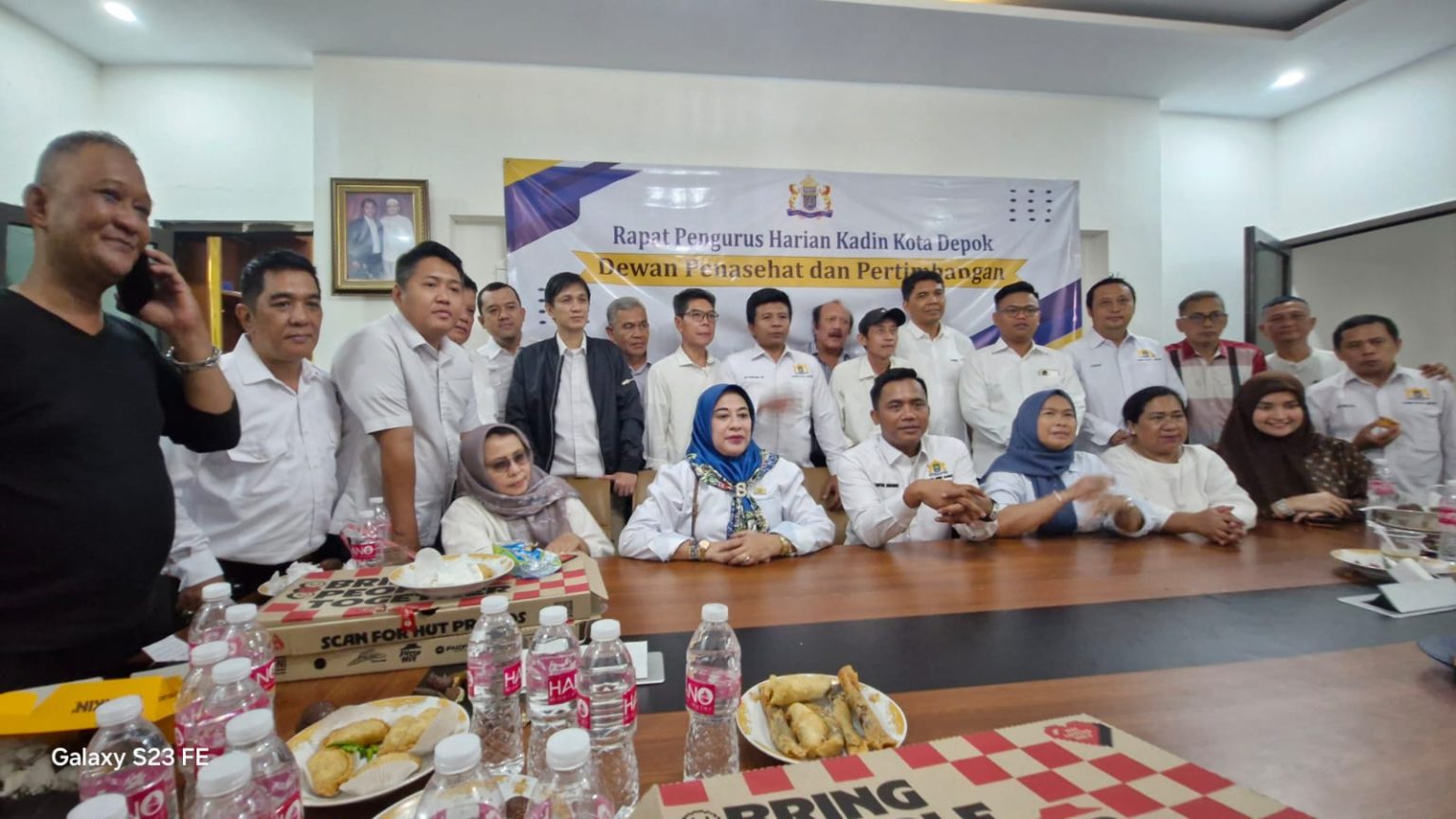
Depok (04/22/2026) – The Depok City Chamber of Commerce and Industry (KADIN) has officially begun strategic preparations for the 2026 Municipal Conference (Muskot). During a board meeting held in a halalbihalal atmosphere at Graha Depok Mas on Wednesday (04/22/26), the restructuring of the committee was confirmed as the starting point for the leadership succession of the business organization.
The Chairman of KADIN Depok City emphasized that the formation of this committee is a response to the need for a transparent, accountable transition process that complies with the organization’s bylaws.
Formalization of SC and OC Structures
As a concrete step, the Chairman has signed a decree establishing the Muskot working team. Technical leadership mandates have been entrusted to two senior figures:
-
Appointed as Chairman of the Steering Committee (SC) to oversee the substance and policy direction of the Muskot.
-
Entrusted as Chairman of the Organizing Committee (OC), responsible for the technical implementation on the ground.
“The decree has been signed. The committee will move quickly, with an estimated opening of candidate registrations within one to two weeks. Meanwhile, the Muskot implementation has been set for September 2026,” explained the Chairman.
Focus on Organizational Mechanism Consistency
Behind these formal steps, the Chairman acknowledged internal challenges that have loomed since early this year. He highlighted the importance of maintaining organizational integrity against efforts to change the leadership structure through illegitimate mechanisms.
“Problems arise when there are attempts to change the structure that ignore organizational rules. The foundation of democracy in KADIN must align with established mechanisms so that outcomes have strong legitimacy,” he stated firmly.
Participation Barriers: Political Costs and Inclusivity
The Chairman also raised a discussion on economic challenges in leadership contests. According to him, the high cost burden to enter the candidate race could hinder small and medium enterprises (SMEs) from participating at the leadership level.
He views that this reality needs evaluation to ensure KADIN remains an inclusive platform for all business spectrums, not just those with significant financial resources.
Post-Muskot Leadership Vision
Looking ahead, the Chairman hopes that the 2026 Muskot will not just be a ceremonial change of faces but will produce a leader capable of aggregating the interests of the business community with local government.
“Whoever is elected must be able to unite entrepreneurs and strengthen synergy with the government to boost regional revenue. I also hope the committee can minimize money politics practices to keep this process healthy and professional,” concluded the Chairman.
With the Muskot committee officially formed, KADIN Depok City now enters a transition period that will test the organization’s ability to maintain stability amid the increasingly competitive dynamics of the business world.