Depok Regional House of Representatives urges BPS to evaluate transparency of poverty variables after aspirations from Desil 6 are ignored.
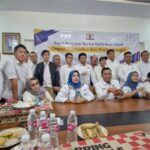
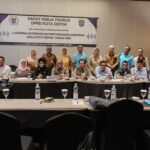
Depok (04/22/2026) – The accuracy of social assistance distribution in Depok City has once again come under sharp scrutiny. During a working visit and coordination meeting at the Central Statistics Agency office on Wednesday (04/22/26), an anomaly in poverty data was revealed that could trigger social friction at the grassroots level.
A member of the Depok City Regional House of Representatives from the Prosperous Justice Party faction emphasized that the current data collection system still leaves significant gaps, especially for people living on the brink of poverty.
Anomaly of the “Forgotten Group” in Decile 6
One crucial point raised was the fate of the community group falling into the Decile 6 category. Statistically, this group has a significant population, yet policy-wise, they often miss out on social assistance or grant interventions.
“We have found that this Decile 6 group is in a very vulnerable economic condition, but they have not been reached by aid programs. This is a ‘forgotten group’ that should receive serious attention to prevent them from falling deeper into poverty,” it was explained.
Field Distortions and the Loss of Recipient Rights for the Family Hope Program
The legislature also highlighted the phenomenon of beneficiary names suddenly disappearing from the system, such as in the Family Hope Program. Although data updates occur every three months, it was noted that the results have not reflected the actual conditions of residents.
Several critical findings in the field include:
Data Inconsistency: Pre-prosperous residents whose conditions remain unchanged (not improving) are removed from the recipient list without transparent reasons.
Social Jealousy: Inaccurate targeting triggers tension at the neighborhood and community association level because some able-bodied residents are registered, while vulnerable residents are overlooked.
Subjectivity Sentiment: The lack of transparency strengthens public perception that closeness with local officials becomes a determining factor in data collection.
“Many residents have been promised assistance for one to three years but it has never materialized. This condition triggers collective disappointment with the government’s data collection performance,” it was stated.
Pushing for Clarity in Verification Mechanisms
As part of its supervisory function, the legislature urged the Central Statistics Agency and local government to clarify who holds full responsibility for field data verification. They demanded a more open mechanism so that the public is not trapped in uncertainty.
“There must be clarity about who is responsible for data collection and what the procedures are. Don’t let people who truly need assistance keep waiting without certainty,” it was concluded.
The Regional House of Representatives hopes that the results of this coordination will become a turning point for improving the assistance distribution system in Depok City, so that the presence of the state can be felt fairly and evenly by all eligible layers of society.
Depok
Depok is a city in West Java, Indonesia, historically known as the site of a 17th-century plantation estate established by the Dutch East India Company. It became a center for freed Christian slaves and later developed into a university town, home to the University of Indonesia. Today, it is a rapidly growing suburban area within the Greater Jakarta metropolitan region.
Depok City Regional House of Representatives
The Depok City Regional House of Representatives (DPRD Kota Depok) is the legislative body of Depok, a city in West Java, Indonesia. Established following Depok’s status upgrade from a town to a city in 1999, the DPRD plays a key role in creating local regulations and overseeing the city’s executive branch. Its building serves as a central venue for democratic deliberation and policy-making that shapes the development of the rapidly growing urban area.
Central Statistics Agency
The Central Statistics Agency (CSA) is the official government body in Ethiopia responsible for
Depok
Depok is a city in West Java, Indonesia, known historically as a planned settlement established in the 18th century by Cornelis Chastelein, a Dutch colonial landowner. He freed his slaves and granted them land, creating a unique community that blended Javanese and European cultures. Today, Depok is a rapidly growing satellite city of Jakarta, home to the University of Indonesia and a mix of modern urban development and historical landmarks.
Depok City Regional House of Representatives
The Depok City Regional House of Representatives (DPRD Kota Depok) is the legislative body of Depok, Indonesia, responsible for creating local laws and overseeing the city’s executive branch. Established following Depok’s designation as an autonomous city in 1999, the institution has evolved to represent the city’s diverse population and address its rapid urbanization. Its history reflects Depok’s transition from a colonial-era settlement to a modern satellite city of Jakarta.
Central Statistics Agency
The Central Statistics Agency (CSA) is the primary government institution in Ethiopia responsible for collecting, analyzing, and disseminating official statistics. Established in the 1960s, it plays a crucial role in supporting national development planning through population censuses, economic surveys, and demographic data. The agency’s work is vital for policy-making, resource allocation, and monitoring progress in areas like agriculture, industry, and social services.
West Java
West Java, located on the Indonesian island of Java, is a culturally rich province known for its volcanic landscapes, tea plantations, and the traditional Sundanese culture. Historically, it was part of powerful kingdoms like the Sunda Kingdom and later became a key Dutch colonial region, with Batavia (now Jakarta) serving as a major colonial hub. Today, it blends natural beauty with cultural heritage, including sites like the Bandung city and the ancient temples of Cangkuang.
University of Indonesia
The University of Indonesia (UI) is a prominent public university located primarily in Depok, West Java, with a historic campus in Salemba, Jakarta. Established in 1849 during the Dutch colonial era as a medical school, it was officially inaugurated as the University of Indonesia in 1950 and is the oldest and one of the most prestigious universities in the country. Its history reflects Indonesia’s journey from colonial rule to independence, and it has since become a leading center for research and higher education.
Dutch East India Company
The Dutch East India Company (VOC) was a powerful trading corporation founded in 1602, which established a vast colonial empire in Asia, particularly in present-day Indonesia. It became the world’s first multinational corporation, wielding quasi-governmental powers such as issuing currency and waging war, until its decline and dissolution in 1800. The company’s legacy includes shaping global trade routes and leaving a lasting cultural and architectural influence in regions like Cape Town and Jakarta.
Greater Jakarta
Greater Jakarta, known locally as Jabodetabek (an acronym for Jakarta, Bogor, Depok, Tangerang, and Bekasi), is a vast metropolitan region in Indonesia that serves as the country’s political, economic, and cultural hub. Its history traces back to the 16th-century port city of Sunda Kelapa, later renamed Batavia under Dutch colonial rule, which expanded rapidly in the 20th century. Today, it is one of the world’s most densely populated urban areas, blending modern skyscrapers with historic colonial architecture and traditional markets.
Family Hope Program
The Family Hope Program (Program Keluarga Harapan) is a conditional cash transfer initiative launched by the Indonesian government in 2007 to alleviate poverty and improve human development. It provides financial assistance to extremely poor households, requiring them to meet specific health and education conditions, such as ensuring children attend school and family members receive regular medical check-ups. Over time, the program has expanded significantly, becoming a cornerstone of Indonesia’s social protection system.