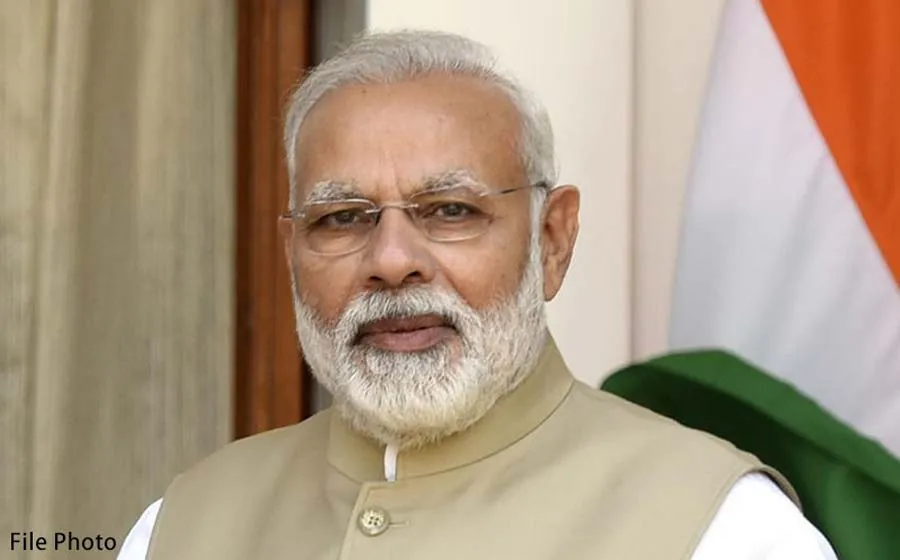
Kolkata, April 24. The day after a record 92.88 percent voter turnout in the first phase of the 2026 West Bengal Legislative Assembly elections, Prime Minister Narendra Modi was seen in a different light.
On Friday morning, PM Modi spent time along the banks of the Hooghly River in Kolkata and enjoyed a boat ride. Sharing his photos on social media platform ‘X’, he described the Ganges as the ‘soul of Bengal’.
Wearing black sunglasses and holding a camera in his hands, the Prime Minister captured the river’s waves, the beauty of the famous Vidyasagar Setu, and the Howrah Bridge through his lens. He wrote that the sacred waters of Mother Ganga embody the eternal spirit of an entire civilization, which holds a special place in Bengali life.
During his morning walk, the Prime Minister warmly met with boatmen on the Hooghly and praised their hard work. He also interacted with local citizens who had come for a stroll there.
On this occasion, the Prime Minister reiterated his government’s commitment to the development of West Bengal and the well-being of its people. While fulfilling his passion for photography, PM Modi showcased Bengal’s natural and infrastructural beauty to the world, which is seen by his supporters as a reflection of his connection to the state’s culture.
Although this visit appeared personal and spiritual, it also carries deep political significance.
PM Modi described the heavy turnout of women and youth in the first phase as a ‘wind of change’ against the Trinamool Congress. After accusing the TMC in election rallies of snatching away women’s rights, his presence on the Hooghly riverfront is seen as a major effort to build an emotional connection with Bengal’s voters.
During campaigning in Krishnanagar and other areas, he made it clear that this election would be decisive for Bengal’s identity and development.
Hooghly River
The Hooghly River is a distributary of the Ganges in West Bengal, India, flowing past the city of Kolkata and into the Bay of Bengal. Historically, it was a vital waterway for European colonial trade, with the Portuguese, Dutch, French, and British establishing settlements along its banks, including the city of Calcutta (now Kolkata). The river remains culturally and economically significant, serving as a key route for transportation and commerce.
Ganges
The Ganges River is a sacred waterway in India, revered by Hindus as the goddess Ganga and central to spiritual life and rituals. Originating in the Himalayas, it flows over 1,500 miles through northern India and Bangladesh, with a history dating back thousands of years as a cradle of ancient civilizations. Despite severe pollution today, it remains a vital source for pilgrimage, bathing, and cremation ceremonies, symbolizing both purity and renewal.
Vidyasagar Setu
Vidyasagar Setu, also known as the Second Hooghly Bridge, is a cable-stayed bridge in Kolkata, India, spanning the Hooghly River. It was completed in 1992 and named after the 19th-century social reformer Ishwar Chandra Vidyasagar, honoring his contributions to education and social justice. The bridge was built to alleviate traffic congestion on the older Rabindra Setu and has since become a vital transportation link in the region.
<h3 class="text-lg font-semibold mb
Hooghly River
The Hooghly River, a distributary of the Ganges in West Bengal, India, has been a vital waterway for centuries, shaping the region’s trade and history. It served as a key route for European colonial powers, particularly the British East India Company, who established the major port city of Calcutta (Kolkata) along its banks in the late 17th century. The river’s strategic importance continued through the colonial era and remains crucial for commerce and transportation in modern-day West Bengal.
Ganges
The Ganges River, also known as the Ganga, is a sacred waterway in India, revered by Hindus as the goddess Ganga. Its history spans millennia, serving as the cradle of ancient civilizations and a central site for spiritual rituals, including cremation ceremonies and purification baths. Despite modern pollution challenges, it remains a vital cultural and religious symbol, drawing millions of pilgrims annually to cities like Varanasi.
Vidyasagar Setu
Vidyasagar Setu, also known as the Second Hooghly Bridge, is a major cable-stayed bridge in Kolkata, India, spanning the Hooghly River. It was opened to the public in 1992 and named after the renowned 19th-century Bengali social reformer and educator, Ishwar Chandra Vidyasagar. The bridge was constructed to alleviate traffic congestion on the older Rabindra Setu and has since become a vital transportation link and a modern architectural landmark in the city.
Howrah Bridge
Howrah Bridge, officially renamed Rabindra Setu, is a iconic cantilever bridge spanning the Hooghly River in West Bengal, India. Completed in 1943 during World War II, it was built without a single nut or bolt, using riveted steel to connect the cities of Howrah and Kolkata. As one of the busiest bridges in the world, it carries millions of commuters daily and stands as a symbol of Kolkata’s industrial heritage and resilience.