Iran denies Trump’s claim that the country is preparing proposals to meet US demands; Macron warns US, Russia, China against Europe; Wall Street closes at record highs… these are notable world news for the morning of April 25.

Trump says Iran is about to make a new proposal, Tehran immediately denies

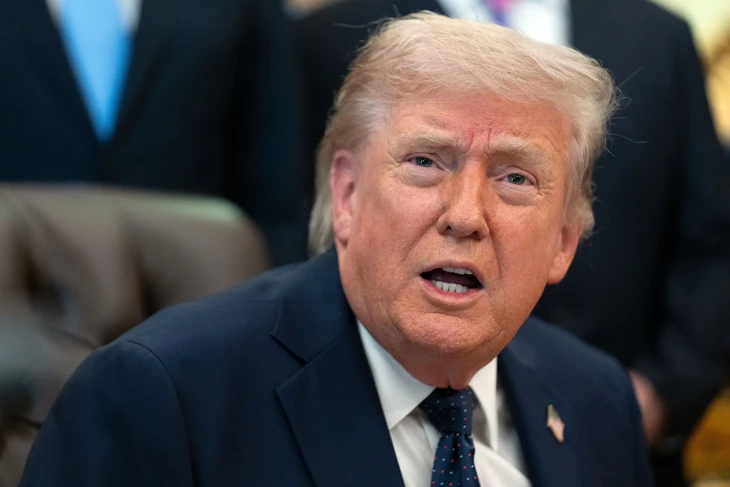
According to reports on April 25, US President Donald Trump stated that Iran is preparing to make a proposal to meet Washington’s demands, amid the possibility of talks resuming in Islamabad (Pakistan).

He said the specific content is unclear, but reiterated that any agreement must include Tehran abandoning enriched uranium and ensuring free passage of oil through the Strait of Hormuz.

US envoys Steve Witkoff and Jared Kushner are expected to travel to Islamabad on April 25 to meet with the Iranian delegation, while Foreign Minister Abbas Araghchi has been there since the evening of April 24.

Trump said the US is working with “those currently in power” in Iran, but did not name names. The US leader also emphasized that the blockade of Iranian ports would be maintained until an agreement is reached.

Meanwhile, Iran’s Tasnim news agency denied reports that Tehran had offered direct negotiations, asserting that the country currently has no intention of dialogue with Washington under current conditions.

“Iran has never made any request for dialogue with the Americans, and on the contrary, has completely rejected negotiation offers from the US due to their arrogant attitude up to this point,” Tasnim posted on Telegram.
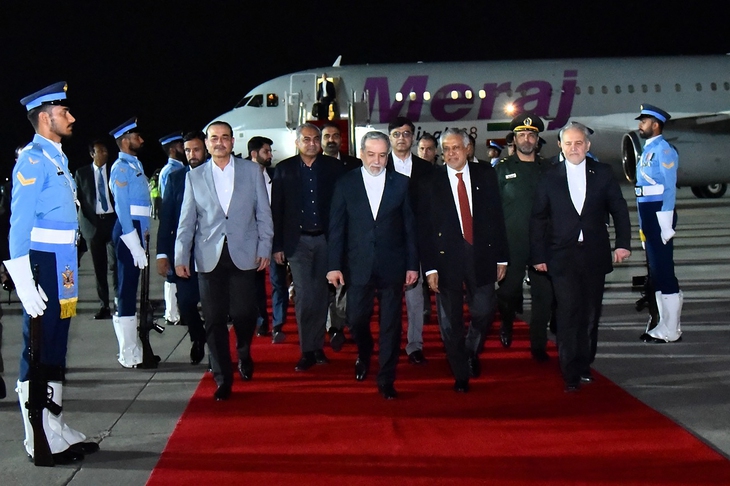
World news April 25: Wall Street rises on US-Iran talks; Iran's foreign minister arrives in Pakistan - Image 3.

Macron warns of US, Russia, China “working against” Europe

French President Emmanuel Macron warned that Europe is facing pressure from major powers, as he argued that US President Donald Trump, Russian President Vladimir Putin, and Chinese President Xi Jinping are all “working against” the continent.

Strait of Hormuz

The Strait of Hormuz is a narrow, strategically vital waterway connecting the Persian Gulf to the Gulf of Oman and the Arabian Sea. Historically, it has been a key chokepoint for global oil shipments,

Oval Office

The Oval Office is the iconic, oval-shaped working office of the President of the United States, located in the West Wing of the White House. First built in 1909 under President William Howard Taft, its distinctive shape was inspired by a formal reception room in the White House. It has since become a powerful symbol of the American presidency, serving as the setting for historic meetings, national addresses, and major policy decisions.

White House

The White House is the official residence and workplace of the President of the United States, located in Washington, D.C. Its construction began in 1792 under President George Washington, and it was first occupied by John Adams in 1800. The building has undergone several renovations and expansions, including a major reconstruction after being burned by British forces during the War of 1812.

Islamabad

Islamabad, the capital of Pakistan, was built in the 1960s to replace Karachi as the country’s capital, designed by Greek architect Constantinos Apostolou Doxiadis. It was chosen for its strategic location and cooler climate near the Margalla Hills, with construction beginning in 1961. The city is known for its modern, planned layout and landmarks like the Faisal Mosque, one of the largest mosques in the world.

Pakistan

Pakistan is a South Asian country with a rich history that includes being part of the ancient Indus Valley Civilization and later the crossroads of various empires, such as the Mughal and British. It gained independence from British rule in 1947, becoming a separate homeland for Muslims of the Indian subcontinent. Today, Pakistan is known for its diverse cultures, languages, and landmarks like the Badshahi Mosque and the ancient city of Mohenjo-Daro.

Strait of Hormuz

The Strait of Hormuz is a narrow, strategically vital waterway connecting the Persian Gulf to the Gulf of Oman and the open ocean. Historically, it has been a key maritime route for the trade of oil and natural gas, with about one-fifth of the world’s petroleum passing through it. Its strategic importance has made it a focal point for geopolitical tensions, particularly between Iran and nations like the United States, especially since the 20th century.

Nur Khan airbase

Nur Khan Airbase, also known as PAF Base Nur Khan, is a major Pakistan Air Force facility located in Rawalpindi, Punjab. Originally established in the 1930s as a British Royal Air Force station, it was renamed in 1982 after Air Marshal Nur Khan, a former Commander-in-Chief of the Pakistan Air Force. Today, it serves as a key operational and administrative hub, housing important PAF units and headquarters.

Rawalpindi

Rawalpindi is a major city in northern Pakistan, historically serving as a key military and administrative center during the British Raj and later as the interim capital of Pakistan from 1959 to 1967 while Islamabad was being built. Known as “Pindi” locally, it has ancient roots dating back to the Gandhara civilization and was an important stop on the Grand Trunk Road. Today, it remains a bustling city with a rich blend of colonial-era architecture, bazaars, and cultural heritage.

Persian Gulf

The Persian Gulf is a vital body of water in Western Asia, connecting the Arabian Peninsula to Iran and serving as a crucial trade route for millennia. Historically, it was central to ancient civilizations like the Sumerians and the Persian Empire, and later became a focal point for maritime trade, pearl diving, and the global oil industry. Today, it remains a geopolitically significant region, bordered by key nations and hosting some of the world’s largest oil reserves.