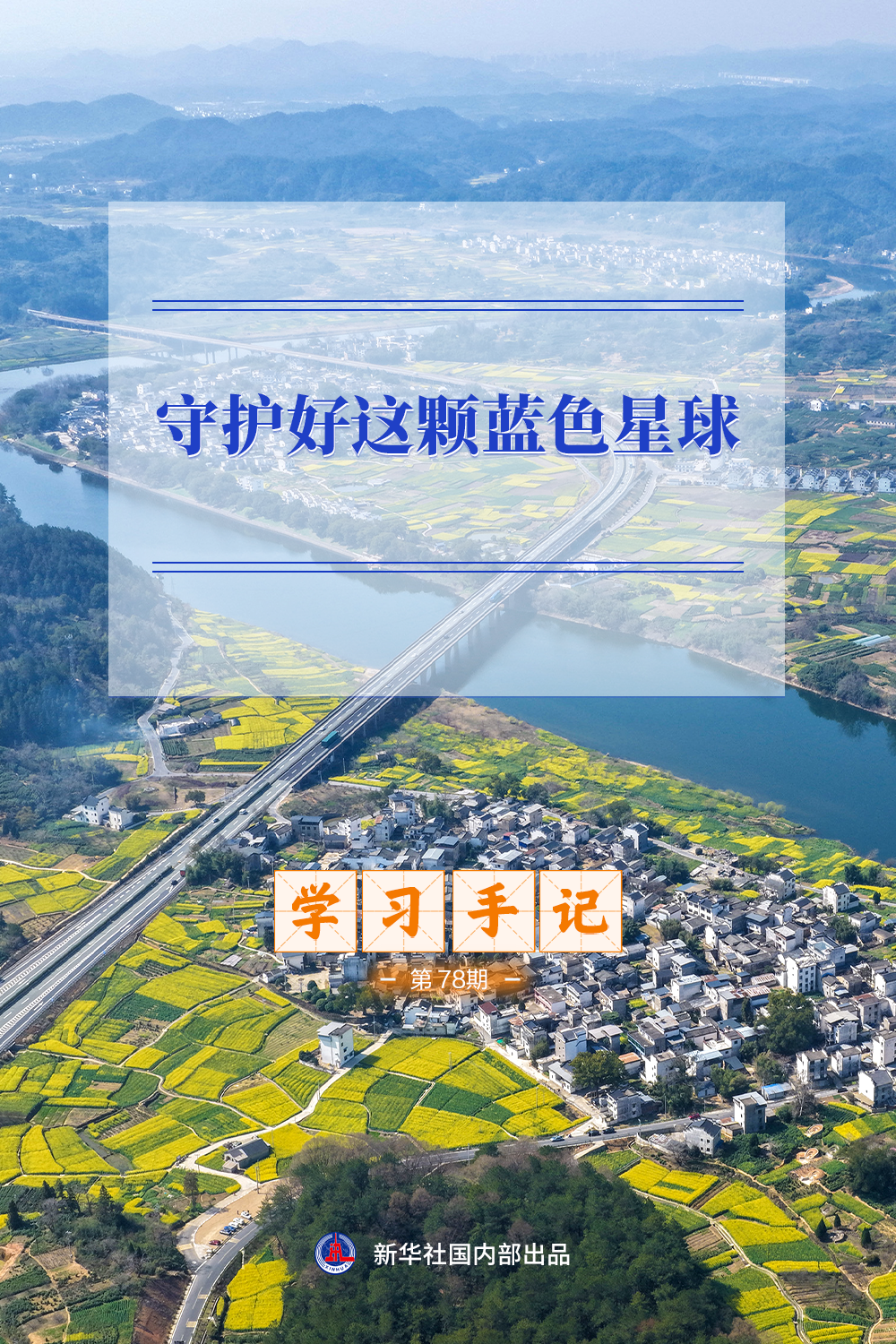
April 22 is World Earth Day, with the global official theme: Our Power, Our Planet.
Just before Earth Day, an event to revisit a “World Earth Day Reply Letter” began at the Chongwen Experimental School in Hangzhou, Zhejiang Province.
Twenty years ago, on the eve of World Earth Day in 2006, the “Li Siguang Squadron” Young Pioneers at Chongwen wrote a letter to Xi Jinping, then Secretary of the Zhejiang Provincial Party Committee, expressing their environmental hopes and calling for care for the Earth and protection of the landscape and homeland.
Xi Jinping replied: “Treating the Earth well is treating ourselves well; cherishing resources is cherishing the future of our country and nation; sustainable development is creating a good development environment and conditions for our descendants.”
A reply letter, two decades of green intent!
For 20 years, following these instructions, the school has persisted in the “Waste Paper for Books” campaign, collecting 300,000 kilograms of waste paper and funding the construction of 16 Chongwen Book House libraries.
“You are welcome to visit China and see the world’s largest wind and solar power stations, the vastest man-made forests, and beautiful national parks. You are welcome to exchange ideas with Chinese primary school students, let the concept of green development take root in your hearts, and grow up to become active builders of a better home for humanity.” Before World Earth Day 2022, President Xi Jinping replied to primary school students at Francis Holland School in the UK, speaking with sincere concern.
From encouraging children worldwide to sow green hope to discussing global ecological plans with leaders of other countries, Xi Jinping has outlined a vision for building a shared future for all life on Earth. This vision carries the weight of human civilization’s survival and the responsibility for future generations, offering a Chinese approach to sustainable development.
From the United Nations podium and the Palais des Nations in Geneva to the Paris Climate Conference venue… At every international multilateral event, President Xi Jinping has engaged in candid dialogue with world leaders, conveying the concept of protecting our home planet—
On November 22, 2020, at the G20 Riyadh Summit side event on “Safeguarding the Planet,” he called: “Earth is our shared home. We must uphold the concept of a community with a shared future for mankind, work together to address challenges in the climate and environmental fields, and protect this blue planet.”
On October 12, 2021, at the leaders’ summit of the 15th meeting of the Conference of the Parties to the Convention on Biological Diversity, he emphasized: “The international community must strengthen cooperation, think and act in unison, and jointly build a community of all life on Earth.”
Why is the leader so concerned about our planetary home and repeatedly reminds us? Because we must face the harsh truth: Mother Earth is sick.
As the heartfelt and painful statement goes: “‘The Yangtze River is sick,’ and seriously so.” Earth’s inhabitants must recognize that the sickness of one mother river after another reflects the wounds of the Earth’s ecosystem.
On April 22, 2021, World Earth Day, President Xi Jinping attended the Leaders Summit on Climate via video and delivered an important speech, pointing out: “Since the advent of the industrial age, humanity has created vast material wealth while accelerating the extraction of natural resources, disrupting the balance of the Earth’s ecosystem, and deepening the conflict between humans and nature.”
President Xi Jinping listed specific issues such as climate change, biodiversity loss, and worsening desertification, and solemnly proposed the core idea of “jointly building a community of life for humans and nature.”
Earth is sick. The development model based on “plundering nature” is unsustainable.
“A sound ecosystem ensures the prosperity of civilization; a degraded ecosystem leads to the decline of civilization.” Standing at the historical crossroads of human civilization, we must abandon the old development model of industrial civilization and build an ecological civilization where humans and nature coexist harmoniously.
This is a profound response to the Earth’s pain and a responsibility for humanity’s future. Building a community of all life on Earth is the only way to keep the blue planet vibrant.
Conducting ocean and polar research and exploring Earth’s scientific mysteries have significant practical importance. Xi Jinping emphasized: “Advance the exploration and discovery of cosmic evolution, the essence of consciousness, the structure of matter,