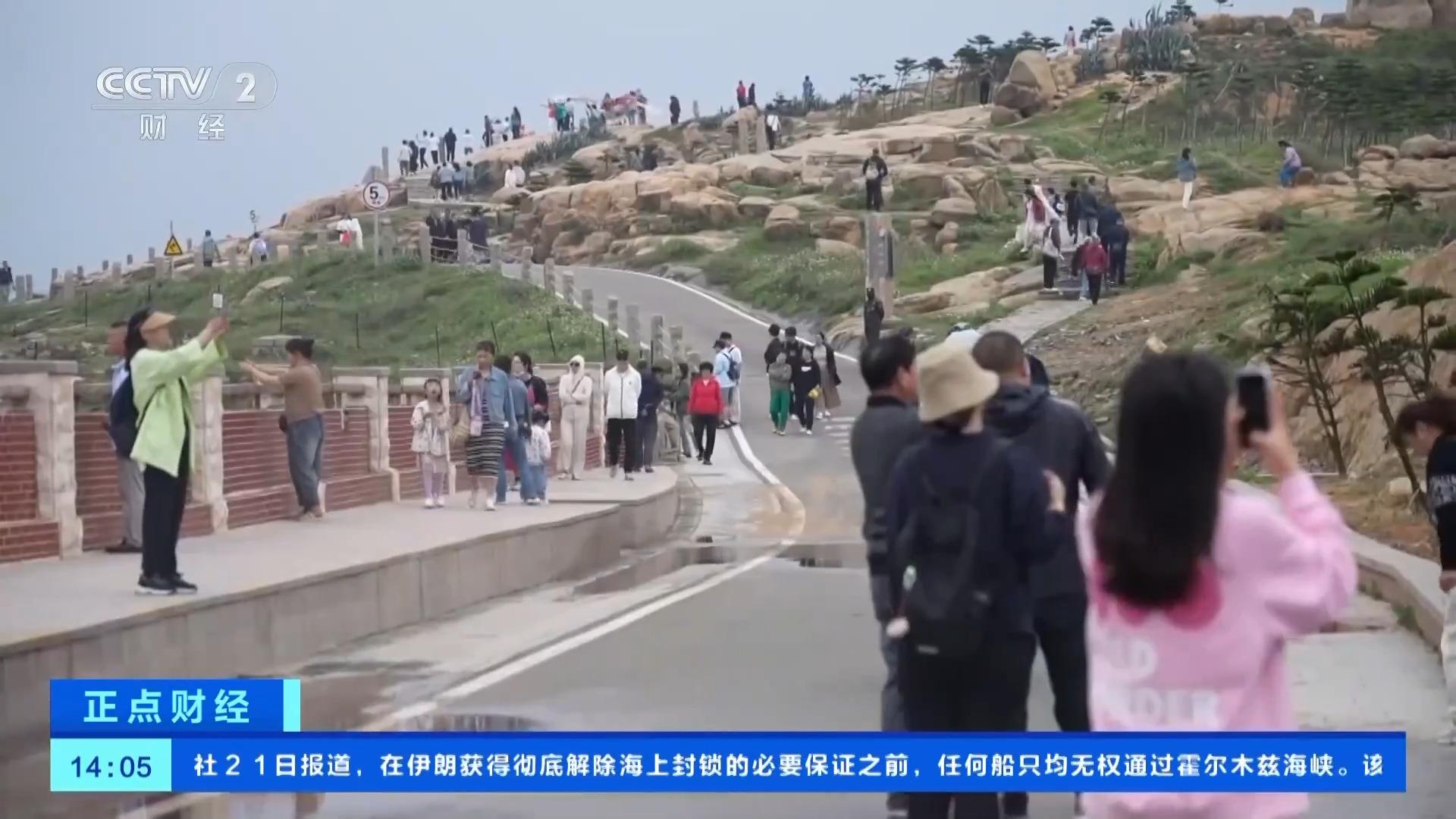
Small-town tourism is booming! These “small but beautiful” cities offer great value and rich experiences.
As the “May Day” holiday approaches, some small, charming cities offering high cost-performance and strong experiential travel are rapidly gaining popularity. Avoiding major tourist destinations and visiting distinctive small towns has become a new choice for many travelers during this “May Day” holiday.
Compared to traditional popular cities, scenic spots in small towns effectively avoid peak crowds, offering a more relaxed and in-depth travel experience. In terms of price, the advantages of small towns are also very clear. During the “May Day” period, the average price of high-star hotels in small towns is over 40% lower than in first-tier cities, and in some areas, five-star hotels are available for 300 yuan per night.
Currently, places like Pingtan in Fujian, Yangshuo in Guangxi, and Jiuzhaigou in Sichuan are seeing continuously rising popularity. During the “May Day” period, a group of small-town scenic spots are experiencing the fastest surge in popularity. For example, the Jingdezhen China Ceramics Museum saw a 10-fold increase in search interest, Chongzuo Tongnayubay saw a 7-fold increase, and Enshi Luyuanping Scenic Area saw a 5-fold increase. Data shows that during this “May Day” holiday, domestic travel trips are expected to increase by 168% year-on-year.
Pingtan
Pingtan is the largest island in Fujian Province, China, known for its stunning coastal landscapes and unique stone dwellings. Historically, it served as a strategic military outpost and a vital fishing hub, with evidence of human activity dating back thousands of years. Today, Pingtan is a popular tourist destination, famous for its sea erosion landforms, such as the “Half Ocean Stone” and the “Stone Arch Bridge,” and is also a key area for cross-strait cultural exchanges.
Yangshuo
Yangshuo is a scenic county in southern China’s Guangxi region, renowned for its dramatic karst mountain landscapes along the Li River. Historically, it served as a key stop on the ancient Lingqu Canal trade route, and its natural beauty has attracted poets, artists, and travelers for centuries. Today, it is a popular destination for outdoor activities like hiking and rock climbing, blending traditional rural life with a vibrant tourism industry.
Jiuzhaigou
Jiuzhaigou, located in Sichuan Province, China, is a stunning nature reserve and national park renowned for its turquoise lakes, multi-tiered waterfalls, and snow-capped peaks. Its name, meaning “Nine Village Valley,” comes from the nine ancient Tibetan villages scattered throughout the area. Designated a UNESCO World Heritage Site in 1992, the valley remained relatively isolated until its discovery by loggers in the 1970s, and it has since become a major tourist destination while efforts continue to preserve its fragile ecosystem.
Jingdezhen China Ceramics Museum
The Jingdezhen China Ceramics Museum in Jingdezhen, Jiangxi Province, is a premier institution dedicated to the history and art of Chinese ceramics, a craft for which the city has been world-renowned for over a thousand years. The museum’s extensive collection spans from the Neolithic period to modern times, with a special emphasis on the exquisite imperial porcelain produced during the Ming and Qing dynasties. Housed in a striking modern building, it showcases the evolution of ceramic techniques and styles, reflecting Jingdezhen’s historical role as the “Porcelain Capital” of China.
Chongzuo Tongnayubay
Chongzuo Tongnayubay is a scenic area located in Guangxi, China, known for its stunning karst landscapes, clear rivers, and rich biodiversity. The site holds cultural significance as it is part of the region inhabited by the Zhuang ethnic group, who have preserved traditional customs and folklore there. Historically, the area has been a hub for local agriculture and tourism, drawing visitors to explore its natural beauty and cultural heritage.
Enshi Luyuanping Scenic Area
Enshi Luyuanping Scenic Area, located in Hubei Province, China, is renowned for its breathtaking karst landscapes, including towering cliffs, lush forests, and the dramatic Enshi Grand Canyon. The area has a rich cultural history tied to the Tujia ethnic minority, whose traditions and architecture are preserved in local villages. Historically, the region was part of ancient trade routes and has become a popular tourist destination for its natural beauty and cultural heritage.