Filtered by: Topstories
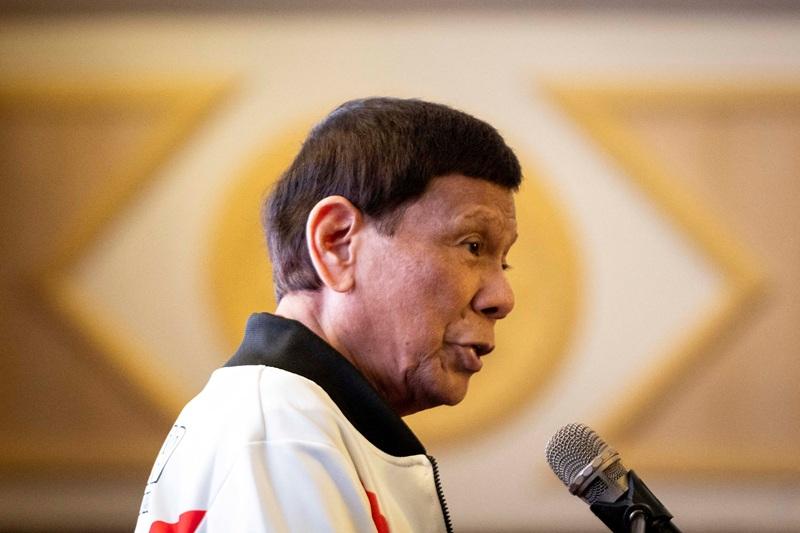
Former President Rodrigo Duterte is facing charges before the International Criminal Court (ICC) for crimes against humanity over his administration’s controversial drug war.
The former official’s legal battle began following his arrest in the Philippines and subsequent transfer to the ICC in March 2025. He and his team have since filed numerous motions and pleadings with the court.
Here is a look back at Duterte’s first appearance before the international tribunal and the legal developments that took place after.
March 14, 2025 — Duterte’s first appearance before the ICC took place following his arrest in Manila. He was allowed to sit as he was tired after flying to The Netherlands from the Philippines.
The Pre-Trial Chamber read to Duterte the charges against him. He was also read his rights under the Rome Statute.
The proceedings began at 2:34 p.m. and ended at 2:59 p.m.
Meanwhile, the Chamber set the confirmation of charges on September 23, 2025.
March 19, 2025 — British-Israeli lawyer Nicholas Kaufman joined Duterte’s defense team. Kaufman’s appointment was confirmed on March 17.
March 21, 2025 — The Pre-Trial Chamber ordered both the prosecution and the defense to submit the evidence they plan to present, along with the prescribed timeline.
In the filing, the ICC Office of the Prosecutor “disclosed to the defense 181 items organized under Pre-Confirmation INCRIM package 001, listed in Confidential Annex A.”
ICC Prosecutor Karim Khan said the items comprised the material cited in the warrant of arrest against Duterte, except items notified to the chamber and the defense in the prosecution’s related applications.
April 4, 2025 — Kaufman said he was the lead counsel for the proceedings, and that former presidential spokesperson Harry Roque was not part of it.
April 7, 2025 — Duterte’s team urged the ICC to adopt strict standards for verifying the identities of victim applicants, such as limitations to the types of identification documents accepted.
Citing potential risks of fraud and procedural delays, the defense team argued that the court should require a “national identity card and/or a passport containing an up-to-date photograph. In the absence thereof, the defense submits that the Pre-Trial Chamber should require those identification documents accepted in the staggered fashion mandated by the social security system of the Republic of the Philippines.”
ICC-listed lawyer Joel Butuyan, counsel for some of the families of the drug war victims, criticized this, saying the victims come from among the “poorest of the poor” and do not have passports, driver’s licenses, SSS, GSIS, or any professional license.
April 18, 2025 — The Pre-Trial Chamber accepted government-issued IDs, passports, and birth certificates as proof of identity for victim applicants in the case and those acting on their behalf.
For applicants whose proof of identity is a declaration signed by two witnesses, the chamber said it would decide whether to accept such documents on an ad hoc basis, upon receipt of the Registry’s assessment and recommendations.
May 1, 2025 — Duterte’s camp asked the Pre-Trial Chamber for the recusal of two judges on the issue of jurisdiction due to “the possibility of perceived bias.”
They said this may arise out of the judges’ prior ruling on substantially the same issue in the situation in the Philippines.
Further, the former president’s lawyers also submitted a “challenge to the jurisdiction” to the ICC.
According to Duterte’s lawyers, the preconditions for the exercise of jurisdiction in the Situation of the Philippines were not met at the time the Pre-Trial Chamber authorized the opening of an investigation on September 15, 2021.
His camp maintained that, “The Philippines’ withdrawal from the Rome Statute became effective on
International Criminal Court (ICC)
The International Criminal Court (ICC) is a permanent tribunal located in The Hague, Netherlands, established to prosecute individuals for genocide, crimes against humanity, war crimes, and the crime of aggression. It was created by the Rome Statute, which entered into force on July 1, 2002, marking a historic effort to hold the most serious international criminals accountable. The ICC operates as a court of last resort, intervening only when national courts are unwilling or unable to prosecute these grave offenses.
The Netherlands
The Netherlands, often referred to as Holland, is a low-lying country in Northwestern Europe known for its flat landscape, canals, tulip fields, windmills, and cycling routes. Historically, it emerged as a major maritime power during the 17th-century Dutch Golden Age, establishing global trade networks and colonies. Today, it is a constitutional monarchy with a rich cultural heritage, famous for its progressive policies, art masters like Rembrandt and Van Gogh, and iconic cities such as Amsterdam and Rotterdam.
Manila
Manila, the capital of the Philippines, is a vibrant metropolis with a rich history as a major trading hub, first established by Spanish colonizers in 1571. It served as the center of Spanish rule in Asia for over 300 years, and later endured significant destruction during World War II. Today, the city blends its colonial past with modern development, featuring historic landmarks like Intramuros and a dynamic cultural scene.
Rome Statute
The Rome Statute is the founding treaty of the International Criminal Court (ICC), adopted on July 17, 1998, in Rome, Italy. It established the first permanent international court with jurisdiction to prosecute individuals for genocide, crimes against humanity, war crimes, and the crime of aggression. The statute entered into force on July 1, 2002, after being ratified by 60 countries, marking a historic step toward global accountability for the most serious international crimes.
Republic of the Philippines
The Republic of the Philippines is an archipelago in Southeast Asia composed of over 7,600 islands, known for its rich biodiversity and diverse cultural heritage. Its history includes early Malay and indigenous settlements, centuries of Spanish colonization beginning in 1565, followed by American rule, and a brief Japanese occupation during World War II before gaining full independence in 1946. Today, it is a vibrant nation with a blend of Eastern and Western influences, shaped by its colonial past and resilient people.
Pre-Trial Chamber
The Pre-Trial Chamber is a judicial body within the International Criminal Court (ICC) that reviews evidence and decides whether a case should proceed to trial. Established with the ICC’s founding in 2002, it plays a crucial role in protecting the rights of the accused by confirming charges and authorizing investigations. Its history is tied to the development of international criminal law, ensuring that only cases with sufficient evidence move forward.
ICC Office of the Prosecutor
The ICC Office of the Prosecutor (OTP) is an independent organ of the International Criminal Court, responsible for investigating and prosecuting individuals accused of the world’s most serious crimes, including genocide, crimes against humanity, war crimes, and aggression. Established in 2002 alongside the ICC itself through the Rome Statute, the OTP conducts preliminary examinations, investigations, and prosecutions, working to end impunity for perpetrators. Its history includes notable cases such as those involving leaders from the Democratic Republic of the Congo, Uganda, and Sudan, though it faces ongoing challenges related to state cooperation and political pressures.
Situation of the Philippines
The Philippines is a Southeast Asian archipelago with a rich history shaped by indigenous cultures, Spanish colonization (1565–1898), American rule, and Japanese occupation during World War II. Its strategic location has made it a crossroads of trade and cultural exchange, resulting in a diverse population with influences from Malay, Chinese, Spanish, and American traditions. Today, the Philippines is known for its vibrant festivals, natural beauty, and resilient people, while its history of colonialism continues to influence its language, religion, and political landscape.