Burundi’s president in Ouagadougou to discuss Burkina Faso’s return to the African Union.
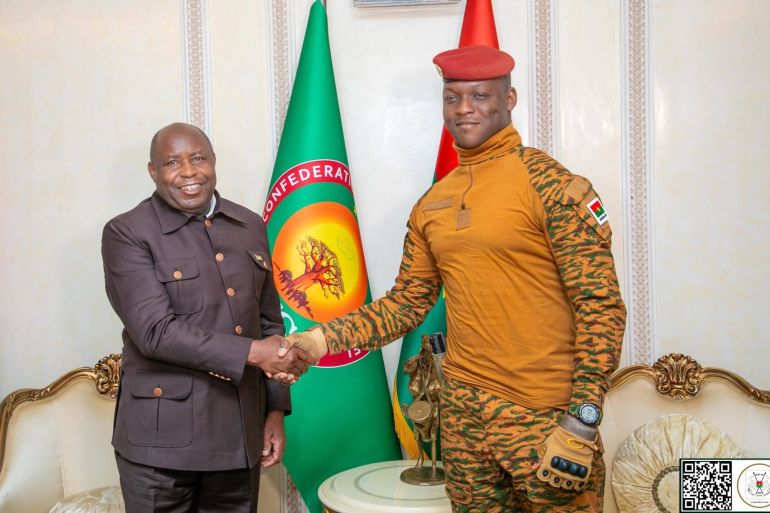
Burundian President Évariste Ndayishimiye, the rotating chair of the African Union, pledged to submit an “objective” report to his fellow African leaders to strengthen cooperation with the Sahel Alliance countries, following a visit to Ouagadougou that began on Monday. During the visit, he held talks with Burkinabe President Captain Ibrahim Traoré, the rotating chair of the Sahel Alliance, which includes Mali, Burkina Faso, and Niger.
The meeting, which brought together the rotating chairs of the two African organizations at the Burkinabe presidential palace, focused on building a “strong bridge” to reconnect the people and institutions of Burkina Faso and redefine the relationship with the alliance, according to a statement from the Burkinabe presidency. Ndayishimiye praised the “cohesion of Burkinabe society” and its support for the authorities in combating terrorism.
The visit, officially described as one of “friendship and action,” goes beyond protocol to address efforts to reconnect what has been severed between the African Union and Burkina Faso since its membership was suspended following the January 2022 coup.
From Suspension to Attempted Integration
The African Union had suspended Burkina Faso’s participation in its activities in early 2022 after the ousting of President Roch Kaboré, requiring a return to constitutional order to lift the suspension. The rift deepened with the September coup that brought Traoré to power, and then with Ouagadougou’s withdrawal—alongside Bamako—from the Economic Community of West African States (ECOWAS) and the establishment of the Sahel Alliance.
Despite previous attempts, diplomatic channels remained largely frozen. The former Chairperson of the African Union Commission, Moussa Faki, visited Ouagadougou in February 2023 to explore a roadmap for returning to constitutional rule. The AU also sent its envoy, Antonio Tete, on an exploratory mission in 2025, but without achieving a real breakthrough.
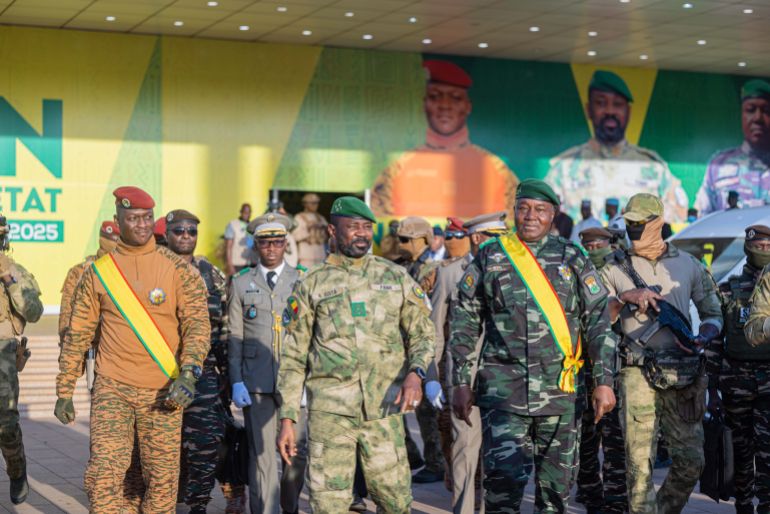
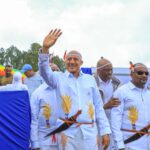
Leaders of the Sahel Alliance countries
Multi-Directional Messages
The visit gains additional significance as Ndayishimiye also serves as the special envoy to the Sahel region since 2025, giving him a dual mandate as AU chair and mediator.
Observers, according to the West Africa Weekly website focused on West African affairs, see his personal initiative as reflecting the AU’s readiness to engage directly with the Sahel Alliance, rather than leaving the matter solely to Western regional bodies that have effectively severed ties with Burkina Faso.
Nevertheless, a wide gap remains between the rhetoric of “rehabilitation” and the decision to lift the suspension. The AU’s founding charter requires a return to constitutional rule, while the transitional authorities in Ouagadougou bet on a sovereign path that prioritizes security against armed groups and redefines external partnerships away from traditional ECOWAS calculations.
An Open Gamble
The outcome depends on what Ndayishimiye will bring to the next African Union summit and his ability to turn the openness he showed in Ouagadougou into institutional decisions that end Burkina Faso’s isolation, and possibly that of Mali and Niger later.
However, this path clashes with the legacy of sanctions, whose limited effectiveness has been demonstrated by studies from the Institute for Security Studies (based in South Africa). The suspension of membership since 2019 did not prevent repeated coups in Mali and Burkina Faso itself, making the approach of “recognizing the reality on the ground”—as advocated by the Burundian president—a
African Union
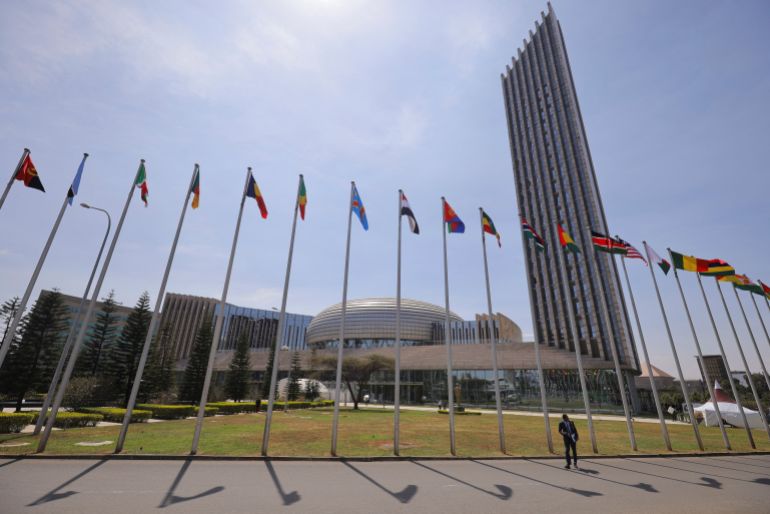
The African Union (AU) is a continental union founded on May 26, 2001, in Addis Ababa, Ethiopia, replacing its predecessor, the Organization of African Unity (OAU), which was established in 1963 to promote decolonization and unity. Its primary goals include fostering political and economic integration, peace and security, and sustainable development across Africa. Today, the AU serves as a key platform for addressing continental challenges and advancing the vision of a united, prosperous Africa.
Sahel Alliance
The Sahel Alliance is a partnership launched in 2017 by France, Germany, and the European Union to coordinate development and security efforts in the Sahel region of Africa, which includes countries like Mali, Niger, and Burkina Faso. Its primary goal is to address challenges such as poverty, climate change, and violent extremism by promoting stability, economic growth, and better governance. The alliance brings together multiple international donors and organizations to align their strategies and funding for more effective support in the region.
Ouagadougou
Ouagadougou is the capital and largest city of Burkina Faso, serving as the nation’s cultural, economic, and administrative hub. Originally a small village of the Mossi people in the 11th century, it became the capital of the Mossi Empire and later the center of French colonial rule before Burkina Faso gained independence in 1960. Today, the city is known for its vibrant markets, the Grand Mosque, and hosting the biennial Panafrican Film and Television Festival (FESPACO).
Burkinabe presidential palace
The Burkinabe presidential palace, located in Ouagadougou, serves as the official residence and workplace of the President of Burkina Faso. Its history is marked by political upheaval, including being burned and looted during the 2014 uprising that ousted President Blaise Compaoré. The building has since been renovated and remains a central symbol of the nation’s governance.
Economic Community of West African States (ECOWAS)
The Economic Community of West African States (ECOWAS) is a regional political and economic union founded in 1975 through the Treaty of Lagos, with the goal of promoting economic integration and cooperation among its 15 member countries. Its history includes efforts to establish a common market, a single currency (the Eco), and a shared approach to peacekeeping and security, particularly through its military intervention in civil conflicts in Liberia and Sierra Leone in the 1990s. Today, ECOWAS works to facilitate trade, free movement of people, and collective stability across West Africa.
African Union Commission
The African Union Commission (AUC) serves as the secretariat and administrative arm of the African Union (AU), headquartered in Addis Ababa, Ethiopia. Established in 2002 to replace the Organization of African Unity (OAU), the commission oversees the AU’s day-to-day operations and implementation of its policies, aiming to promote unity, peace, and development across the continent. It plays a key role in advancing initiatives like Agenda 2063, Africa’s strategic framework for inclusive growth and integration.
Institute for Security Studies
The Institute for Security Studies (ISS) is an independent African research and policy organization founded in 1991, originally based in South Africa. It focuses on human security, conflict prevention, and governance across the continent, providing evidence-based analysis to inform policy decisions. With offices in several African capitals, the ISS has grown into a leading think tank, working to address transnational threats like terrorism, organized crime, and climate-related instability.