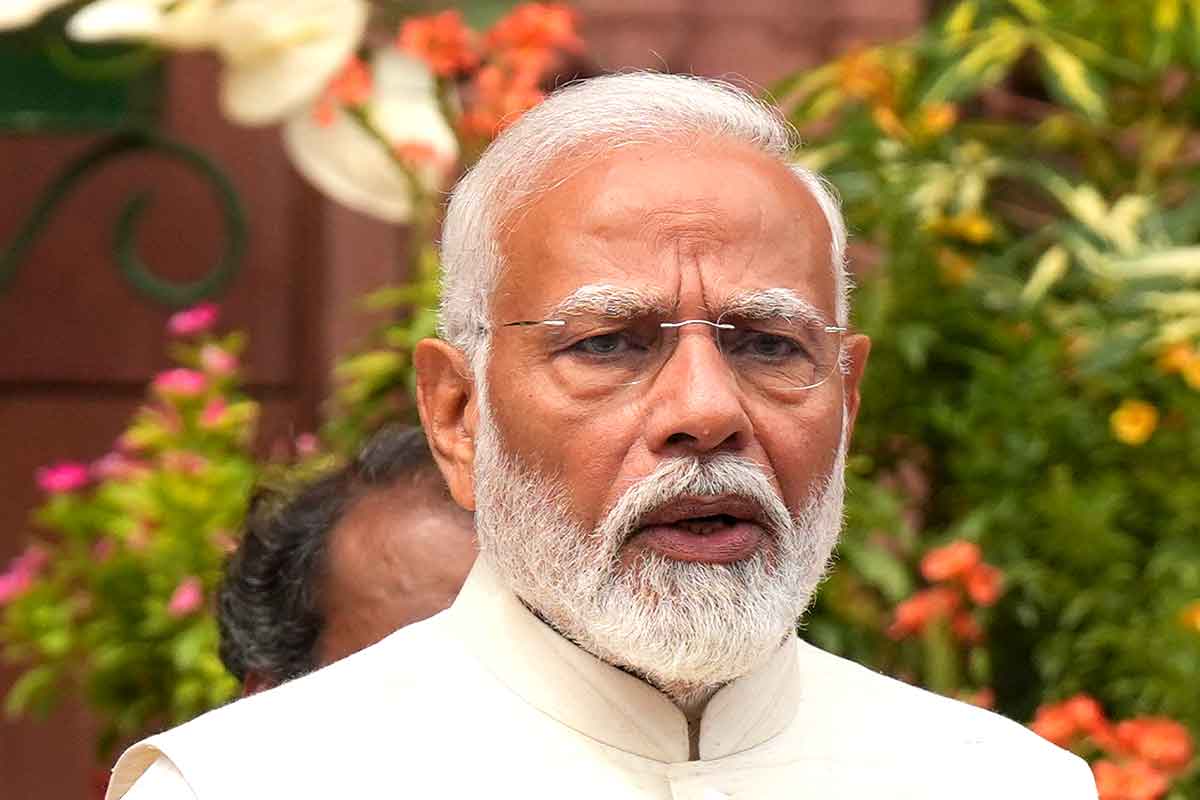
A threat to assassinate Prime Minister Narendra Modi via a bomb explosion. Such a threatening email was received by Punjab’s security agencies. The hit list also includes Foreign Minister S. Jaishankar, and the Chief Ministers of Punjab and Haryana. It also claimed that on Friday, April 24, thousands of people would be killed in bomb blasts on railway lines in the two states. Additionally, attacks would be carried out in Ludhiana, Amritsar, Bathinda, and Firozpur! A high alert has been issued by the police of both states.
In the border state of Punjab, the Pakistani intelligence agency ISI has always been active. From drug trafficking to arms smuggling and espionage, arrests are common. Over the past year, the Indian Army has shot down multiple Pakistani drones along the Punjab border. In this situation, the police and other security agencies of both Punjab and Haryana are not taking the threatening email lightly. Urgent warnings have been issued in both states. Searches have begun at major railway stations. The Railway Protection Force has been instructed to conduct additional surveillance on railway tracks. Officials responsible for the security of the Chief Ministers of both states have also been alerted.
This is not the first time; previously, several threat emails and calls to kill Modi have been received. In November last year, the Mumbai Police received a phone call threatening to kill Modi. A woman called the main police control room in Mumbai and said that a plot to assassinate the Prime Minister was being hatched. The murder weapon had also been prepared. The police became active immediately. However, the caller could not be identified. No danger occurred in the future. In 2022 as well, the NIA received threat emails regarding sabotage in 20 cities. At that time too, a threat to kill Modi was made.
Punjab
Punjab is a historic region divided between India and Pakistan, known as the “Land of Five Rivers.” It was a center of the Indus Valley Civilization and later the birthplace of Sikhism, with its holiest site, the Golden Temple, located in Amritsar, India. The region experienced significant cultural and political shifts, including the rise of the Sikh Empire under Maharaja Ranjit Singh and the traumatic partition of 1947 along religious lines.
Haryana
Haryana, a state in northern India, was carved out of the former state of Punjab in 1966 on linguistic grounds. Its history is deeply rooted in ancient Indian civilization, as it is traditionally believed to be the land where the epic Mahabharata war was fought and where the Vedic culture flourished. Today, it is known for its rich agricultural output and vibrant folk traditions.
Ludhiana
Ludhiana is a major industrial city in the Indian state of Punjab, known as the “Manchester of India” for its large-scale textile and hosiery production. Founded in 1480 by the Lodhi dynasty, it later became a key center during the Sikh Empire under Maharaja Ranjit Singh. Today, it blends its historical roots with modern industry, featuring landmarks like the 19th-century Lodhi Fort and the bustling Nehru Rose Garden.
Amritsar
Amritsar is a historic city in the Indian state of Punjab, best known as the spiritual and cultural center of Sikhism. It was founded in 1577 by Guru Ram Das, the fourth Sikh guru, and is home to the iconic Golden Temple (Harmandir Sahib), a major pilgrimage site. The city also witnessed key events in Indian history, including the tragic Jallianwala Bagh massacre in 1919.
Bathinda
Bathinda is one of the oldest cities in Punjab, India, with a history dating back to the ancient Indus Valley civilization. It is historically significant for the Bathinda Fort, built around 90–110 CE by Raja Dab, which later served as a strategic stronghold for rulers such as the Mughals and the Sikh Empire. Today, the city is known for its blend of historical landmarks and modern industrial development.
Firozpur
Firozpur is a historic city in the Indian state of Punjab, located near the border with Pakistan. It was founded in the 14th century by Firoz Shah Tughlaq, a ruler of the Tughlaq dynasty, and later became a significant military and administrative center under the British Raj. The city is known for its martyrs’ memorials, including the Saragarhi Memorial and the National Martyrs Memorial, which commemorate soldiers who died in various conflicts.
Mumbai
Mumbai, formerly known as Bombay, is a bustling port city on India’s west coast and the country’s financial and entertainment capital. Its history as a major trading hub began under Portuguese rule in the 16th century, but it was the British East India Company that developed it into a key commercial center after acquiring it in 1661. Today, Mumbai is famous for its iconic landmarks like the Gateway of India, Bollywood film industry, and vibrant street life, reflecting a rich blend of colonial heritage and modern Indian culture.