Misuse of court proceedings: State argues in IPAC case, ED counters with questions on law and order.
File photo.
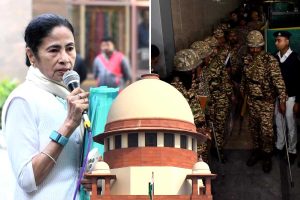
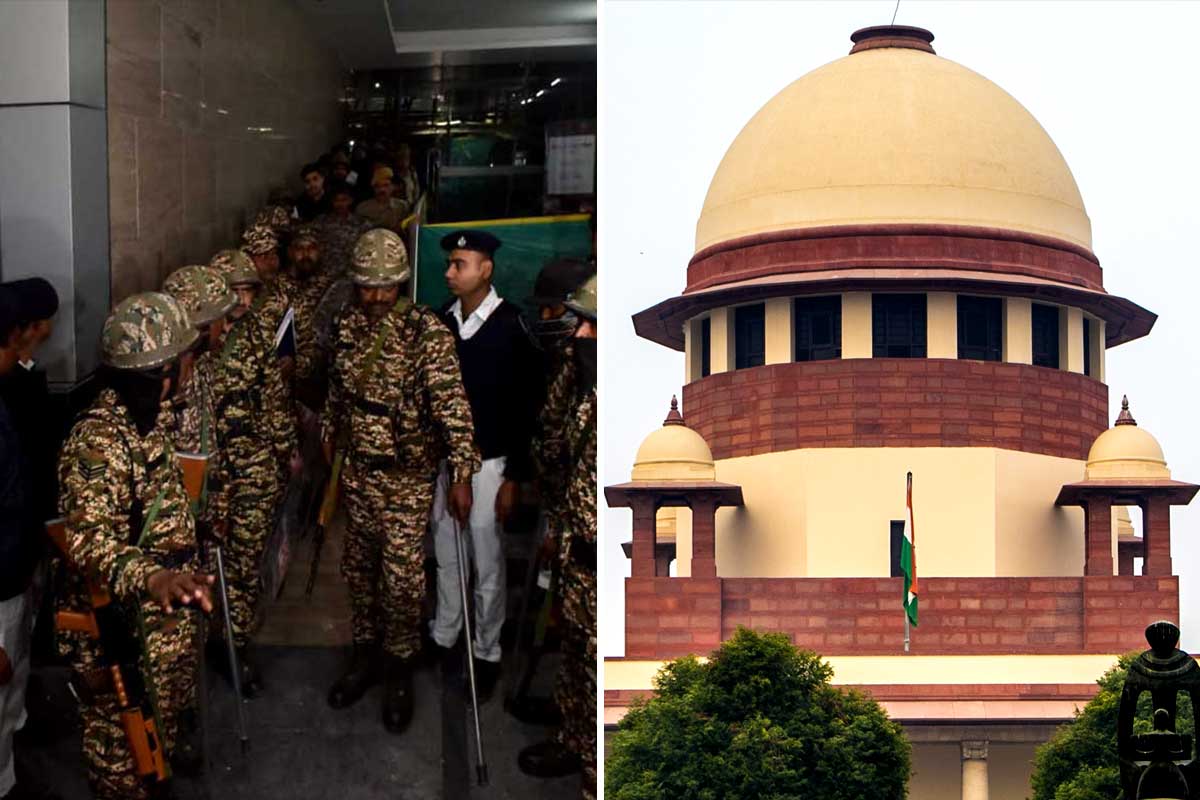
The court is being misused. In the IPAC case, serious allegations were raised against the central investigating agency, the Enforcement Directorate, by the state’s lawyer, Menaka Guruswamy. During the hearing, the lawyer argued that the admissibility of the case is being questioned, but the central side is presenting arguments that clearly amount to misuse of the court. She also appealed that the court should not be used as a weapon for political propaganda. Additionally, she raised questions about the role of the central lawyer. However, the ED countered by claiming that law and order in West Bengal has collapsed. The central additional solicitor general and ED lawyer, Tushar Mehta, stated that he would highlight how the rule of law is being violated.
After Wednesday, the hearing of the IPAC case resumed in the Supreme Court on Thursday. The hearing began in the court of Justice Prashant Kumar Mishra. During the hearing, Additional Solicitor General Tushar Mehta said that the investigation into the illegal coal smuggling case is ongoing. Corruption worth approximately 2700 crore rupees has occurred. During the investigation of that case, ED officials are losing protection of their fundamental rights. He claimed that ED officials are also Indian citizens, but what happened was something Dr. B.R. Ambedkar never imagined.
Read more:
Additional Solicitor General Tushar Mehta said that the investigation into the illegal coal smuggling case is ongoing. Corruption worth approximately 2700 crore rupees has occurred. During the investigation of that case, ED officials are losing protection of their fundamental rights.
During the exchange of arguments, Tushar Mehta alleged that during a search, the police arrived at the scene. They stated that permission from the police was needed to conduct the search. Meanwhile, the Chief Minister brought over a hundred police officers. He again raised questions about her visit to the location during the hearing. Furthermore, the lawyer also alleged that several devices were seized, which are relevant to the financial smuggling case. Later, the police filed a case regarding trespassing. Tushar Mehta argued that this is never an isolated incident and cannot be dismissed as a separate event. He therefore appealed for the investigation to be handed over to the CBI. He even demanded an investigation into the Chief Minister, the Director General of Police, and the police. He also demanded that the investigation be conducted under court supervision if necessary.
Notably, during the hearing, Tushar Mehta criticized Rajiv Kumar without naming him. He said that a former police commissioner has been made a Rajya Sabha member, which is very concerning and shameful for a citizen.
Supreme Court
The Supreme Court of the United States is the highest federal court, established by Article III of the Constitution in 1789, though it first met in 1790. It serves as the final arbiter of federal law, with the power of judicial review to interpret the Constitution and strike down laws that violate it. The iconic neoclassical building in Washington, D.C., completed in 1935, symbolizes the judiciary’s role as a co-equal branch of government.
West Bengal
West Bengal is a culturally rich state in eastern India, known for its history as the center of British colonial power in Calcutta (now Kolkata). It played a pivotal role in India’s independence movement and is famous for its literary and artistic heritage, including the works of Rabindranath Tagore. The state is also renowned for its diverse landscapes, from the Himalayan foothills of Darjeeling to the Sundarbans mangrove forest.
Enforcement Directorate
The Enforcement Directorate (ED) is a specialized financial investigation agency under the Indian Ministry of Finance, established in 1956. It is primarily responsible for enforcing economic laws and fighting financial crimes, such as money laundering and foreign exchange violations, under the Foreign Exchange Management Act (FEMA) and the Prevention of Money Laundering Act (PMLA). Over the decades, the ED has evolved into a key institution for investigating high-profile corruption cases and asset seizures in India.
CBI
CBI commonly refers to the **Central Bureau of Investigation**, India’s premier law enforcement and anti-corruption agency. Established in 1941 as the Special Police Establishment, it was renamed the CBI in 1963 and operates under the jurisdiction of the Ministry of Personnel, Public Grievances and Pensions. The agency investigates major crimes, corruption, and economic offenses, playing a crucial role in maintaining legal integrity in India.
Rajya Sabha
Rajya Sabha, meaning “Council of States,” is the upper house of India’s bicameral Parliament, established under the Constitution of India in 1952. Unlike the Lok Sabha, its members are not directly elected by the public but are chosen by state legislatures and presidential nominations, with a maximum strength of 250 members. It serves as a revising chamber, representing the interests of India’s states and union territories in the legislative process.
Dr. B.R. Ambedkar
Dr. B.R. Ambedkar (1891–1956) was an Indian jurist, economist, and social reformer who championed the rights of the Dalit community and was the principal architect of the Indian Constitution. A lifelong advocate for social equality, he led movements against caste discrimination and converted to Buddhism in 1956, inspiring a mass religious conversion. His legacy continues to influence Indian politics and social justice movements worldwide.