-
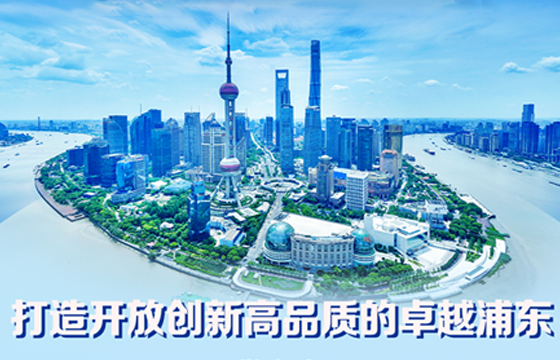
This year marks the 35th anniversary of the development and opening-up of Pudong, the 5th anniversary of the important speech at the 30th anniversary celebration of Pudong’s development and opening-up, and the final year of the “14th Five-Year Plan.” Pudong’s development and opening-up is a cross-century national strategy made by the central government. With the care of the central government, the strong leadership of the municipal government, and the support from all sides, Pudong has persisted in daring to explore and pioneer, serving as a leader in reform and opening-up and an innovator in development. From farmland, it has built a modern new city with concentrated functions, complete elements, and advanced facilities. In 2024, its regional GDP reached 1.78 trillion yuan, per capita GDP reached 43,100 USD, and with 1/8000 of the nation’s area, it contributed 1/76 of the GDP and 1/17 of the total import and export volume, providing the most vivid proof of the advantages of the socialist system with Chinese characteristics…
-
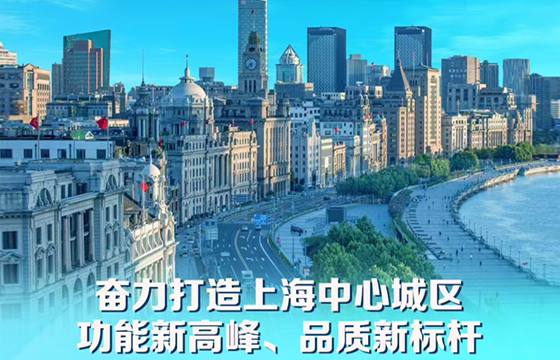
Huangpu District is the center of Shanghai’s economy, administration, and culture. During his work in Shanghai, the leader positioned Huangpu as the “heart, window, and name card” of the city. Since the “14th Five-Year Plan,” Huangpu has focused on building a core leading area and the main line of “new functional peaks and new quality benchmarks,” striving to promote high-quality development, create high-quality life, and achieve efficient governance. The urban development level and comprehensive competitiveness have steadily improved. By the end of 2024, Huangpu’s GDP reached 334.4 billion yuan, with an average annual comparable growth of about 4.5% in the first four years of the “14th Five-Year Plan”; the regional economic density reached 16.3 billion yuan per square kilometer, ranking first in the city and among the top in the country; district-level general public budget revenue reached 29.9 billion yuan, with an average annual growth of over 6%…
-
-
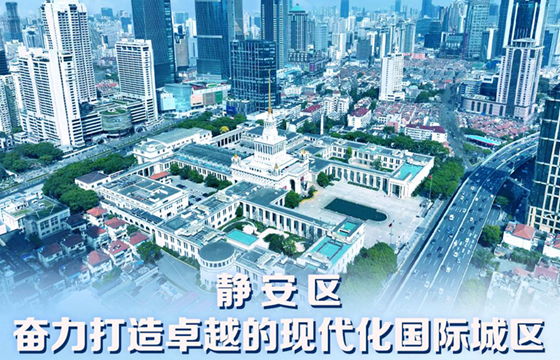
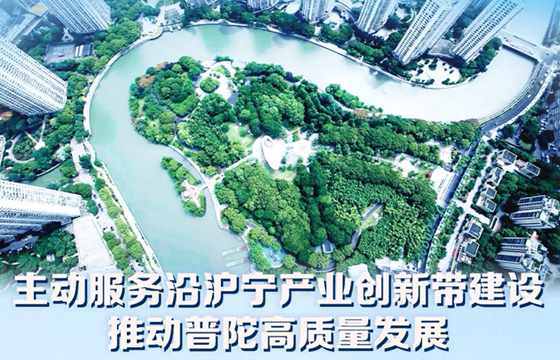
Jing’an, as the core area of Shanghai’s central city, has a high degree of internationalization, concentrated high-end elements, and a developed service economy, consistently leading the city’s regional economic and social development. The “14th Five-Year Plan” period was an extraordinary five years for Jing’an. Following the requirements of the municipal government, Jing’an has aimed to “accelerate the construction of an excellent modern international urban area,” comprehensively promoting high-quality development, high-level reform and opening-up, high-quality life, and efficient governance, striving to create an urban sample of Chinese-style modernization…
-
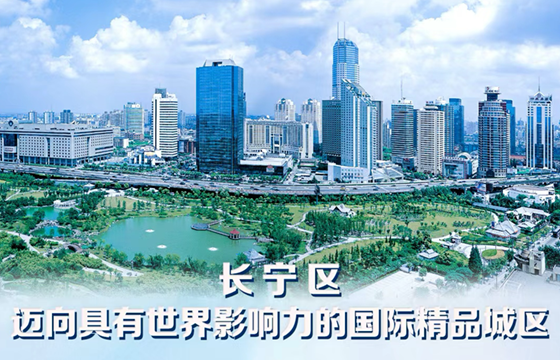
Changning is an important gateway for Shanghai connecting the Yangtze River Delta and facing domestic and international markets. It has prominent locational advantages, significant digital characteristics, and a distinct open nature. Since the “14th Five-Year Plan,” Changning has focused on accelerating the construction of a world-class international boutique urban area, firmly seizing the strategic opportunities of “Greater Hongqiao” and “digitalization,” persistently pursuing development, reform, improving people’s livelihoods, and optimizing governance, pushing the urban level and core competitiveness to new heights and showing new vitality in people’s city construction. In 2024, Changning’s GDP reached 278.9 billion yuan, 1.8 times that of 2020, with an average annual growth of 7.8% in the first four years of the “14th Five-Year Plan”; district-level general public budget revenue reached 18 billion yuan, with an average annual growth of 8.8%. The district’s economic and social development has achieved positive results, mainly reflected in six aspects…
-
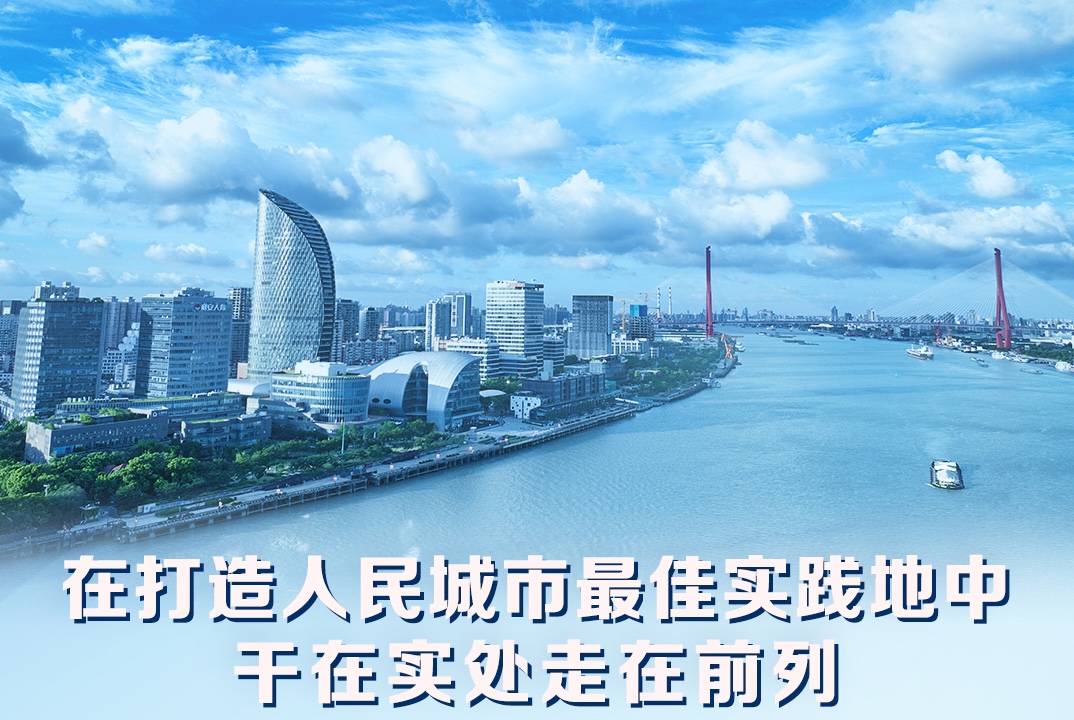
Insisting on putting livable and affordable housing first, we have continuously increased urban renewal efforts and accelerated the pace of demolition and relocation. In five years, three goals were achieved and three levels were ascended
Pudong
Pudong is a major financial and commercial district in Shanghai, China, located on the eastern side of the Huangpu River. Historically, it was primarily farmland and small villages until the early 1990s, when the Chinese government designated it a special economic zone, sparking rapid development. Today, it is renowned for its futuristic skyline, including iconic landmarks like the Oriental Pearl Tower and the Shanghai Tower, symbolizing China’s economic modernization.Huangpu District
Huangpu District is the historic and commercial heart of Shanghai, China, home to iconic landmarks like the Bund and the Old City. Its history dates back centuries, serving as a key trading port and later becoming the center of foreign concessions in the 19th and early 20th centuries. Today, it blends colonial-era architecture with modern skyscrapers, reflecting Shanghai’s evolution from a fishing village to a global metropolis.Jing’an
Jing’an is a prominent district in central Shanghai, China, named after the historic Jing’an Temple, a Buddhist temple originally built in 247 AD during the Three Kingdoms period. The temple was relocated to its current site on Nanjing West Road in 1216 and has since become a major cultural and spiritual landmark. Today, Jing’an is a bustling commercial and residential area, blending ancient heritage with modern skyscrapers and luxury shopping.Changning
Changning is a county-level city in Hunan Province, China, with a history dating back over 2,000 years. It was historically known for its role in the Chinese tea trade and as a center for the production of selenium-rich agricultural products. Today, Changning is recognized for its scenic landscapes, including the Yinshan Mountain and the Yijiang River, as well as its cultural heritage linked to the ancient Chu civilization.Yangtze River Delta
The Yangtze River Delta is a major economic and cultural region in eastern China, centered around Shanghai and including parts of Jiangsu and Zhejiang provinces. Historically, it has been a hub of trade, agriculture, and civilization for over a millennium, with cities like Suzhou and Hangzhou flourishing during the Song and Ming dynasties. Today, it is one of the world’s most dynamic metropolitan areas, driving China’s economic growth through manufacturing, technology, and innovation.Greater Hongqiao
Greater Hongqiao is a rapidly developing business and transportation hub in western Shanghai, China, centered around the Hongqiao Transportation Hub, which integrates an airport, high-speed rail, and metro lines. Its modern growth began in the early 2000s, evolving from a suburban area into a major commercial district, with the Hongqiao CBD (Central Business District) launched in 2010 to boost economic integration. The area now hosts numerous corporate headquarters and international trade facilities, symbolizing Shanghai’s expansion and connectivity.