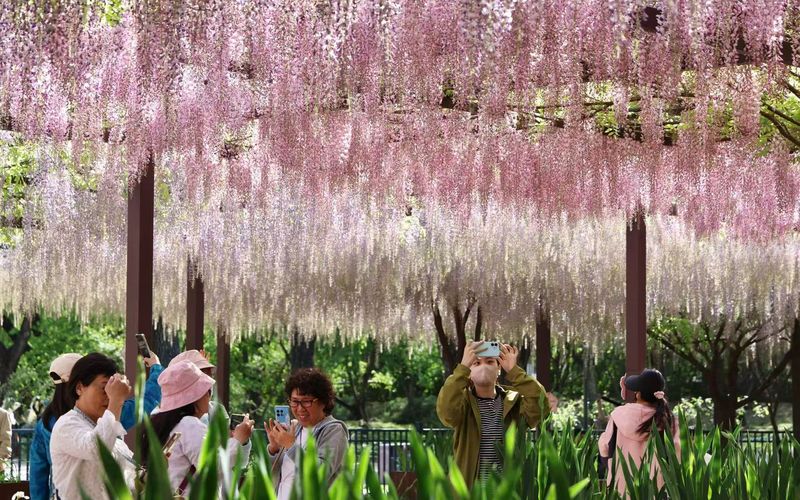
As temperatures steadily rise in the capital, the wisteria at Yuyuantan Park has entered its full bloom period. According to the park, over 200 plants of 15 varieties of wisteria are now at their peak viewing season, allowing visitors to enjoy the spectacular sight of cascading wisteria flowers.
Visitors admire the wisteria at Yuyuantan Park. (Image provided by Yuyuantan Park)
All 15 varieties of wisteria are now in bloom, including purple, pink, and white colors
According to park officials, the wisteria is mainly distributed in three areas: the Science Square in the northwest is the core viewing area with the highest density and strongest visual impact, featuring 3 color series and 6 varieties of wisteria. The flower spikes hang naturally, reaching up to one meter in length, and are complemented by blooming irises for added beauty. The Yuyuan Spring and Autumn scenic area in the southeast features a trellis corridor, ideal for leisurely walks. The Cherry Blossom Valley scenic area in the south showcases wisteria on both trellises and trees, integrated with the park paths and terrain.
An expert noted that since the park introduced wisteria in spring 2018, all 15 varieties have bloomed after years of meticulous care. However, due to differences in light conditions, soil environment, and variety characteristics, the growth and flowering vary significantly. Compared to traditional wisteria, this variety blooms slightly later, has longer flower spikes, and offers richer colors, primarily in various shades of purple, with rare pink and white being particularly eye-catching. This year’s wisteria viewing period is expected to last until the end of April.
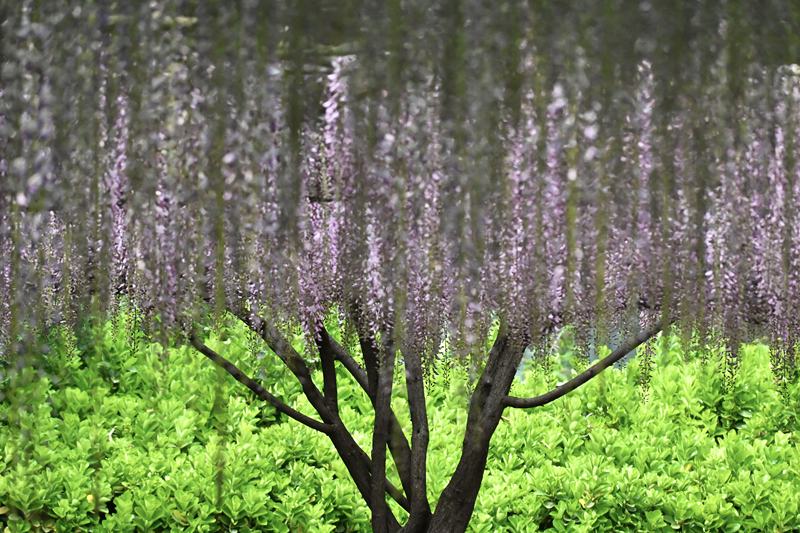
The wisteria at Yuyuantan Park creates a romantic atmosphere like a “curtain of dreams.” (Image provided by Yuyuantan Park)
Pruned three times a year to create a stunning flowering effect
Many visitors wonder whether the long, neatly arranged wisteria flower spikes are natural or the result of manual care.
“For most plants, it’s 30% planting and 70% maintenance, but for wisteria, it’s 20% planting and 80% maintenance,” said a wisteria care expert. Wisteria has few pests and diseases but grows vigorously. Without pruning, many water sprouts (branches that consume nutrients and affect the growth of other branches and flower bud differentiation) would grow, and without tying, the branches would tangle into a mess, leading to few or no flowers. Therefore, pruning and maintenance are key to the wisteria’s beauty.
“To achieve a stunning flowering effect, three major prunings each year are essential,” the expert explained. The first pruning takes place after flowering. Each flower spike is cut 1 cm below the third bud from the base. This process must be repeated for every spike, requiring significant skill and physical effort.
The second pruning occurs between July and September, which is crucial for determining next year’s flowering. During the hot summer, wisteria is forming flower buds. Pruning removes weak buds and crossing branches without damaging the fragile buds; otherwise, the flowering the following year would be greatly reduced.
The third pruning happens in winter, removing side branches and untangling overlapping vines. If necessary, the vines are tied to the trellis. Only by having the vines “line up” on the trellis can a uniform and beautiful waterfall of flowers be achieved the following year. “In addition to pruning, fertilization is also essential. The right fertilizer ratio helps the wisteria bloom better,” the expert added.
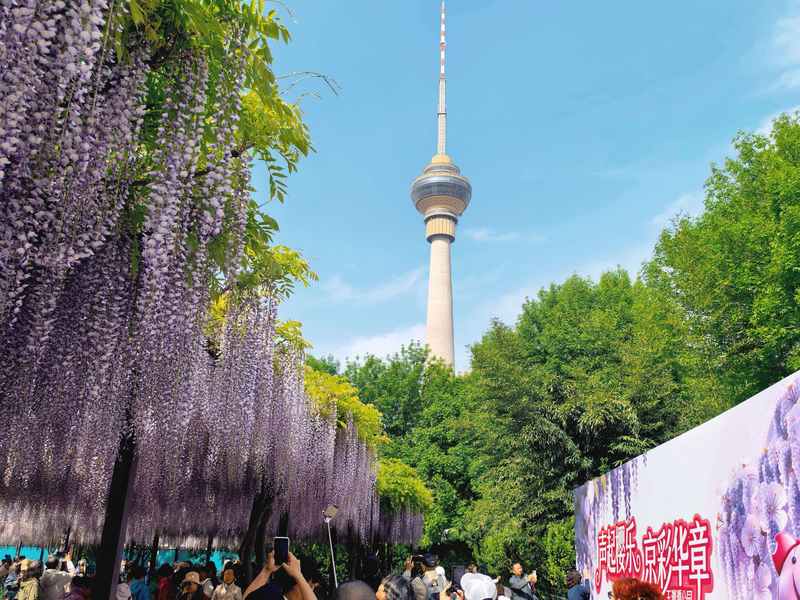
Over 200 wisteria plants at Yuyuantan Park have entered their peak viewing period. (Image provided by Yuyuantan Park)
Taking over from cherry blossoms, wisteria becomes the new highlight at Yuyuantan Park
To enhance the visitor experience, Yuyuantan Park has added several resting benches under the wisteria trellises. During peak flower viewing times, staff and volunteers guide the crowd, help visitors take photos, and provide educational explanations about wisteria.
Additionally, the park has introduced a well-known catering