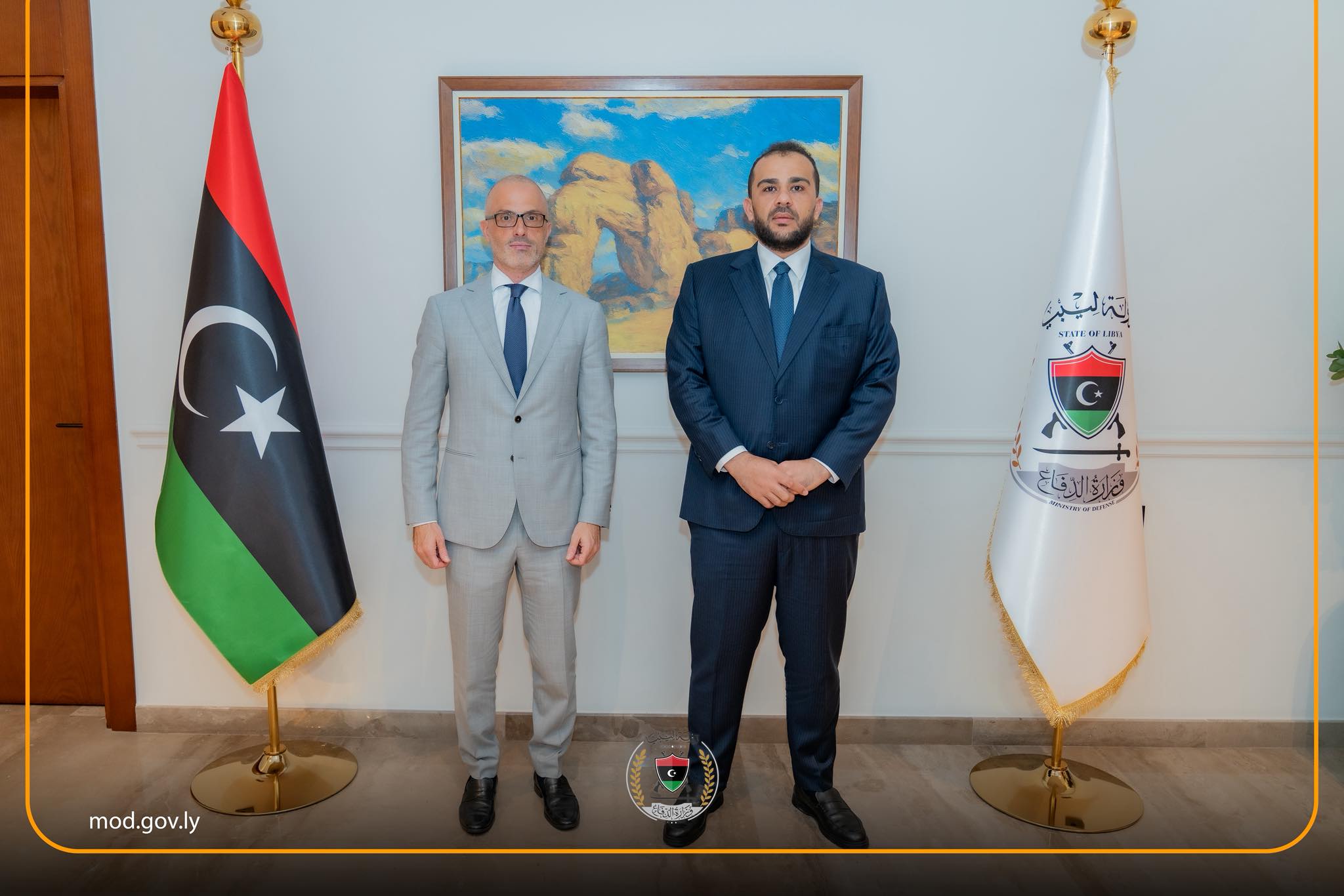
In Tripoli on April 20, 2026, the President of the Presidential Council, Mohamed al-Menfi, received the Deputy Special Representative of the United Nations Secretary-General to Libya, Stephanie Khoury.
Khoury provided a briefing on the outlines of the UN’s upcoming efforts, particularly regarding structured dialogue tracks, affirming the mission’s continued work in facilitating dialogue and bridging viewpoints to reach a comprehensive consensus that paves the way for ending the transitional phase.
For his part, al-Menfi stated that the Presidential Council views positively the UN efforts aimed at achieving consensus among Libyan parties, stressing that any initiative must be based on existing legal and constitutional references to ensure clarity of the path and adherence to the framework governing the political process.
The President of the Presidential Council also reaffirmed the principle of national ownership and support for any path leading to holding elections within a specific timeframe, while emphasizing the importance of preserving the unity of institutions and including all national components in any arrangements leading to a comprehensive and sustainable settlement acceptable to all parties.