The impact of the crude oil shortage is also affecting home builders…
Visited on the 17th was “Toyo Juken,” a company that has been building custom homes and conducting renovation work in Ichinomiya City, Aichi Prefecture for over 40 years.
“There is the naphtha problem. Household equipment and everyday items around us are facing supply stoppages and price hikes.”
Due to the de facto “blockade” of the Strait of Hormuz, it has become difficult to procure materials using petroleum-derived naphtha.




Strait of Hormuz
The Strait of Hormuz is a narrow, strategically vital waterway connecting the Persian Gulf to the Gulf of Oman and the Arabian Sea. Historically, it has been a crucial maritime trade route for centuries, controlling the flow of oil and gas from the Middle East to global markets. Today, it remains a key geopolitical flashpoint due to its role in global energy security.
Ichinomiya City
Ichinomiya City, located in Aichi Prefecture, Japan, is historically significant as the site of the Masumida Shrine, one of the three major shrines of the former Owari Province. The city developed as a castle town during the Edo period and later became a thriving center for the textile industry, particularly known for its woolen fabrics and clothing production. Today, Ichinomiya blends its rich cultural heritage with modern manufacturing, hosting the annual Nagoya Festival and maintaining its reputation as a key textile hub.
Aichi Prefecture
Aichi Prefecture, located in central Japan, is historically significant as the home of the samurai warlord Tokugawa Ieyasu, who unified Japan and founded the Edo shogunate in the early 17th century. The region flourished as a cultural and industrial hub, with Nagoya Castle serving as a key symbol of its feudal heritage. Today, Aichi is known for its modern industries, including Toyota’s automotive headquarters, while preserving traditional crafts like ceramics and samurai history.
Toyogawa Irrigation Canal
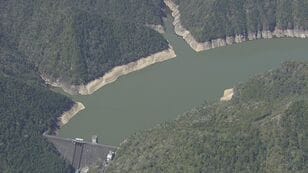
The Toyogawa Irrigation Canal is a historic waterway in Aichi Prefecture, Japan, constructed between 1962 and 1968 to address chronic water shortages in the region. It channels water from the Toyogawa River to support agriculture, industry, and daily life across multiple cities. The canal is a significant example of modern Japanese civil engineering and has played a vital role in the area’s economic development.
Ure Dam
Ure Dam, located in the Hunza Valley of Gilgit-Baltistan, Pakistan, is a small but historically significant irrigation dam built in the early 20th century. Constructed by the local community under the leadership of Mir Muhammad Nazim Khan, the former ruler of Hunza, it was designed to channel water from the Ure River to support agriculture in the arid region. The dam stands as a testament to traditional engineering and community cooperation, playing a vital role in sustaining local farming and livelihoods for over a century.
Oshima Dam
Oshima Dam is a concrete gravity dam located in the Oshima District of Yamaguchi Prefecture, Japan, primarily built for flood control and water supply. Completed in 1961, it was constructed to mitigate flooding in the surrounding area and to provide a stable water source for local agriculture and communities. The dam creates a reservoir that also serves as a scenic spot for visitors.
Nagoya
Nagoya is a major city in central Japan, historically significant as the seat of the powerful Owari branch of the Tokugawa clan during the Edo period. Its most famous landmark, Nagoya Castle, was built in 1612 and largely destroyed in World War II, though it has been partially reconstructed and remains a symbol of the city. Today, Nagoya is a thriving industrial and cultural hub, blending historic sites like Atsuta Shrine with modern attractions.
Aichi Governor Omura
The Aichi Governor Omura, also known as the Aichi Prefectural Government Office, is a historic building located in Nagoya, Japan. Constructed in 1938, it was designed in a distinctive modern style with traditional Japanese architectural elements and served as the administrative center for the prefecture. The building is named after Governor Omura, recognizing his role in its development, and remains a symbol of Aichi’s governance and cultural heritage.