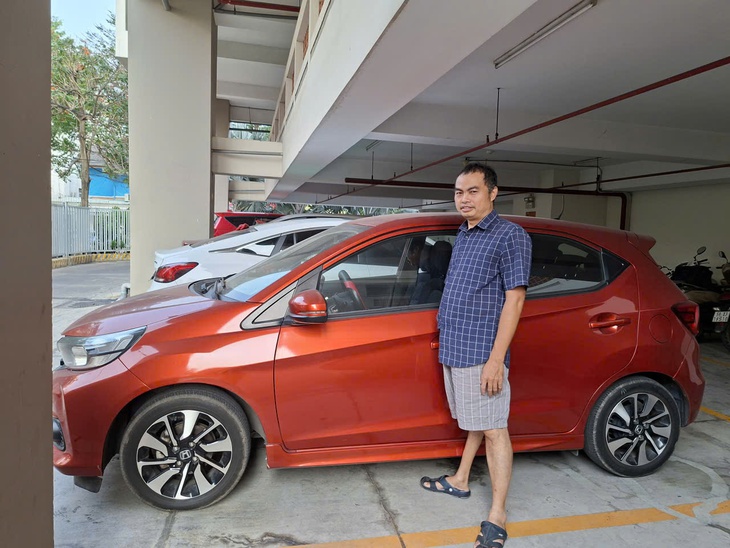
I am a person with a mobility disability, with atrophy in my right leg due to polio at age 3. Currently, walking is quite difficult for me. I would like to share my personal story about the process of learning and obtaining a B1 driver’s license.
In early 2009, while working as an interpreter for a non-governmental organization, I applied and was accepted into a short-term scholarship program for youth from Asian countries, organized by the Korean Society for Rehabilitation of Persons with Disabilities (KSRPD) for young people with disabilities from countries such as Cambodia, India, Mongolia, Vietnam, and Uzbekistan—each with two representatives, plus the host country, South Korea.
Arriving in South Korea: from surprise to aspiration
One unforgettable memory for me was when we were visiting a historical site. A South Korean member, who was disabled in both legs and used a wheelchair, suddenly said he would drive me separately by car to another location.
I was skeptical and asked him again if he had a driver’s license. As far as I knew, in Vietnam at that time, people with disabilities did not yet meet the health requirements or have suitable vehicles to even get a license for a two-wheeled vehicle, let alone a car. He smiled and answered “yes,” which both reassured me and sparked a bit of curiosity.
After informing the group leader, I followed his wheelchair to the parking area not far away. In the blink of an eye, with smooth and decisive movements, he folded his wheelchair, put it in the trunk, and then used his arms as support to jump into the driver’s seat.
The seat and the controls in the car had been adjusted to suit his disability: the accelerator and brake were both integrated into the steering wheel, so with just his hands, he could comfortably control the car.
His actions were so natural and skillful that, try as I might, I couldn’t remember the exact sequence of steps he took. I could only stand there, stunned and speechless: moving from astonishment and surprise to admiration.
A powerful surge of longing welled up inside me. If only I could also drive a car like him.
I watched intently and gradually realized: with just a few small adjustments, a person as severely disabled as he was could still drive a car, cruising on busy roads just like any other ordinary person.
My heart swelled with admiration mixed with a deep wish that one day, not too far off, Vietnam would also allow people with disabilities to take the test for a car driver’s license.
Starting lessons as soon as the regulation allowed people with disabilities to drive B1 vehicles
In 2017, the Ministry of Transport permitted the training, testing, and issuance of B1 driver’s licenses—for automatic transmission vehicles—to people with disabilities for non-commercial use, only for driving family or personal vehicles. After researching, I found that I met the conditions, so I eagerly invited my wife to register for driving lessons with me, even though I knew from the start it was just to learn, as we didn’t have money to buy a car yet.
At that time, some training centers accepted us, while others did not. Even though the center didn’t require it, I decided to go to the hospital for a check-up on my own. I wanted to know for sure whether I was healthy enough to learn and take the driving test. And then, holding the results in my hand, I breathed a sigh of relief—I was eligible to take the B1 license test.
That was the first step, but an incredibly important one, bringing me closer to my dream of driving a car myself.
The very next day, I brought my health check certificate and ID photos to register, my heart full of excitement as if my dream was about to come true. However, I stopped attending lessons after just one session. The instructor sat in the passenger seat and constantly told me to turn left, turn right,