It is time for us not only to talk about digital transformation as a goal, but to live with it as a responsibility.
Once, when discussing digital transformation and people in the new era, the General Secretary and President To Lam emphasized a guiding viewpoint: digital transformation is not just a story of technology, but first and foremost a story of people – of their ability to access, master, and enjoy the fruits of technology.
In that spirit, “digital literacy for the people” is no longer an academic concept, but has become an urgent requirement, a profound political and social mission.
From that perspective, summer – the season of youth, of dedication and spreading impact – stands before a new mission: to become the summer of digital literacy for the people, where technological knowledge is given as a “new cultural light,” kindling faith and capability for those who are still disadvantaged in society.
Today, as we build the green summer strategy for our university’s students, experiences of the light of knowledge once again stir many emotions in me.
When the “cultural light” needs to be reborn in digital form
Nearly 40 years ago, from the Ho Chi Minh City University of Education, a campaign called “Summer Cultural Light” was launched. Those education students at the time did not shy away from hardship; they went to remote and deep-lying areas, bringing letters and knowledge to eradicate illiteracy.
That was not just a volunteer activity, but a symbol of social responsibility and educational ideals.
Those who have experienced those unforgettable emotions will fully understand a journey of the light of knowledge. The growing baggage of many students is not just about giving and receiving, but also about community responsibility, especially towards those facing difficulties and disadvantages…
Today, the context has changed. We no longer face illiteracy in the traditional sense, but we stand before a form of “digital” illiteracy.
If back then letters were the key to opening the door to knowledge, today digital skills are the key to opening the door to digital citizenship.
The question is: can we recreate the spirit of the “Summer Cultural Light” in a new version – a summer digital literacy campaign for the people? The answer is not just “possible,” but “necessary.”
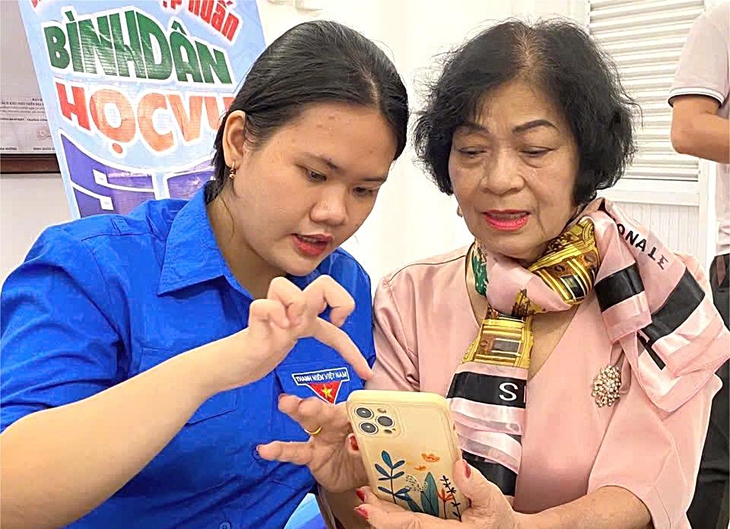
Reality shows that in the strong current of digital transformation, there are still many “low-lying areas” of digital capability. These are the elderly who cannot use online public services on their own; ordinary workers vulnerable to cybersecurity risks; people with disabilities who face difficulties accessing technology; and people in remote, deep-lying areas who lack conditions to access digital knowledge.
Or from the survey perspective of our research group, up to nearly a quarter of the survey sample showed confusion when facing everyday digital technologies, lacking appropriate responses when “falling” into situations at risk of being disadvantaged in the digital environment…
These gaps are not just technical issues, but also issues of social equity and sustainable development.
If not filled, they will create an “invisible boundary” in the digital society – where on one side are those who master technology, and on the other side are those who are passive, dependent, and even excluded