The Sukhoi will become a ‘devastating attacker’ with the R 37M ‘Sky Hunter’ missile fitted to its wings, spelling trouble for Pakistan.
A deadly weapon could soon be added to the Indian Air Force’s arsenal. It is one of the world’s most precise missile systems, and its inclusion in India’s power bank could cause concern for Pakistan.
Approval for R-37M Missiles
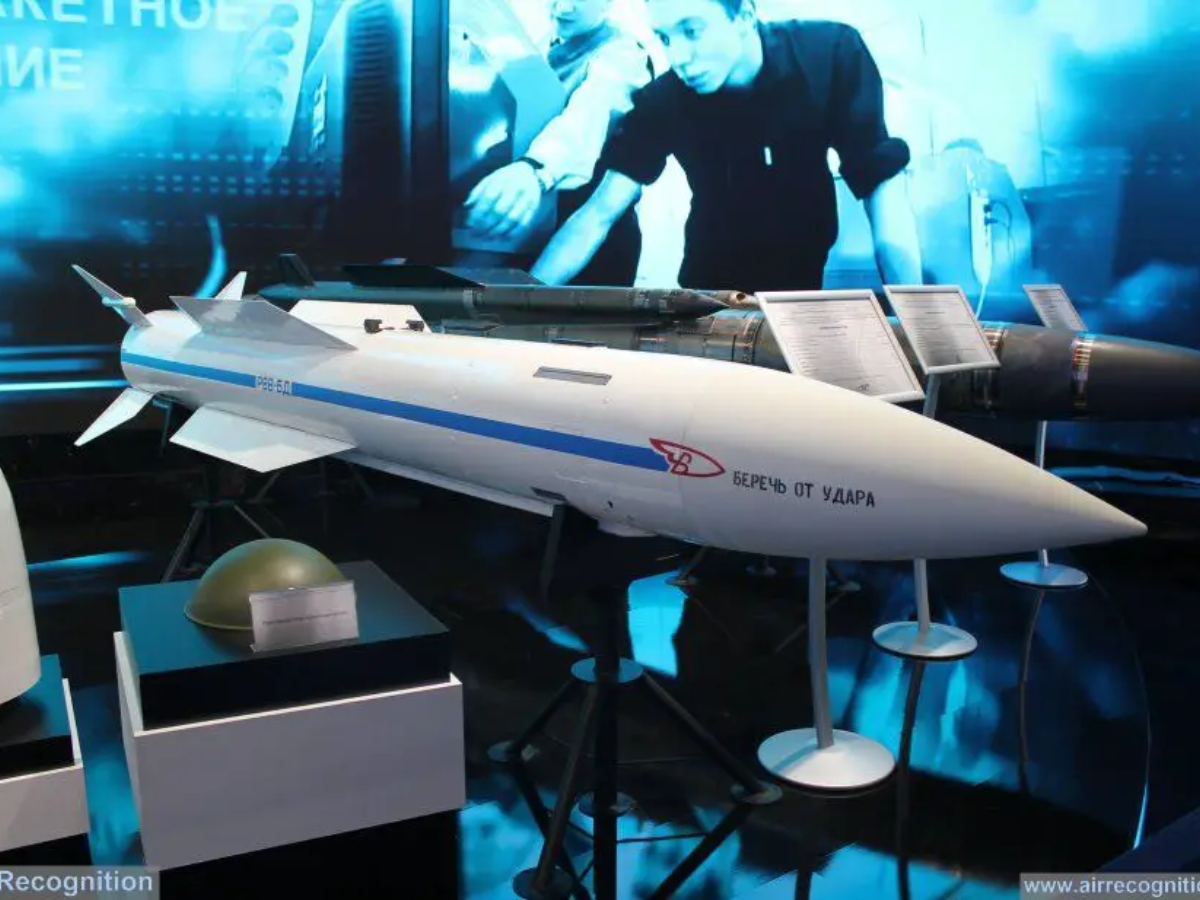
According to defense news reports, Russia has approved the sale of the deadly R-37M missiles to India. The Indian Air Force plans to integrate them with the Sukhoi-30MKI, and if this happens, there will be no escape for those within the missile’s range.
India is planning to purchase around 300 R-37M missiles. This weapon is often called the ‘Sky Sniper’. It could redefine beyond-visual-range (BVR) combat, as it will allow Indian pilots to strike targets hundreds of kilometers away. Additionally, the enemy will not even know what hit them.
Range of 300-400 km
The biggest advantage of the R-37M is its range of 300-400 kilometers. In the event of a potential conflict between India and Pakistan, Indian jets can engage Pakistani aircraft or surveillance planes like AWACS long before they enter their own firing range.
The R-37M acts like a precise sniper system in the sky. With speeds of Mach 5-6, it covers the distance in just a few minutes, giving enemies very little time to react.
Will Annihilate Enemies
The R-37M is designed specifically to completely annihilate enemies. This Russian missile is built to destroy AWACS (Airborne Warning and Control System), aerial refueling tankers, and electronic warfare aircraft. Without AWACS, enemies will lack radar pictures, have poor coordination, and lose the BVR advantage. In this way, India can blind and isolate Pakistani fighter jets in a single blow.
Even More Lethal with Sukhoi
The Sukhoi-30MKI is considered the backbone of the Indian Air Force, and with the R-37M, it will become even more deadly. The Sukhoi is also the platform from which the BrahMos missile can be launched. The Sukhoi can hit multiple targets from a certain distance using missiles.
While the R-37M provides immediate strength, India is already preparing a future solution with the Astra Mk-3 missile (Gandiva), which aims to achieve a range of 350+ km. Thus, while the R-37M will serve as a bridge, the Astra Mk-3 will be the ultimate solution for the air force.
Indian Air Force
The Indian Air Force (IAF) is the air arm of the Indian Armed Forces, officially established on October 8, 1932, as an auxiliary air force of the British Empire. It played a crucial role in World War II and, after India’s independence in 1947, was renamed the Royal Indian Air Force before becoming the Indian Air Force in 1950. Today, it is one of the world’s largest air forces, known for its modernization and key roles in conflicts like the 1971 Indo-Pakistani War.
Sukhoi-30MKI
The Sukhoi-30MKI is a highly advanced, twin-engine multirole fighter aircraft developed by Russia’s Sukhoi and built under license in India by Hindustan Aeronautics Limited. It has been the backbone of the Indian Air Force since its induction in 2002, featuring thrust-vectoring engines and canards for exceptional agility. The aircraft has undergone continuous upgrades to enhance its avionics, weapons systems, and electronic warfare capabilities, playing a key role in India’s air superiority strategy.
BrahMos missile
The BrahMos is a supersonic cruise missile jointly developed by India and Russia, named after the Brahmaputra and Moskva rivers. It originated from a 1998 partnership between India’s DRDO and Russia’s NPO Mashinostroyeniya, with its first successful test flight in 2001. The missile is known for its speed, versatility across land, sea, and air platforms, and has been inducted into the Indian Armed Forces as a key strategic weapon.
Astra Mk-3 missile
The Astra Mk-3 is an advanced beyond-visual-range air-to-air missile developed by India’s Defence Research and Development Organisation (DRDO) for the Indian Air Force and Navy. It is the latest variant in the Astra missile family, featuring an extended range of over 120 kilometers and enhanced maneuverability through a thrust-vector control system. The missile’s development builds on earlier Astra versions, with successful flight tests conducted in the early 2020s, marking a significant step in India’s indigenous missile capabilities.
Gandiva
Gandiva is the legendary celestial bow of the Pandava prince Arjuna in the Hindu epic, the Mahabharata. It was created by the god Brahma and given to Arjuna by the fire god Agni, enabling him to perform incredible feats in battle. After the Kurukshetra war, Arjuna returned the bow to the gods, as its divine power was no longer needed for earthly warfare.

)