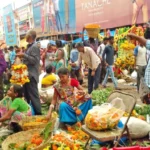
The state government has released three comprehensive Standard Operating Procedures (SOPs) under the State Heat Action Plan, aligned with color-coded heat alerts issued by the India Meteorological Department, to protect citizens from heatwaves.
The measures aim to reduce heat-related illnesses and deaths, especially among vulnerable groups such as informal workers, miners, and low-income communities.
The SOPs primarily focus on 15 high-risk districts, including Latur, Amravati, Yavatmal, Washim, Akola, Buldhana, Nagpur, Wardha, Chandrapur, Gondia, Bhandara, Jalgaon, Nandurbar, Dhule, and Nanded.
The first SOP provides guidelines for outdoor workers such as street vendors, construction workers, traffic police, sanitation staff, delivery personnel, and rickshaw drivers. Measures include rescheduling work hours, mandatory water breaks, setting up water booths, distributing ORS, providing shaded rest areas, and strengthening healthcare services, based on the IMD’s yellow, orange, and red alerts.
The second SOP focuses on workers in coal mines in Chandrapur, addressing heat stress management. It includes provisions for cooling rest centers, adequate water supply, improved ventilation, better work planning, job rotation, training to identify heat-related illnesses, and special facilities for women workers.
The third SOP emphasizes heat-resilient housing and climate-sensitive urban planning. It includes thermal improvements in homes, adoption of cool roofs, expansion of green spaces, and structured planning across immediate, medium-term, and long-term timelines.
Immediate measures include heat-risk mapping, targeting vulnerable populations, public awareness campaigns, cooling centers, and low-cost thermal improvements like reflective roofs, shading, and ventilation. Medium-term steps involve integrating heat-resilient designs into housing schemes like PMAY, building by-laws, and master plans. Long-term strategies focus on state building codes, climate-sensitive zoning, and equitable access to temperature-resilient infrastructure.
The SOPs also stress inter-departmental coordination, regular reviews based on feedback from health centers and workers, and representation of informal workers. Emergency contact numbers, including district control rooms (1077), ambulance services (108), and police helplines (112/100), have been circulated.
These SOPs will be implemented through agencies such as District Disaster Management Authorities, municipal corporations, Public Works Department, Urban Planning Department, MHADA, CIDCO, and other local governing bodies.
Latur
Latur is a city in the Indian state of Maharashtra, known for its historical and cultural significance. It was historically part of the Hyderabad State under the Nizams and later became a major center for the Marathwada region. Today, Latur is recognized for its agricultural economy, particularly as a hub for soybean and sugarcane production, and is also home to several educational institutions.
Amravati
Amravati is a city in the Indian state of Maharashtra, historically known as the capital of the ancient Vidarbha region. It is renowned for its Buddhist heritage, particularly the Amravati Stupa, a major Mahayana Buddhist monument built between the 3rd century BCE and the 3rd century CE, which features intricate marble carvings. Today, Amravati serves as a cultural and administrative center, blending its ancient past with modern development.
Yavatmal
Yavatmal is a city in the Indian state of Maharashtra, known for its historical significance as a former princely state under the Berar Province. The region has a rich history dating back to the medieval period, and it was once a key center for the cotton trade during British rule, earning it the nickname “Cotton City.” Today, Yavatmal is an agricultural hub, famous for its cotton and soybean production, and features landmarks like the ancient Mahadev Temple and the scenic Waghadi River.
Washim
Washim is a town in the Indian state of Maharashtra, historically known as Vatsagulma, which served as the capital of the Vakataka dynasty during the 4th and 5th centuries CE. It is renowned for its ancient temples and archaeological significance, including the nearby caves at Ajanta and Ellora that were patronized by Vakataka rulers. Today, Washim is a pilgrimage site and a center for cotton and oilseed trade, blending its rich historical heritage with modern agricultural importance.
Akola
Akola is a city in the Indian state of Maharashtra, historically part of the Berar region. It served as a key administrative center under the Mughals and later the British Raj, becoming a major hub for cotton trade. Today, Akola is known for its agricultural markets and cultural landmarks like the Raj Rajeshwar Temple.
Buldhana
Buldhana is a city in the Indian state of Maharashtra, serving as the administrative headquarters of the Buldhana district. Historically, it was part of the Berar region and later came under the rule of the Nizam of Hyderabad before becoming part of independent India. The area is known for its ancient temples and the nearby Lonar Crater, a unique meteorite impact site.
Nagpur
Nagpur is a major city in the Indian state of Maharashtra, known as the “Orange City” for its large-scale citrus fruit cultivation. Historically, it served as the capital of the Bhonsle dynasty and later became the capital of the Central Provinces and Berar under British rule. Today, it is a key commercial and political hub, hosting the winter session of the Maharashtra state legislature.
Chandrapur
Chandrapur is a historic city in the Indian state of Maharashtra, known for its ancient forts and temples. Founded in the 13th century by the Gond king Khandkya Ballal Sah, it later came under the rule of the Bhonsle dynasty of the Maratha Empire. The city is also famous for the Chandrapur Fort and the nearby Tadoba-Andhari Tiger Reserve, a major wildlife sanctuary.