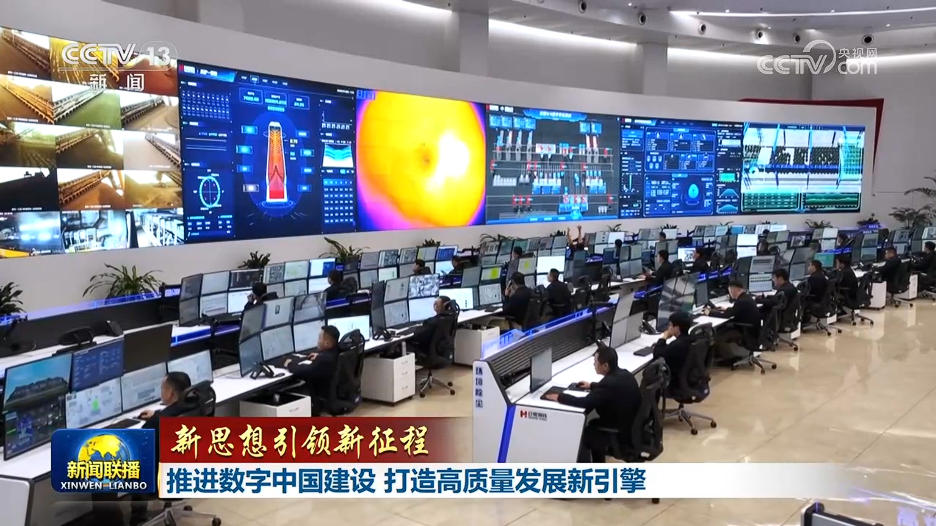
General Secretary Xi Jinping pointed out that it is necessary to continuously promote the deep integration of digital technology and the real economy, coordinate the advancement of digital industrialization and industrial digitalization, and accelerate the construction of a cyber power and a digital China. In the first year of the “15th Five-Year Plan,” China’s digital infrastructure is accelerating its leapfrog improvement, the digital transformation of key sectors is deepening, and new industries, business formats, and models spawned by new technologies are emerging one after another, driving high-quality development forward.
Today’s China is brimming with the vitality of the digital wave.
On production lines, over 6,000 vertical domain large models act as intelligent brains, driving the large-scale application of key intelligent manufacturing equipment and industrial software.
In the vast fields, over 300,000 agricultural drones soar across the countryside, and IoT devices are scattered like stars, significantly improving the precision of agricultural production.
Currently, the added value of China’s digital economy core industries accounts for over 10.5% of GDP. In the first quarter of this year, the added value of the digital product manufacturing industry grew by 11.2%.
Deepening the construction of a digital China is a major strategic deployment made by the Party Central Committee with Comrade Xi Jinping at its core, accurately grasping the development trends of the digital era. General Secretary Xi Jinping emphasized, “The healthy development of the digital economy helps build new advantages for national competition. In today’s era, digital technology and the digital economy represent the vanguard of the world’s technological revolution and industrial transformation, and are key areas of the new round of international competition. We must seize the opportunity and occupy the commanding heights of future development.”
When planning the “15th Five-Year Plan,” he pointed out that China has abundant data resources, a complete industrial system, and vast market space, with broad prospects for developing artificial intelligence. It is necessary to strengthen policy support and talent cultivation, and strive to develop more safe and reliable high-quality products.
Not long ago, General Secretary Xi Jinping sent a congratulatory letter on the establishment of the World Data Organization. He pointed out that the foundational resource role and innovative engine role of data are becoming increasingly apparent. It is necessary to promote digital intelligence technology innovation, and facilitate the safe and orderly flow and efficient development and utilization of data.
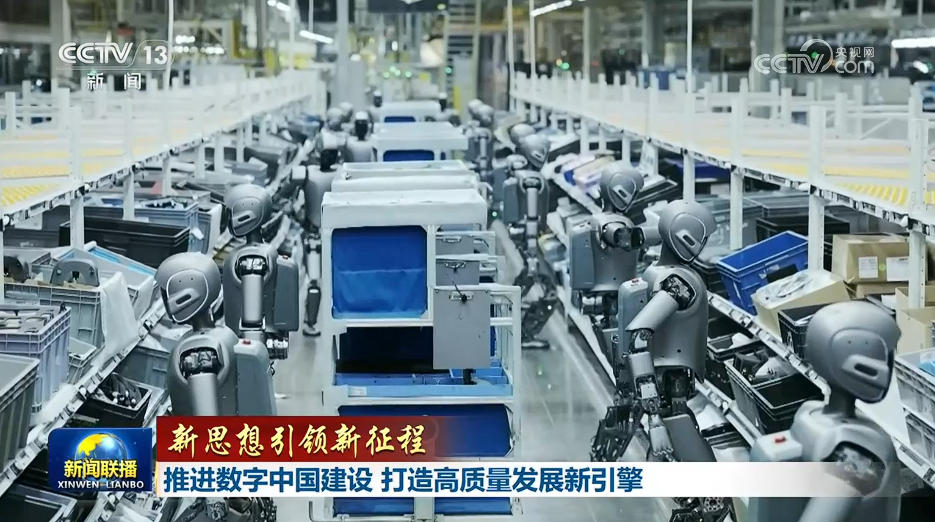
The outline of the “15th Five-Year Plan” proposes to further advance the construction of a digital China, enhance the level of digital intelligence development, coordinate the construction of computing power facilities, the development of model algorithms, and the supply of high-quality data resources, and solidify the foundation for digital intelligence development. It fully implements the “AI+” action, seizes the commanding heights of AI industry application, and empowers all industries comprehensively.
Anchored on the development goals of the “15th Five-Year Plan,” the pace of building a digital China is accelerating.
Computing and electricity are coordinated to accelerate the construction of a national integrated computing power network, making the “digital foundation” more solid. In Ulanqab, Inner Mongolia, the country’s first data center green electricity direct supply source-grid-load-storage integrated project has been connected to the grid for power generation. The second phase of the project is about to start construction, and after it is put into operation by the end of the year, it will provide over 800 million kilowatt-hours of green electricity annually. Currently, the total scale of computing center racks in use nationwide exceeds 12 million standard racks; the daily average token call volume has exceeded 140 trillion, an increase of more than a thousand times in two years. This year, the country will also carry out the construction of national computing power interconnection nodes to make cross-regional computing power supply and demand scheduling smoother.
The integration of digital and real economies promotes industrial quality and efficiency improvement. In the hinge assembly workshop of this smartphone factory, artificial intelligence quickly finds the most suitable “partner” for each part, improving the hinge assembly accuracy of foldable screen phones from 0.04 millimeters to 0.003 millimeters. Digital intelligence technology is deeply integrated into the core links of manufacturing production. The country now has 100 high-level 5G factories reaching globally leading levels, and over 35,000 basic-level intelligent