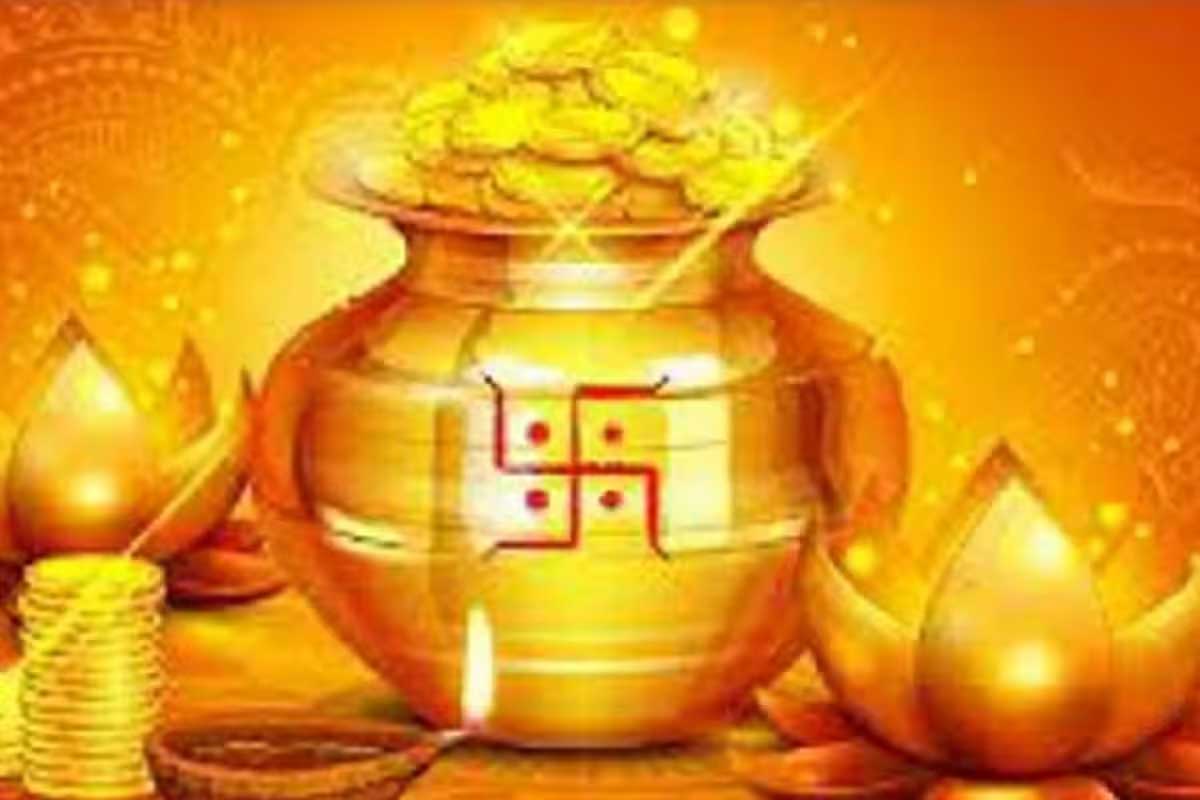
The glory of this day is described extensively in the Matsya Purana and Varaha Purana. After rescuing the Earth from the deluge, Lord Varahadeva himself explained the significance of this day to Goddess Vasundhara. He said that by bathing, donating, chanting, and performing Tarpana on Akshaya Tritiya, one attains imperishable results. Fasting on this day accumulates all virtues. Furthermore, if this day coincides with the Krittika constellation, its importance increases even more. According to scriptures, worshipping Vishnu with rice grains and donating sattu (roasted gram flour) to a Brahmin on this day brings supreme good fortune. The Puranas also mention that women who observe this vow have children whose glory is everlasting.
The supreme example of the unfailing power of donation on Akshaya Tritiya is Sri Krishna and his childhood friend Sudama. Tormented by poverty, Sudama once went to Dwarka to meet Krishna. His only possession was a few handfuls of flattened rice given by his wife Sushila. Sri Krishna lovingly accepted that gift. That simple offering, imbued with devotion, was priceless to Krishna. Although Sudama asked for nothing, the omniscient Lord transformed his humble hut into a palace. The story of Krishna and Sudama teaches us on Akshaya Tritiya that even a humble donation can yield imperishable wealth.
According to scriptures, one should bathe in the Ganga on this day and, according to one’s capacity, donate water, food, or clothing. This satisfies not only oneself but also the souls of ancestors. Amidst modern busy lives, it is essential to remember this religious teaching on Akshaya Tritiya. Even a small act performed with devotion on this sacred day of Vaishakha can bring infinite peace and prosperity to a devotee’s life. May the day begin with a pure heart and remembrance of the Supreme Lord.
Akshaya Tritiya
Akshaya Tritiya is a highly auspicious day in the Hindu and Jain calendars, observed on the third lunar day of the bright half of the month of Vaishakha. It is believed to mark the beginning of the Treta Yuga and is associated with events like the birth of Lord Parasurama and the day the Ganges descended to Earth. Traditionally, it is considered an ideal day for new beginnings, charitable acts, and purchasing gold, as the term “Akshaya” means “never diminishing,” signifying eternal prosperity.
Matsya Purana
The Matsya Purana is one of the eighteen major Hindu religious texts (Puranas), traditionally said to have been narrated by the god Vishnu in his fish incarnation (Matsya). It is an encyclopedic work containing cosmology, mythology, genealogies of gods and kings, and detailed guides to pilgrimage sites, rituals, and social duties. Composed between the 3rd and 8th centuries CE, it preserves ancient traditions and is a key source for understanding medieval Hindu geography and religious practice.
<
Akshaya Tritiya
Akshaya Tritiya is a highly auspicious day in the Hindu and Jain calendars, observed on the third lunar day of the bright half of the month of Vaishakha. It is traditionally believed to mark the beginning of the Treta Yuga and is associated with events like the birth of Lord Parasurama and the day the Ganges descended to Earth. The day is considered eternally prosperous (“akshaya” meaning never diminishing), leading to rituals, charitable acts, and the purchase of gold and new ventures.
Matsya Purana
The Matsya Purana is one of the eighteen major Hindu religious texts (Puranas), traditionally believed to have been narrated by the Matsya (fish) avatar of Lord Vishnu to the sage Manu. It is a vast compilation that covers cosmology, mythology, genealogies of gods and kings, and detailed guides to pilgrimage sites, rituals, and social duties. Its narratives, including the story of a great flood that parallels other ancient deluge myths, are foundational to Hindu tradition and provide significant insight into early Hindu thought and geography.
Varaha Purana
The **Varaha Purana** is one of the eighteen major Hindu Puranas, traditionally attributed to the deity Vishnu in his Varaha (boar) incarnation. It primarily focuses on the glorification of Vishnu and includes extensive sections on cosmology, mythology, and sacred geography, particularly detailing pilgrimage sites (*tirthas*) and rituals. While its exact date is uncertain, it is generally considered to have been compiled between the 10th and 12th centuries CE, drawing from earlier traditions.
Lord Varahadeva
Lord Varahadeva is a reference to the Varaha Cave Temple at the UNESCO World Heritage site of the Ellora Caves in Maharashtra, India. It is a 6th-century CE Hindu temple carved from a single basalt rock cliff, dedicated to Lord Vishnu in his Varaha (boar) avatar rescuing the earth goddess Bhudevi. Commissioned by a minister named Varahadeva for the Vakataka king, it is renowned for its intricate sculptures and is one of the earliest and finest examples of Indian rock-cut architecture.
Goddess Vasundhara
Goddess Vasundhara is a revered deity in Buddhist and Hindu traditions, particularly in Nepal and the Himalayan regions, who personifies the earth and its bounties. Historically, her worship became prominent from around the 5th century CE, with her iconography often depicting her as a goddess of abundance, seated and holding sheaves of grain. She is especially venerated in the Kathmandu Valley, where she is believed to ensure agricultural fertility and prosperity.
Sri Krishna
“Sri Krishna” typically refers to Lord Krishna, a major deity in Hinduism, rather than a single physical site. However, the name is associated with numerous temples and pilgrimage centers across India, such as the Sri Krishna Temple in Udupi, Karnataka, which was founded in the 13th century by the philosopher-saint Madhvacharya. These sites are central to Vaishnavism and celebrate Krishna’s life and teachings as depicted in ancient texts like the Bhagavata Purana and the Mahabharata.
Sudama
“Sudama” refers to the Sudama Setu, a modern pedestrian bridge in Vrindavan, India, named after Sudama, a childhood friend and devotee of the Hindu deity Krishna. The bridge, inaugurated in 2022, connects the town with the pilgrimage island of Parikrama, facilitating access for devotees. Its name honors the ancient legend of Sudama’s selfless friendship with Krishna, a central story in the Bhagavata Purana, symbolizing devotion and humility in Hindu culture.
Ganga
The Ganga (or Ganges) is a sacred river in northern India, central to Hinduism and revered as the goddess Ganga. Historically, it has been a cradle of ancient Indian civilization, with major empires and pilgrimage sites flourishing along its banks for millennia. Today, it remains a vital spiritual and physical lifeline, though it faces severe environmental challenges.