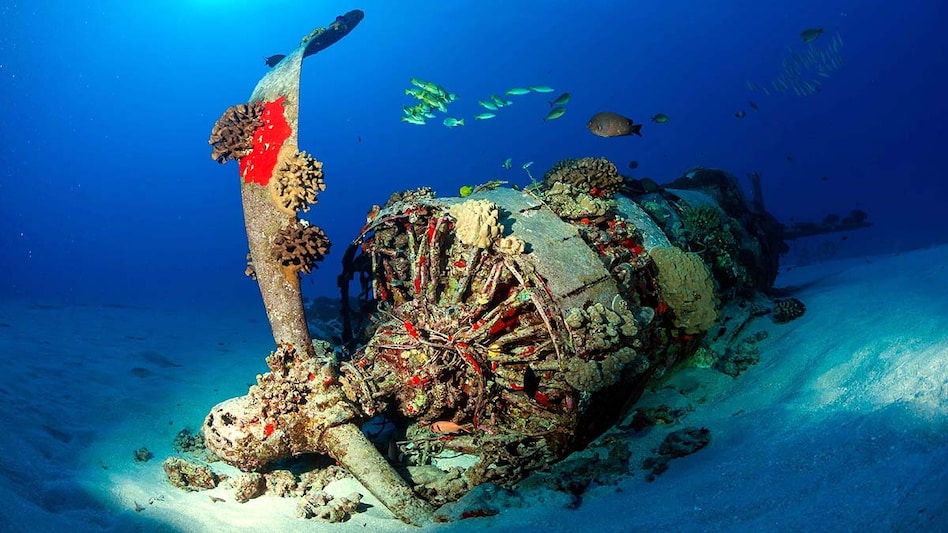
1.6 million tons of old munitions from World War II are decaying in the Baltic Sea. Scientists thought there would be no life here, but ROV cameras revealed a surprise. Crabs, fish, starfish, and anemones are living undisturbed on these toxic bombs and missiles. Scientists call it the Chernobyl of the sea.
Baltic Sea
The Baltic Sea is a relatively young brackish inland sea in Northern Europe, formed after the last Ice Age around 10,000-15,000 years ago. Historically, it has been a crucial trade and cultural crossroads, central to the Hanseatic League’s medieval power and a frequent strategic arena for regional conflicts. Today, it is bordered by nine countries and is known for its unique marine ecosystem and environmental challenges.
World War II
World War II was a global conflict that lasted from 1939 to 1945, involving most of the world’s nations split into two opposing military alliances: the Allies and the Axis. It was the deadliest war in history, resulting in widespread devastation, the Holocaust, and the use of nuclear weapons, fundamentally reshaping the geopolitical landscape and leading to the establishment of the United Nations.
Chernobyl
Chernobyl is a city in northern Ukraine, infamously known as the site of the 1986 nuclear disaster at the nearby Chernobyl Nuclear Power Plant. The catastrophic meltdown of Reactor 4 caused widespread radioactive contamination, leading to the permanent evacuation of the surrounding area and creating an exclusion zone. Today, the abandoned city and power plant serve as a stark memorial and a unique, if somber, destination for researchers and controlled tourism focused on the legacy of the accident.
Baltic Sea
The Baltic Sea is a brackish inland sea in Northern Europe, historically serving as a vital trade route and cultural crossroads for surrounding nations like the Vikings, Hanseatic League, and various empires. Its strategic importance has shaped the region’s history, from medieval commerce to major naval conflicts in the 20th century. Today, it remains a crucial waterway for transport, while also facing significant environmental challenges like pollution and eutrophication.
World War II
World War II was a global conflict from 1939 to 1945, involving most of the world’s nations and resulting in unprecedented destruction and loss of life. It was primarily fought between the Axis powers (led by Germany, Italy, and Japan) and the Allies (led by the United Kingdom, the United States, and the Soviet Union), culminating in events like the Holocaust and the use of atomic weapons. Its legacy profoundly reshaped the geopolitical order, leading to the establishment of the United Nations and the beginning of the Cold War.
Chernobyl
Chernobyl is a city in northern Ukraine, infamously known as the site of the 1986 nuclear disaster at the nearby Chernobyl Nuclear Power Plant. The catastrophic meltdown of Reactor 4 caused widespread radioactive contamination, leading to the permanent evacuation of the surrounding area and creating an exclusion zone. Today, the abandoned city and power plant serve as a stark memorial and a unique, if somber, destination for researchers and controlled tourism focused on the legacy of the accident.