According to reports, on the afternoon of the 17th local time, it was stated on social media that, in view of the ceasefire reached between Lebanon and Israel, Iran will open the Strait of Hormuz to all commercial vessels during the ceasefire period.
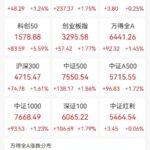
On April 17, Eastern Time, the three major U.S. stock indices collectively closed higher. The Nasdaq rose 1.52%, marking its 13th consecutive day of gains, setting a new record high and achieving its longest winning streak since 2013, with a weekly cumulative gain of 6.84%. The S&P 500 index rose 1.2%, also reaching a record high, with a weekly cumulative gain of 4.54%. The Dow Jones Industrial Average rose 1.79%, with a weekly cumulative gain of 3.19%.
Strait of Hormuz
The Strait of Hormuz is a strategically vital maritime chokepoint connecting the Persian Gulf with the Gulf of Oman and the wider Indian Ocean. Historically, it has been a key trade route for centuries, but in the modern era, its significance is defined by the transit of about one-fifth of the world’s oil supply. Its geopolitical importance has made it a focal point of regional tensions and international security concerns for decades.
Nasdaq
The Nasdaq is a global electronic stock exchange founded in 1971, notable for being the world’s first electronic marketplace. It is headquartered in New York City and is heavily associated with major technology and growth companies, such as Apple and Microsoft. Its name originally stood for the “National Association of Securities Dealers Automated Quotations.”
S&P 500
The S&P 500 is not a physical place or cultural site, but a major U.S. stock market index. It was launched in 1957 by the financial firm Standard & Poor’s to track the performance of 500 large, publicly-traded American companies, serving as a key benchmark for the health of the U.S. economy.
Dow Jones Industrial Average
The Dow Jones Industrial Average (DJIA) is a major U.S. stock market index, created in 1896 by Charles Dow and Edward Jones, that tracks the performance of 30 large, publicly-owned companies. It was originally designed as a simple average to gauge the health of the industrial sector, but has since evolved into a globally recognized barometer of the broader American economy. While its composition has changed over time to reflect the shifting economy, it remains one of the world’s most cited financial indicators.