Chaired by the Crown Prince… Council of Ministers: Approval of a special clause for localizing pharmaceutical industries in government health sector budgets
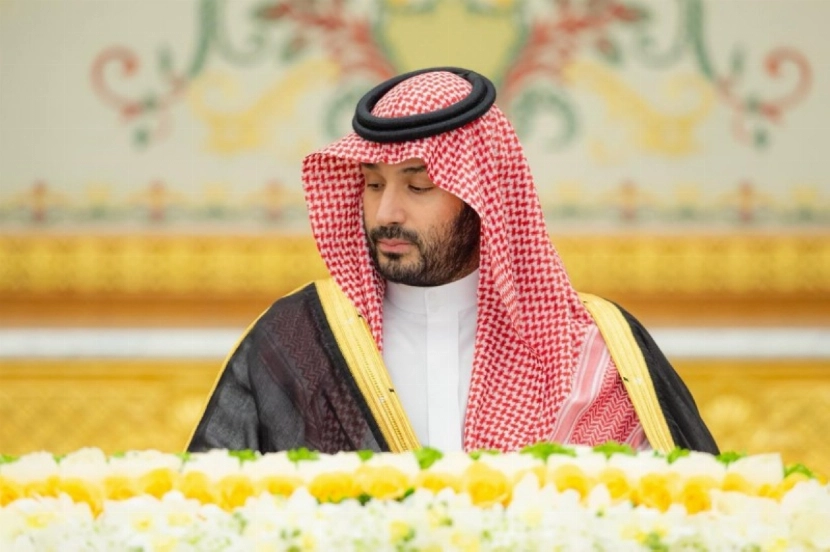
The Crown Prince and Prime Minister, Prince Mohammed bin Salman bin Abdulaziz Al Saud, chaired the session held by the Council of Ministers on Tuesday in Riyadh.
At the beginning of the session, the Crown Prince briefed the Council on the contents of his meetings with the leaders and heads of government of a number of brotherly and friendly countries during their visits to the Kingdom of Saudi Arabia to participate in the Future Investment Initiative conference.
In this context, the Council affirmed that the high-level international attendance at the conference reflects the global appreciation for the Kingdom, its achievements, and its vision, which has made it an international economic destination and a leading global hub that brings together leaders and innovators from various countries of the world to turn visions into practical strategies that shape the future of investment.
The Council of Ministers approved granting financial incentive rewards to those who help uncover violations of the municipal violations penalties regulations, according to a number of controls. The Council also approved the Ministry of Industry and Mineral Resources, in agreement with the Ministry of Finance, to take the necessary measures to create and approve a special clause for localizing pharmaceutical industries in the budgets of government health entities.
The Kingdom’s Economy Keeps Pace with Global Transformations
The Council of Ministers noted the ability of the Kingdom’s economy to keep pace with global transformations with flexibility, resilience, and alignment between resources, capabilities, and national priorities, alongside continued growth in non-oil sectors and further development in a number of fields, including advanced manufacturing, technology, tourism, and entrepreneurship.
It was explained in a statement following the session that the Council praised the private sector’s contribution to driving the growth of non-oil activities to notable levels since the launch of (Saudi Vision 2030); reflecting the effectiveness of economic policies and reforms that have enabled the business environment to expand and prosper.
Shaping a Future that Enhances Transparency and Governance
The Council considered the Kingdom’s win of the presidency of the International Organization of Supreme Audit Institutions (INTOSAI) for a three-year term starting in 2031 as a confirmation of its leadership in this field and its role in shaping a global future that enhances transparency and governance.
The Council of Ministers appreciated AlUla’s winning of three World Travel Awards for 2025, embodying its continuous distinction and growing status on the regional tourism map, and the multiple historical, civilizational, and cultural components it boasts.
Decisions:
The Council reviewed the items on its agenda, including items studied jointly with the Shura Council. It also reviewed the conclusions reached by the Council of Economic and Development Affairs, the Council of Political and Security Affairs, the General Committee of the Council of Ministers, and the Experts Commission of the Council of Ministers regarding them. The Council concluded the following:
– Approval of a headquarters agreement between the Government of the Kingdom of Saudi Arabia and the Arab Urban Development Institute.
– Approval of a memorandum of understanding between the Government of the Kingdom of Saudi Arabia and the Government of the State of Kuwait for financial cooperation.
– Authorizing the Minister of Tourism – or his representative – to negotiate with the San Marino side regarding a draft memorandum of understanding between the Ministry of Tourism in the Kingdom of Saudi Arabia and the Ministry of Tourism, Post, Cooperation, Exhibitions, and Media and Attracting Tourism Investments in the Republic of San Marino for cooperation in the field of tourism, and to sign it.
– Approval of a memorandum of understanding between the Ministry of Economy and Planning in the Kingdom of Saudi Arabia and the Ministry of Industry and Trade in the Socialist Republic of Vietnam for cooperation in the economic and commercial field.
– Approval of an agreement between the Government of the Kingdom of Saudi Arabia and the Government of the Republic of Panama in the field of air transport services.
– Approval of a memorandum of understanding between the Saudi Food and Drug Authority in the Kingdom of Saudi Arabia and the National Agency for Food, Environmental and Occupational Health Safety in the Republic of France in the field of veterinary medicinal product management.
– Approval of a memorandum of understanding between the Education and Training Evaluation Commission in the Kingdom of Saudi Arabia and Kuwait University in the State of Kuwait for cooperation in the field of measurement, evaluation, and accreditation.
– Approval of transferring the authority to issue licenses for the chemical consulting profession from the Ministry of Commerce to the Ministry of Energy.
– Granting financial incentive rewards to those who help uncover violations of the municipal violations penalties regulations, according to a number of controls.
– The Ministry of Industry