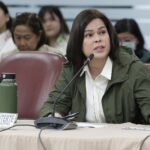
Ombudsman may issue show cause order against Ryan Quilala: Sara Duterte’s associate scrutinized over bag of money.
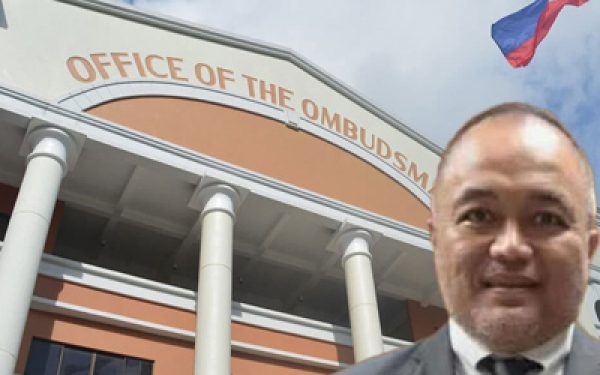
The Office of the Ombudsman has issued a show cause order against the alleged former law professor of Vice President Sara Duterte, Assistant Special Prosecutor Ryan Rey Quilala.
This is in connection with the testimony of Ramil Madriaga before the House Committee on Justice last Tuesday, April 14, where he claimed he delivered a bag full of cash to former Ombudsman Samuel Martires and Quilala in 2022.
In a press briefing this Thursday, April 16, it was stated that the investigation would prioritize the allegation against Quilala.
It was explained that apart from the money Madriaga allegedly gave to Quilala, the assistant special prosecutor would be asked to explain the accusation that he used his influence at the San Sebastian College of Law “to ensure that Sara received passing grades despite her poor academic performance.”
“From our monitoring of the impeachment hearing, it seems to be much deeper,” it was noted, because Madriaga’s affidavit is reportedly accompanied by photos and video.
It was mentioned that the allegation against Martires is more serious, but for now it is being discussed “internally.”
“Accountability will come once we are able to figure out what really happened,” was the warning given.
The Office of the Ombudsman will also scrutinize Madriaga to assess the weight of his allegations.
“I believe the credibility will be seen more when we are able to have a face-to-face talk with him,” it was stated.
They will return to the Justice panel after receiving a subpoena to appear at the hearing on April 22.
Martires had previously denied Madriaga’s accusation that he gave a bag full of money.
“If the public’s perception that I am close to former President Rodrigo Duterte is true, then why would the former President send me money through a nonentity when [he] can easily summon me so he can give me money?” reasoned the former Ombudsman.
Office of the Ombudsman
The Office of the Ombudsman is an independent public institution that investigates complaints from citizens against government agencies, acting as a mediator to ensure fair and lawful administration. The modern concept originated in Sweden in 1809, and similar offices have since been established worldwide to promote transparency, accountability, and the protection of citizens’ rights.
House Committee on Justice
The House Committee on Justice is a standing committee of the United States House of Representatives. Its primary constitutional role is to oversee the federal judiciary and consider impeachment proceedings against federal officials, a power famously exercised during the impeachments of Presidents Bill Clinton and Donald Trump.
San Sebastian College of Law
San Sebastian College of Law is a private Catholic law school in Manila, Philippines, established in 1946 by the Augustinian Recollect Order. It is part of the larger San Sebastian College system, which has roots dating back to the 1890s, and is known for its rigorous legal education program. The college has produced numerous notable alumni in the Philippine judiciary and legal profession.
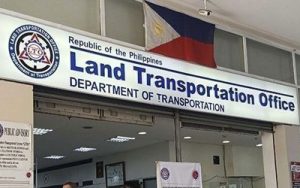
Land Transportation Office
The Land Transportation Office (LTO) is the primary government agency in the Philippines responsible for motor vehicle registration, driver licensing, and road safety enforcement. It was established in 1964 by Republic Act No. 4136, also known as the Land Transportation and Traffic Code, to consolidate and regulate all land transportation systems in the country. Its operations are central to maintaining order, safety, and legal compliance on Philippine roads.
Department of Transportation
The United States Department of Transportation (USDOT) is a federal Cabinet department established by an act of Congress in 1966 and began operating in 1967. It was created to coordinate and oversee national transportation policies, integrating various existing agencies to ensure safe, efficient, and accessible travel across highways, aviation, railroads, and transit systems. Its history reflects the growing complexity of America’s transportation infrastructure and the federal government’s role in its regulation and development.
Republic of the Philippines
The Republic of the Philippines is an archipelagic nation in Southeast Asia with a rich history shaped by centuries of Spanish colonization, followed by American rule, before achieving full independence in 1946. Its culture is a vibrant fusion of indigenous Malay traditions with significant Hispanic, American, and Asian influences, evident in its festivals, cuisine, and historic sites like the Baroque churches and the ancient rice terraces of Banaue.