-
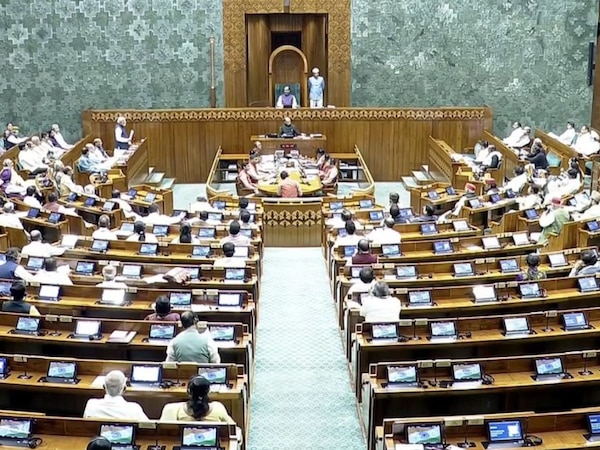
Some parties in the country have brought a north-south angle to women’s reservation. Meanwhile, some are seeking reservation within women’s reservation itself. Today, when the discussion on women’s reservation began in the Parliament’s special session, the Samajwadi Party raised the issue of reservation for Muslim women within the women’s reservation. This means that out of the one-third reservation being arranged, a portion should also be allocated to Muslim women.
This implies that there should be some seats reserved specifically for Muslim women, from which only Muslim women can contest elections. The provision for seat reservation in the Lok Sabha and State Legislative Assemblies has existed from the beginning. However, reservation is only for Scheduled Castes and Scheduled Tribes. There is no provision for reservation for any other class besides these.
How Reservation Works in the Lok Sabha
-
84 seats in the Lok Sabha are reserved for SCs. While 47 Lok Sabha seats are reserved for STs. That is, approximately 24% of seats are reserved for SC-STs.
-
This reservation is provided under Article 330 of the Indian Constitution.
-
The remaining 412 seats are in the general category, from which a person of any caste, class, or religion can contest elections.
Why Was There a Delay on Women’s Reservation?
The government’s formula for women’s reservation is the same. Out of the one-third of seats that will be reserved for women, approximately 24% of seats will be reserved for women from the SC-ST category. The remaining seats will be open to women from all classes. Any woman can contest from there. Today, when there is a demand for reservation within reservation, you should be aware of an important piece of information. A major reason for the delay in women’s reservation is that a demand for reservation within reservation was made for it.
The Women’s Reservation Bill was first introduced in 1996. However, it could not be passed due to the demand by socialist leaders for separate reservation for OBC women.
In 2010, the Women’s Reservation Bill was even passed by a huge majority in the Rajya Sabha, but due to the demand for an OBC quota, it was not introduced in the Lok Sabha. Thus, the bill lapsed.This Work Should Have Been Done 30 Years Ago
The reservation for women, which was supposed to be implemented in 1996, is being discussed now in 2026, 30 years later. First, the bill was stalled on the demand for an OBC quota, and now the bill is being opposed in the name of demanding Muslim reservation. Whereas the Constitution does not permit reservation based on religion.
Regarding reservation based on religion, you should also know the view of the Constitution’s architect, Babasaheb Dr. Bhimrao Ambedkar. He had said that – reservation based on religion could prove to be a fatal dose for the country’s integrity and it will create division in society. But despite this warning from the Constitution’s architect, a demand for reservation based on religion was made in Parliament.
Demand for Religious Reservation is Against the Constitution
The Samajwadi Party must certainly be aware that reservation based on religion is not possible. But despite this, if this demand is being made, then the politics of vote bank is behind it. Its purpose is to signal to Muslim voters that the SP is the party that cares for the interests of Muslims. It is a different matter that the demand for religious reservation is against the Constitution.
-
Here you should also know that in the 2024 Lok Sabha elections, the Samajwadi Party gave tickets to 10 women candidates. Out of them, only 1 was a Muslim woman.
-
Similarly, in the 2022 Legislative Assembly elections, the Samajwadi Party fielded 42 women candidates. Out of them, 4
Lok Sabha
The Lok Sabha is the lower house of India’s bicameral Parliament and the primary legislative body of the country. It was established under the Constitution of India, which came into effect in 1950, succeeding the Constituent Assembly. Members are directly elected by the people, and the house holds significant powers, including approving the national budget and overseeing the Council of Ministers.State Legislative Assemblies
State Legislative Assemblies are the elected lower houses of state governments in India, each representing a specific state or union territory. Their history dates to the Government of India Act 1935, which established provincial legislatures, with their current structure and powers defined by the Constitution of India after independence in 1950. These bodies are responsible for making laws on state subjects, overseeing the state council of ministers, and managing the state’s finances.Indian Constitution
The Constitution of India is the supreme legal document of the Republic of India, adopted by the Constituent Assembly on November 26, 1949, and coming into effect on January 26, 1950. It established India as a sovereign, democratic republic, drawing from various global constitutions and India’s own historical needs to create a framework for governance and fundamental rights. As the world’s longest written constitution, it is a foundational pillar of the world’s largest democracy.Article 330
“Article 330” is not a specific place or cultural site, but rather a reference to a legal statute. For example, in the Indian Penal Code, Article 330 criminalizes the act of voluntarily causing hurt to extort a confession or information. Therefore, it is a legal concept pertaining to justice systems rather than a physical location with a historical background.Women’s Reservation Bill
The Women’s Reservation Bill, officially known as the Constitution (108th Amendment) Bill, is a significant piece of proposed legislation in India aimed at reserving one-third of seats for women in the Lok Sabha (the lower house of Parliament) and state legislative assemblies. First introduced in 1996, it faced decades of political debate and delay before finally being passed by both houses of Parliament in September 2023. Its implementation is expected to be a historic step toward enhancing women’s political representation in the world’s largest democracy.Rajya Sabha
The Rajya Sabha, or Council of States, is the upper house of India’s bicameral Parliament. It was established on 3 April 1952 under the Constitution of India, representing the states and union territories to provide federal balance and review legislation proposed by the directly elected lower house, the Lok Sabha. Its members are largely elected by state legislative assemblies, with some nominated by the President for their expertise in arts, sciences, or social service.Babasaheb Dr. Bhimrao Ambedkar
Babasaheb Dr. Bhimrao Ambedkar was a principal architect of the Indian Constitution and a pioneering social reformer who dedicated his life to fighting against caste discrimination and advocating for the rights of Dalits and other marginalized communities. Born into an “untouchable” Mahar family in 1891, he overcame immense social barriers to become India’s first Law Minister and is revered as a symbol of equality and justice. His legacy is honored nationwide, with memorials like the Chaitya Bhoomi in Mumbai and the Dr. Ambedkar National Memorial in Delhi serving as major cultural and pilgrimage sites.Samajwadi Party
The Samajwadi Party is a major socialist and secular political party in India, founded on October 4, 1992, by Mulayam Singh Yadav. It has historically been a dominant force in the politics of Uttar Pradesh, India’s most populous state, advocating for the interests of Other Backward Classes (OBCs), farmers, and minorities.
-