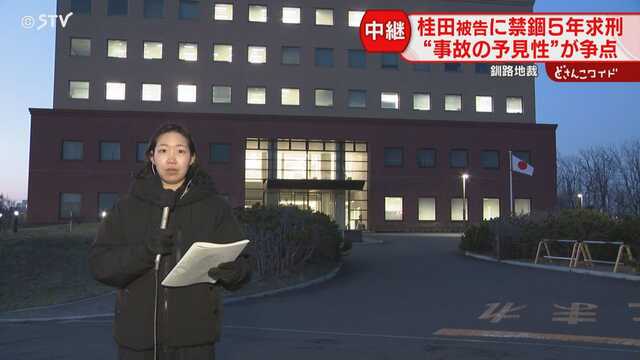
Live from in front of the Kushiro District Court in Hokkaido.
What was the scene like inside the courtroom today?
During the trial that began at 10 a.m. on April 16th, the victims’ families gave their statements in the morning.
The family of a deceased brother stated, “The defendant, Katsurada, was in a position to stop the departure. We want him not to avert his eyes from the decision to set sail,” appealing for him to sincerely face the accident.
As the family members gave their statements, their hands shook so much that the papers they held trembled visibly as they spoke with great effort.
In response, the sound of sobbing echoed through the courtroom.
The defendant, Katsurada, listened with his head slightly bowed the entire time and did not appear to look toward the family members.
The central point of contention in this trial is “whether the accident could have been foreseen.”
The prosecution pointed out that “the defendant, Katsurada, was aware that the return course to Utoro would involve sailing into the afternoon when the weather was deteriorating.”
Furthermore, they stated, “It was foreseeable that the expected weather deterioration during the voyage would exceed operational standards, posing a danger to the Kazuwan,” and demanded a prison sentence of 5 years.
On the other hand, the defense argued for acquittal in the first hearing, stating, “The vessel could have returned if not for the hatch malfunction, which had been judged as passing in an inspection prior to the accident.”
The trial is scheduled to continue tomorrow, the 17th, with the defense’s closing arguments and the defendant Katsurada’s final statement. The verdict will be delivered on June 17th.
Kushiro District Court
Hokkaido
Utoro
Kazuwan
To provide an accurate summary, could you please verify the correct spelling or provide any additional context, such as the country or region where it is located?