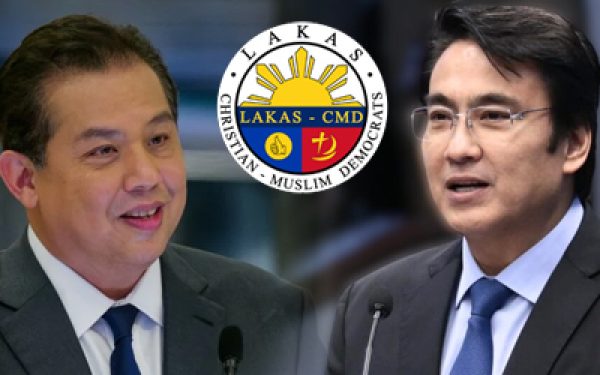
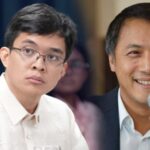
Party says Martin Romualdez, Bong Revilla: Lakas-CMD is weakening, being pirated.
After dominating the first three years of President Ferdinand “Bongbong” Marcos Jr.’s administration, the Lakas-Christian Muslim Democrat (Lakas-CMD) party is gradually weakening in the House of Representatives.
This began when Leyte Rep. Ferdinand Martin Romualdez, the party president, was removed as House Speaker, and Senator Ramon Bong Revilla Jr., the party chairperson, became embroiled in a flood control scandal.
It has been learned from a reliable source that members of Lakas-CMD are individually defecting to three major parties: the Nationalist Peoples Coalition (NPC), the National Unity Party (NUP), and the Partido Federal ng Pilipinas (PFP).
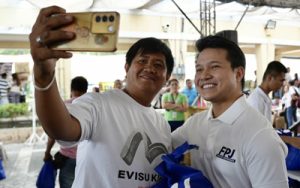
Marcos’s PFP was the first to benefit from Lakas-CMD after 23 former partymates of Romualdez defected to the president’s party, increasing its numbers from an original 17 after the 2025 elections to around 40.
According to the informant, Lakas-CMD’s membership will decrease further because among the party’s remaining members, there are pending applications to join the NUP, which is led by Deputy Speaker and Antipolo 1st District Rep. Ronaldo “Ronnie” Puno.
The NUP currently has 41 members, but this could reach 61 once the applications of Lakas-CMD congressmen who wish to leave Romualdez’s party are processed and accepted.
However, more want to defect to the NPC, led by Senate President Vicente “Tito” Sotto III, which could increase the party’s members in the House from the current 34 to 68, according to the informant.
“Once the defections are complete, the NPC will be the number one party in the House of Representatives, the NUP will become second, and the PFP will be third because there are also those who still want to transfer to BBM’s political party,” the informant said.
The informant estimates that only up to 30 members will remain in Lakas-CMD, which once had 110 members when Romualdez was installed as Speaker in June 2022.
One reason cited for why more are defecting to the NPC is the upcoming 2028 presidential election, where lawmakers believe Vice President Sara Duterte is the candidate to beat.
The informant stated that only one NPC member supported the first impeachment case against Duterte that reached the Senate, which is seen as proof that the party does not want the vice president impeached. Therefore, it is believed they will support the daughter of former President Rodrigo “Digong” Duterte in the upcoming presidential race.
House of Representatives
The House of Representatives is the lower chamber of the United States Congress, established by the Constitution in 1789. It is composed of representatives elected from congressional districts across the country, with representation based on state population, and it holds primary responsibility for initiating revenue bills and impeaching federal officials.
Lakas-Christian Muslim Democrat (Lakas-CMD)
The Lakas-Christian Muslim Democrats (Lakas-CMD) is a major political party in the Philippines, founded in 1991 by former President Fidel V. Ramos. It was established as a centrist, nationalist party to unite Christian and Muslim Filipinos and has served as a dominant political vehicle, producing presidents including Gloria Macapagal Arroyo. Its history is marked by mergers, splits, and periods as both the ruling party and the opposition, reflecting the shifting alliances in Philippine politics.
Nationalist Peoples Coalition (NPC)
The Nationalist People’s Coalition (NPC) is a major political party in the Philippines, not a physical place or cultural site. It was founded in 1992 by businessman Eduardo Cojuangco Jr. and other prominent figures, positioning itself as a centrist, pro-business alternative to the dominant parties of the era. It remains one of the country’s largest political parties, known for its influential membership and role in various coalition governments.
National Unity Party (NUP)
The National Unity Party (NUP) is a political party in Myanmar, founded in 1988 as the political wing of the country’s former military junta. It was the ruling party until 2011, when a nominally civilian government was established, and it continues to be a significant political force aligned with the military establishment.
Partido Federal ng Pilipinas (PFP)
The Partido Federal ng Pilipinas (PFP) was a political party established in 1900 during the early American colonial period. It advocated for the peaceful assimilation of the Philippines as a state of the United States, believing this path would lead to stability and development. However, the party dissolved after the U.S. Congress rejected statehood and instead passed the Philippine Organic Act of 1902, which set the course for a separate, eventual independence.
Senate
The Senate is the upper chamber of the United States Congress, established by the Constitution in 1789. It was designed to provide equal representation for each state, with two senators per state, and was originally intended to be a more deliberative and stable counterbalance to the popularly elected House of Representatives. Among its unique powers are confirming presidential appointments and ratifying treaties with other nations.
Land Transportation Office
The Land Transportation Office (LTO) is the primary government agency in the Philippines responsible for vehicle registration, driver licensing, and road safety enforcement. It was established in 1964 to consolidate and regulate all land transportation systems in the country. Its core functions are aimed at ensuring orderly land travel and promoting public safety on the roads.
Department of Transportation
The United States Department of Transportation (USDOT) is a federal Cabinet department established by an act of Congress in 1966, beginning operations in 1967. It was created to coordinate and oversee national transportation policies, aiming to ensure a fast, safe, efficient, accessible, and convenient system for the American people. The department oversees numerous agencies, including the Federal Aviation Administration (FAA) and Federal Highway Administration (FHWA), and plays a central role in infrastructure development and transportation safety regulation.