
Ho Chi Minh City National University has just released an analysis of the results from the first round of this year’s exam, showing a wide score distribution with a slight shift towards higher scores compared to 2025.

Slight Score Increase, Large Score Gap Remains

According to the analysis, the results from this year’s first round show a score distribution close to normal, with the average and median both at 682 points.

The top scorer of this year’s first round achieved 1,098 points, the highest score in the past three years; the candidate with the lowest score had only 27.

“The exam results show the quality of the test continues to improve with good differentiation ability. The score distribution is wide with a standard deviation of 141.2, demonstrating good candidate classification. Notably, about 30% of candidates scored below 600 points, 55% below 700 points, while only about 6% achieved 900 points or more. This shows a clear stratification between different competency groups,” the analysis stated.

    The examination council stated that compared to 2025, this year’s score distribution shows a slight shift towards higher scores, while dispersion has increased. This reflects that candidates have adapted better to the test structure, while the test maintains its ability to differentiate.

    The technical indicators of the test, such as difficulty and discrimination, are both at good levels. Most questions are of medium difficulty, with more than half achieving a high discrimination level, contributing to enhancing the exam’s value in university admissions.
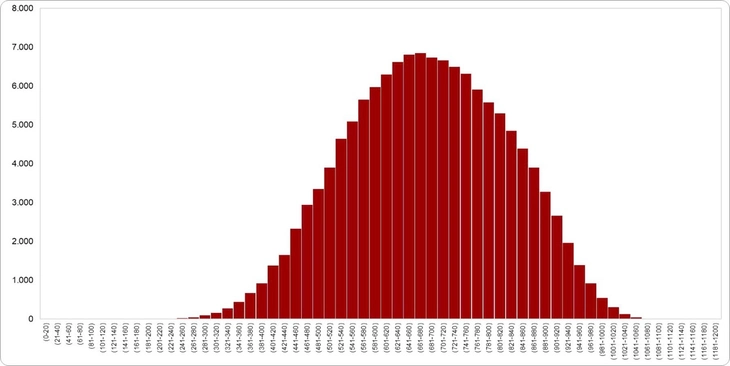
    Competency assessment - Image 2.

    How to View Competency Assessment Results on April 17

    According to the plan, the results of the Ho Chi Minh City National University competency assessment exam will be announced tomorrow, April 17, via the online system.

    Candidates can view their competency assessment results and download the result certificate from their registered exam account on the exam’s official information portal.

    This year, Ho Chi Minh City National University continues to apply the electronic certificate issuance method instead of paper versions for candidate convenience and alignment with digital transformation trends.

    RELATED NEWS

      The second round of the exam is scheduled for May 24 in 9 provinces and cities: Ho Chi Minh City, Hue, Gia Lai, Dak Lak, Khanh Hoa, Lam Dong, Dong Nai, Dong Thap, and An Giang (according to provincial administrative units after merger). Registration is open from April 18 to 25.

      The first round of the 2026 competency assessment exam organized by Ho Chi Minh City National University continues to attract significant nationwide attention, with over 135,000 registered candidates.

      The exam took place on April 5 across 15 provinces and cities, with the cooperation of 57 universities and colleges, totaling 57 exam clusters, 119 exam sites, and nearly 10,000 invigilators.

      According to statistics, 133,488 candidates took the exam, achieving a participation rate of 98.3%. Candidates came from 61 provinces and cities and over 2,000 high schools, an increase of nearly 6% compared to the previous year. The areas of Ho Chi Minh City, Southeast, South Central Coast, Central Highlands, and Mekong Delta continue to have the highest concentration of candidates.

      Many candidates think that a high score in the 2026 Ho Chi Minh City National University competency assessment exam guarantees university admission. However, each university has different admission criteria; even with the same score, opportunities can vary.


      Ho Chi Minh City National University

      Ho Chi Minh City National University is a major public research university system in Vietnam, established in 1995 through the merger of several older institutions. Its history traces back to the founding of the University of Saigon in 1957, and it is now a leading center for higher education and scientific research in the country.

      Ho Chi Minh City

      Ho Chi Minh City, formerly known as Saigon, is Vietnam’s largest and most dynamic metropolis. It served as the capital of French Indochina and later South Vietnam, playing a pivotal role during the Vietnam War before its capture in 1975, which led to its renaming. Today, it is a major economic hub where modern skyscrapers stand alongside historic French colonial landmarks like the Notre-Dame Cathedral Basilica.

      Hue

      Hue is a historic city in central Vietnam, serving as the imperial capital of the Nguyen Dynasty from 1802 to 1945. Its most prominent landmark is the Hue Imperial City, a vast walled complex containing palaces, temples, and the Forbidden Purple City, modeled after Beijing’s Forbidden City. Much of the site was damaged during the Vietnam War, but it has been extensively restored and is now recognized as a UNESCO World Heritage Site.

      Gia Lai

      Gia Lai is a mountainous province in Vietnam’s Central Highlands, historically home to indigenous ethnic groups like the Jarai and Bahnar. Its culture is deeply tied to the region’s traditional stilt houses, communal longhouses (*nha rong*), and vibrant gong festivals. The area also holds historical significance from the Vietnam War, including sites related to the Ho Chi Minh Trail.

      Dak Lak

      Dak Lak is a province in Vietnam’s Central Highlands, best known for its rich ethnic minority cultures, particularly the Ede and M’nong peoples, and its expansive coffee plantations. Historically, it was part of the Champa Kingdom and later saw significant settlement during Vietnam’s southward expansion. The province is also home to important cultural sites like the traditional longhouse villages and Buon Ma Thuot, which played a key role in the Vietnam War’s closing campaign in 1975.

      Khanh Hoa

      Khanh Hoa is a coastal province in south-central Vietnam, best known for its popular beach resort city of Nha Trang. Historically, the area was part of the Champa Kingdom, with the Po Nagar Cham Towers complex—built between the 7th and 12th centuries—standing as a significant cultural and religious relic from that era. Today, it is a major tourism hub celebrated for its beautiful bays, islands, and vibrant marine life.

      Lam Dong

      Lam Dong is a mountainous province in Vietnam’s Central Highlands, best known for the charming city of Da Lat, a former French colonial hill station established in the early 20th century. The region is also home to diverse ethnic minority cultures and is famous for its cool climate, scenic landscapes, and agricultural products like coffee, tea, and flowers.

      Dong Nai

      Dong Nai is a province in southeastern Vietnam, historically significant as part of the ancient Funan and Chenla kingdoms and later a crucial area during the Nguyen dynasty’s southern expansion. Its most prominent cultural site is the **Cat Tien Archaeological Site**, a complex of temples and relics dating from the 4th to the 9th centuries AD, linked to the Champa civilization. Today, the province is a major industrial hub but also preserves natural and historical treasures like the Dong Nai River and the Dong Nai Culture and Nature Reserve.