Yang Li Juan Returns, Haidilao to “Tackle the Hard Nut”.
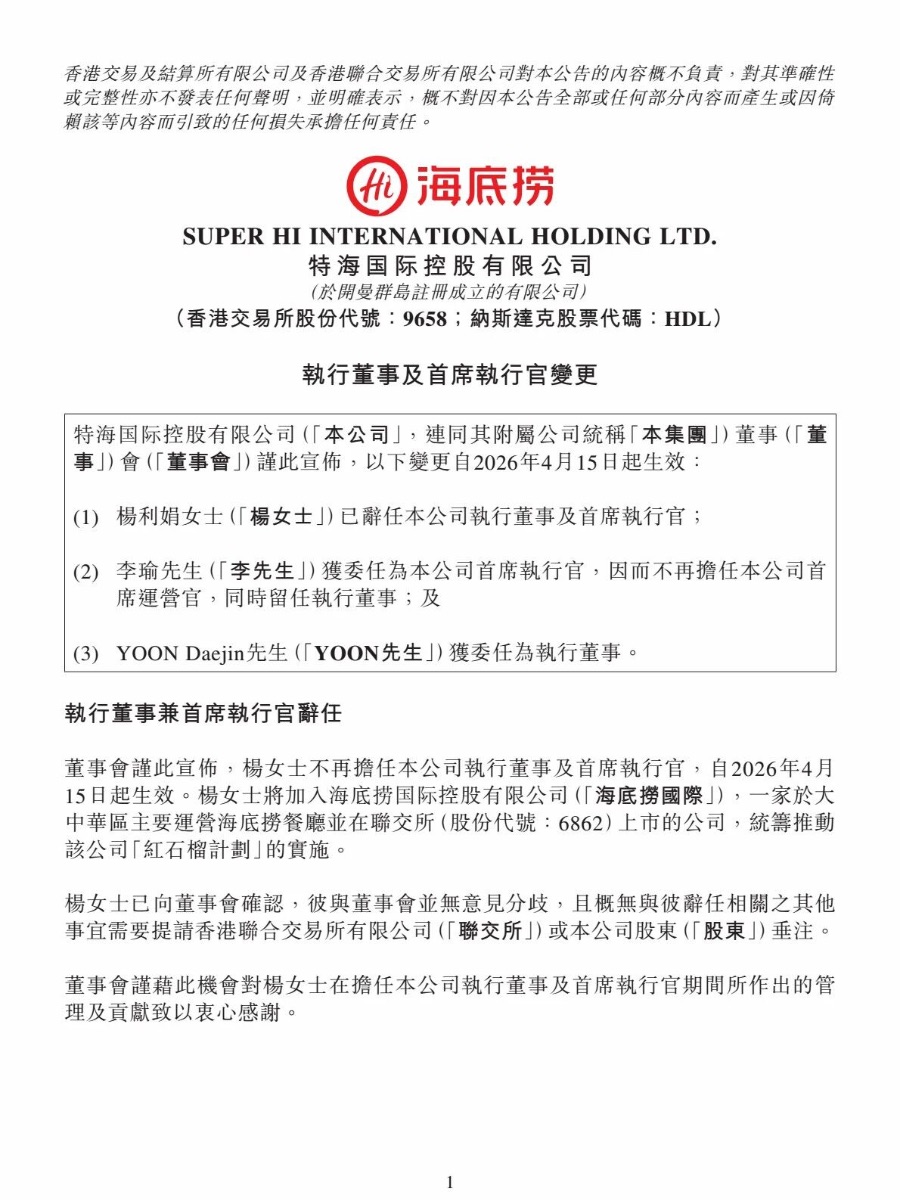
It was announced that Yang Li Juan has resigned as an executive director and CEO of Super Hi International Holding Ltd. and will join Haidilao International Holding Ltd. to oversee and promote the implementation of the company’s “Pomegranate Plan”.
Yang Li Juan is a “veteran of the first generation” at Haidilao. An industry insider revealed that in the eyes of Haidilao employees, Yang is a “decisive and capable businesswoman,” whose presence has been seen at almost every critical stage of the company’s development.
Information shows that Yang Li Juan joined Haidilao in 1995 and was one of the core members in its early entrepreneurial days, accompanying the company as it expanded beyond Sichuan. In January 2018, Yang Li Juan became the Chief Operating Officer of Haidilao, primarily responsible for overseeing its operations. On September 26 of the same year, when Haidilao listed on the Hong Kong Stock Exchange, standing next to founder Zhang Yong was Yang Li Juan, then hailed as the “most remarkable employee”.
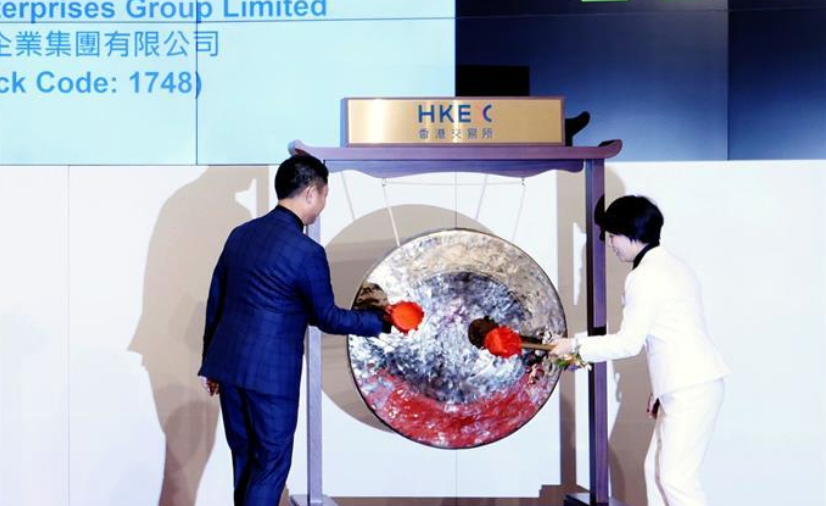
(Left: Zhang Yong, Right: Yang Li Juan)
Starting in August 2021, she served as an executive director and deputy CEO of Haidilao. On March 1, 2022, she was officially appointed as the CEO of Haidilao.
During Yang Li Juan’s tenure as CEO, the company returned to profitability in 2022 and achieved a net profit of 44.95 billion yuan in 2023, a year-on-year increase of approximately 174.6%, with revenue reaching 414.53 billion yuan, up 33.6% year-on-year. During this period, she led the group in completing the “Woodpecker” plan, proactively closing underperforming stores, rebuilding and strengthening certain functional departments, and reinstating the regional management system.
In 2024, Yang Li Juan transitioned to become the CEO of Super Hi International, a subsidiary of Haidilao, responsible for its overseas business, until her recent return to the parent company.
Earlier this year, Haidilao founder Zhang Yong also returned to the company as CEO. Their renewed partnership signifies the company is entering a “deep-water zone of reform,” and Haidilao is preparing to tackle a “hard nut”.
According to Haidilao’s 2025 financial report, the company’s overall revenue increased slightly by 1.1% to 432.25 billion yuan, but net profit attributable to the parent company fell by 14% year-on-year to 40.42 billion yuan, marking the first decline in four years.
In particular, revenue from the core main brand restaurants saw a significant decline. Full-year revenue from the main brand restaurants decreased by 7.1% year-on-year, and the table turnover rate dropped to 3.9 times per day, directly reflecting a weakening growth momentum in the traditional hotpot main business. The company’s most core and mature business segment is facing growth bottlenecks.
With growth of the main brand peaking, Haidilao is eager to find a second growth curve, which is the “Pomegranate Plan”.
The so-called “Pomegranate Plan” is a core initiative of Haidilao’s diversification strategy. Launched in August 2024, it had introduced 20 restaurant brands (such as Yan Qing, Ru Yi, etc.) with a total of 207 restaurants by the end of 2025. In 2025, revenue from these multiple brands reached 15.21 billion yuan, a year-on-year increase of 214.6%, becoming a core growth driver.
Compared to the Haidilao main brand, the series of sub-brands launched under the “Pomegranate Plan” have shifted from low-frequency formal dining to high-frequency fast food, snacks, bakery, and other segmented markets, featuring lower average customer spending, more impressive growth rates, and greater potential for expansion.
Haidilao’s 2025 performance announcement stated that in 2025, the group formally entered a new phase of group operations characterized by “parallel operation of multiple brands