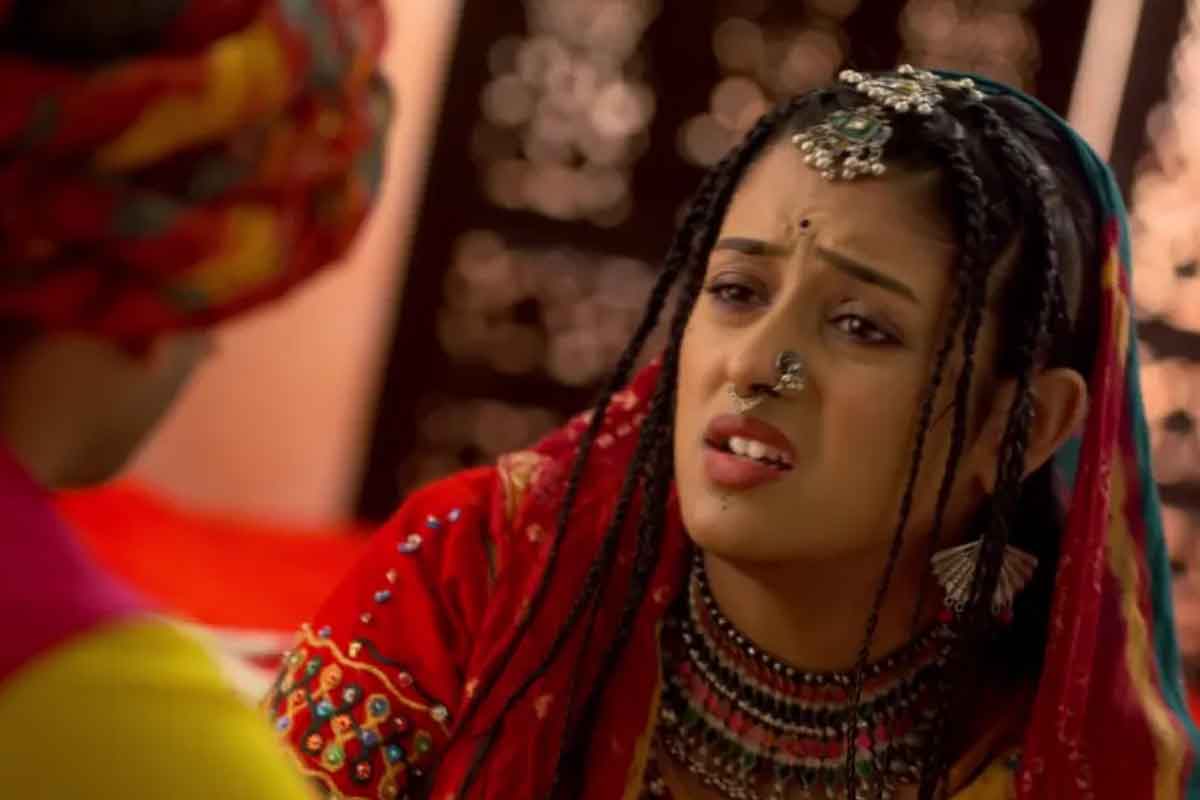
Another Thursday, meaning the day to receive the report card for Bengali mega serials. The fate of Bengali TV serials is judged on Lakshmi’s day based on viewer ratings. In the volatile situation of Tollywood, which mega serial is ahead in the TRP ratings or who has outdone whom? While the average viewer may not worry about the numbers, it is no exaggeration to say that TRP plays a crucial role for the artists and crew of the serials. In terms of popularity, ‘Parineeta’ has once again captured the top spot. This serial has bagged 5.7 points this week. ‘Tare Dhori Dhori Mone Kori’ slipped from the first position by a small margin of points.
Last week, these two mega serials had jointly snatched the title of Bengal’s top performer. ‘Tare Dhori Dhori Mone Kori’ is the runner-up with 5.4 points. However, in the final week of Chaitra, ‘Parashuram Aajker Nayak’ saw a significant drop in points. The total points for Titli and Parashuram are 5.2.
Read More:
On one hand, the mercury of excitement among the common people regarding Bengal politics is steadily rising. As evening falls, everyone from children to the elderly keeps an eye on the news of the upcoming assembly elections in their drawing rooms. Alongside that, there is the frenzy of the ‘IPL’. Amidst all this, the fierce battle between ‘Parineeta’ and ‘Parashuram Aajker Nayak’ has intensified, which hardly needs reiteration.
In the aftermath of Rahul’s death, ‘Kone Dekha Alo’ from the ‘banned’ Magic Moments is positioned eighth with 4.2 points. In ninth place, on the list of joint successes, are ‘Milon Hobe Kotodine’ and ‘Chiro Sakha’. Notably, the serial Chiro Sakha was also broadcast under the banner of the production house Magic Moments.
In the top ten list, ‘Jowar Bhata’ is in fourth place with 5.1 points, and ‘Lakshmi Jhanpi’ is in fifth. This serial has a collection of 4.7 points. ‘Kusum’ is in sixth place with a total score of 4.6. In seventh place, there is a three-way tie. ‘O Mor Dorodia’, ‘Rangamati Tirandaj’, ‘Professor Vidya Banerjee’, and ‘Ganga’ have a collection of 4.5 points.
In the aftermath of Rahul’s death, ‘Kone Dekha Alo’ from the ‘banned’ Magic Moments is positioned eighth with 4.2 points. In ninth place, on the list of joint successes, are ‘Milon Hobe Kotodine’ and ‘Chiro Sakha’. The total points for these two serials are 3.6. Notably, the serial Chiro Sakha was also broadcast under the banner of the production house Magic Moments. ‘Chirodin-i Tumi Je Amar’ holds the tenth position on the TRP list with 3.5 points.
Parineeta
“Parineeta” is not a specific place or cultural site, but the title of a classic 1914 Bengali novel by Sarat Chandra Chattopadhyay. The story is famously set in the neighborhoods of North Kolkata (Calcutta) in the early 20th century, particularly around the affluent areas of “Beadon Street” and the banks of the Hooghly River, capturing the social dynamics and romance of the era.
Parashuram
Parashuram is a revered figure in Hindu mythology, believed to be the sixth avatar of Lord Vishnu. While not a physical site, his legend is deeply associated with the coastal region of Konkan (stretching across Maharashtra, Goa, and Karnataka), which he is said to have reclaimed from the sea. Many temples, towns, and geographical features in this area, such as the Parashuram Kund in Arunachal Pradesh, are named after him and celebrate his legacy.
Tare Dhori Dhori Mone Kori
“Tare Dhori Dhori Mone Kori” is not a widely recognized historical or cultural site. It is a famous Bengali song, specifically a modern *adhunik* song, written by Gouri Prasanna Majumdar and famously sung by Manna Dey. The song’s title translates to “Holding Her, I Keep Her in My Heart” and it is a beloved piece of music within Bengali culture, not a physical location.
Kone Dekha Alo
“Kone Dekha Alo” is a popular Bengali song by the band Chirkutt, not a physical place or cultural site. The title translates to “The Light Seen in the Corner” and the song’s lyrics poetically explore themes of hope, resilience, and finding light in darkness. While it doesn’t have a historical background as a location, it holds significant cultural value as a modern musical piece in Bangladesh, often associated with inspiration and social consciousness.
Milon Hobe Kotodine
I’m unable to find any verifiable information about a place or cultural site named “Milon Hobe Kotodine.” This may be due to a spelling variation, a very localized name, or a phrase in another language. If you have more context or can confirm the spelling, I would be happy to try again.
Chiro Sakha
“Chiro Sakha” appears to refer to a traditional **Yakut (Sakha) summer solstice festival**, Yhyakh, rather than a specific place. It is a major cultural celebration in the Republic of Sakha (Yakutia), Russia, marking the beginning of summer and the rebirth of nature. Historically rooted in ancient Turkic Tengrism, it involves rituals to honor the sun and spirits, traditional circle dances (osuokhai), and epic storytelling, and was revived as a national holiday after the Soviet era.
Jowar Bhata
“Jowar Bhata” refers to a traditional, open-air community grinding site found in rural Bangladesh and parts of eastern India, where a large, flat stone slab (*jowar*) and a cylindrical rolling stone (*bhata*) are used to manually grind spices, grains, and pulses. Historically, these were vital communal hubs, especially for women, serving as centers for daily chores, social interaction, and the sharing of news and stories. While less common today due to modern appliances, preserved Jowar Bhata sites stand as cultural landmarks representing village life, collective labor, and culinary heritage.
Lakshmi Jhanpi
“Lakshmi Jhanpi” is a sacred pond located in the historic city of Ayodhya, India, believed to be the site where the goddess Lakshmi performed penance. According to Hindu tradition, it is associated with the divine marriage of Lord Rama and Goddess Sita, making it a significant pilgrimage site for devotees.