‘Can we order arrest for not voting’, demand to make voting mandatory rejected by SC
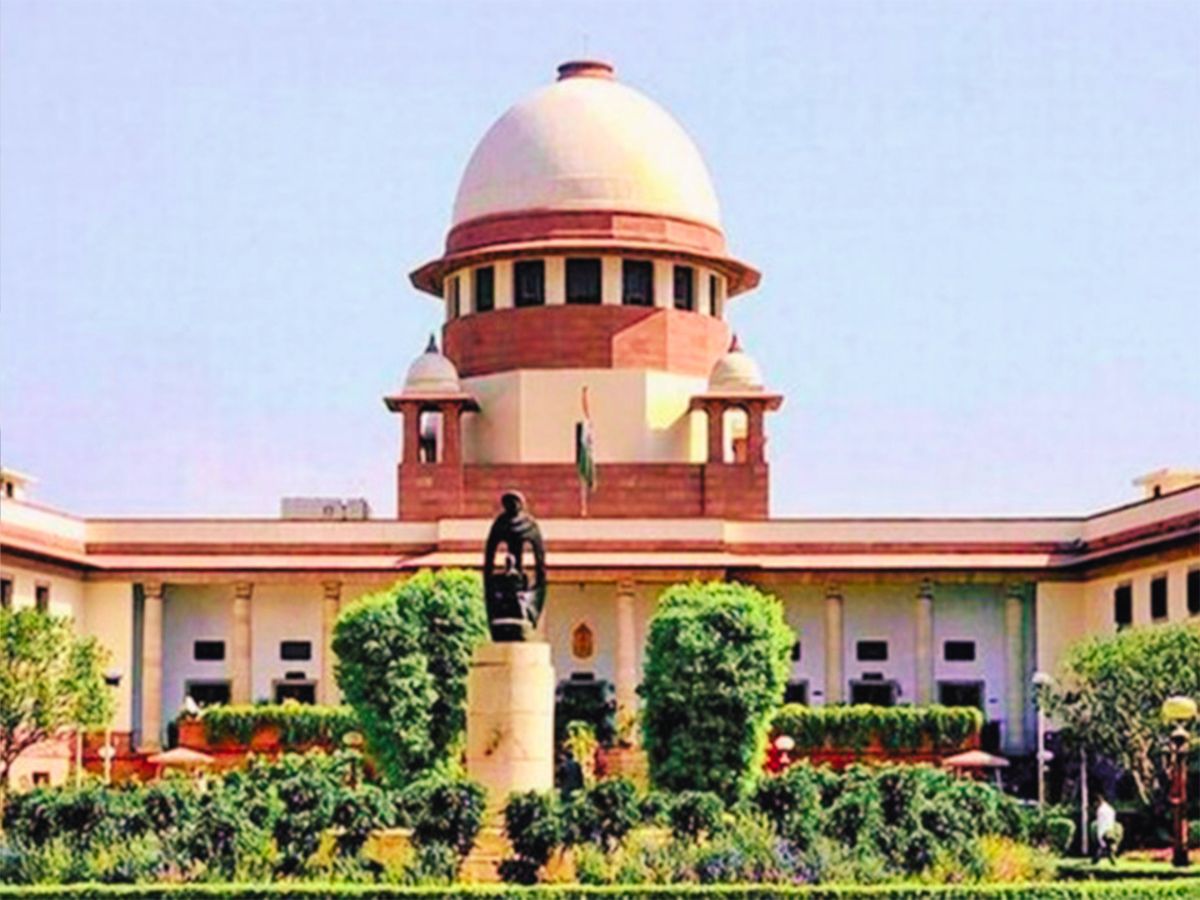
Supreme Court Voting Decision: An interesting petition came up for hearing in the Supreme Court. The petition demanded that voting be made mandatory and that provisions for punishment be made for those who intentionally do not vote. Government facilities should be taken away from such people. The bench headed by the Chief Justice refused to hear the petition, stating that no one can be forced to vote. Voting has its own importance in a democracy; people can be made aware for it, but they cannot be legally forced to do it.
Cannot Force People to Vote
The lawyer representing the petitioner said that the court could direct the Election Commission to form a committee and limit the government facilities of those who intentionally do not vote without any compulsion. The Chief Justice questioned the practicality of this suggestion by the petitioner. The Chief Justice said, if a poor person cannot go to vote due to their employment, what can we do about it! Should we order their arrest! In a democracy, it is expected that all people vote. Awareness campaigns can be run to encourage the use of this right, but how can we force people to do it. To vote or not to vote depends on their will.
Will the SC Judges Themselves Be Able to Vote in Bengal Elections
Chief Justice Surya Kant, citing the example of the bench’s other member Justice Bagchi, told the petitioner that if your argument is accepted, then Justice Bagchi would have to go to West Bengal to cast his vote, while that day is a working day in the Supreme Court. Justice Bagchi remarked on this that judicial work is equally important.
Hearing Refused
However, the court told the petitioner that this is a policy matter. Even if such rules are to be made, it is not the court’s job; only the legislature can decide on this. The petitioner can approach the concerned authority if they wish.
Supreme Court
The Supreme Court is the highest judicial body in the United States, established by Article III of the U.S. Constitution in 1789. It has ultimate appellate jurisdiction over all federal and state court cases involving federal law, and its landmark decisions, such as *Brown v. Board of Education* and *Roe v. Wade*, have profoundly shaped American society and civil rights. The Court is composed of nine justices who serve lifetime appointments, ensuring judicial independence from political pressures.
Election Commission
The Election Commission is an independent government body responsible for organizing and overseeing elections to ensure they are free and fair. Its history is tied to the development of modern democracies, with many countries establishing permanent commissions in the 19th and 20th centuries to manage the complex electoral process and uphold public trust in democratic institutions.
Chief Justice
“Chief Justice” typically refers to the presiding judge of a high court, especially the Supreme Court of a country, rather than a specific place. For example, the **Chief Justice of the United States** is the head of the U.S. Supreme Court, a position established in 1789 by the U.S. Constitution to lead the judicial branch and oversee federal courts. This role is central to the legal and constitutional history of the nation, interpreting laws and shaping landmark rulings throughout American history.
Justice Bagchi
“Justice Bagchi” likely refers to **Justice Bagchi Memorial Hall** in Kolkata, India, a historic building named after Sir Gooroodas Banerjee, the first Indian Vice-Chancellor of the University of Calcutta. Originally constructed in the early 20th century, it served as a key venue for university convocations and public events. Today, it stands as a protected heritage site, symbolizing the city’s academic and legal history.
West Bengal
West Bengal is a state in eastern India, historically renowned as the cultural and intellectual heart of the country, with Kolkata (formerly Calcutta) serving as the capital of British India until 1911. Its history is deeply intertwined with the Bengal Renaissance of the 19th-20th centuries, a period of profound social reform and artistic flourishing, and the 1947 Partition which divided the region. Today, it is celebrated for its vibrant contributions to literature, cinema, art, and festivals like Durga Puja.
Bengal Elections
“Bengal Elections” refers to the democratic electoral process in the Indian state of West Bengal and the historical region of Bengal, known for its highly competitive and politically vibrant nature. Its modern history is deeply shaped by the 34-year uninterrupted rule of the Communist Party of India (Marxist)-led Left Front (1977-2011) and its subsequent intense rivalry with the Trinamool Congress, which came to power in 2011. These elections are a key battleground in Indian politics, reflecting the region’s complex social dynamics and historical legacy of partition and cultural identity.
legislature
A legislature is a governmental body with the authority to make, amend, and repeal laws for a political entity, such as a country or state. Historically, modern legislatures evolved from ancient assemblies and medieval parliaments, like England’s Parliament, which began as an advisory council to the monarch. Today, they are typically central to democratic systems, embodying the principle of representative government.
court
The term “court” can refer to a royal residence, a judicial body, or a sports arena. Historically, a royal court was the extended household and center of administration for a monarch, such as the Court of Versailles in France. In law, a court is a tribunal with the authority to adjudicate legal disputes, a foundational institution of governance dating back to ancient civilizations.

)