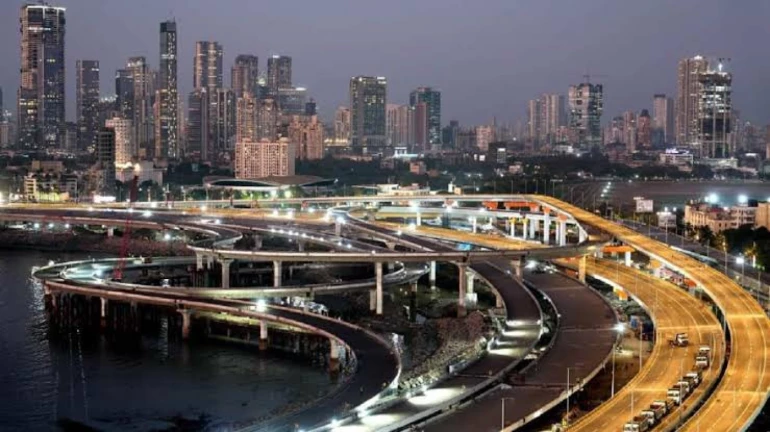
The coastal road has witnessed a sharp surge in traffic with usage increasing almost seven times since March 2024.
In just two years, it has been transformed from a brand-new stretch into one of the city’s busiest corridors. A total of 3.16 crore vehicles used the road as of March 2026.
According to data, the road saw an average of 8,787 vehicles per day in the first month. By March 2026, that figure had surged to 63,003 daily trips.
In its first month of operations — March 2024 — the road saw a modest 2.63 lakh vehicles, averaging 8,787 daily trips, as it was opened mid-month. The following month, April 2024, recorded a jump to 4.36 lakh vehicles, or 14,538 daily.
The real spike, however, has come over time. By March 2026, average daily traffic had climbed to 63,003 vehicles, with the monthly count touching 18.9 lakh.
From Independence Day last year, the road had been made fully operational and the sea-facing promenade was also opened up to the public, pulling an even larger crowd.
By August 2025, daily traffic had already climbed to 45,961 vehicles, with a monthly tally of 13.78 lakh.
Officially named the Dharamveer Swaraj Rakshak Chhatrapati Shambaji Mumbai Coastal Road, the INR 13,893 crore high-speed corridor cut down travel time between Marine Drive and Worli to less than 10 minutes from the earlier 30-40 minutes.
Mumbai Coastal Road
The Mumbai Coastal Road is a major infrastructure project currently under construction along the western coastline of Mumbai, India. Designed to ease severe traffic congestion, its history is rooted in decades of planning, with formal construction beginning in 2018. It is notable for its ambitious reclamation of land from the Arabian Sea and includes tunnels, interchanges, and plans for extensive public promenades.
Marine Drive
Marine Drive is a scenic 3.6-kilometer-long promenade along the coast in Mumbai, India, famously known as the “Queen’s Necklace” for its sweeping arc of streetlights that resemble a string of pearls at night. It was constructed in the early 20th century, largely through land reclamation completed in 1920, and has since become an iconic symbol of the city and a popular public space for leisure.
Worli
Worli is a historic fishing village and now a prominent residential and commercial neighborhood in South Mumbai, India. It is home to the ancient Worli Fort, built by the British in the 17th century, and the iconic Bandra-Worli Sea Link, a modern engineering marvel completed in 2009. The area retains its traditional Koli community heritage while being a key part of Mumbai’s contemporary urban landscape.
Dharamveer Swaraj Rakshak Chhatrapati Shambaji Mumbai Coastal Road
The **Dharamveer Swaraj Rakshak Chhatrapati Shambaji Mumbai Coastal Road** is a major infrastructure project currently under construction along Mumbai’s western coastline. It is named in honor of Chhatrapati Sambhaji Maharaj, the son and successor of the 17th-century Maratha emperor Chhatrapati Shivaji Maharaj. Once completed, the road aims to significantly reduce traffic congestion and improve connectivity between the city’s southern and northern suburbs.