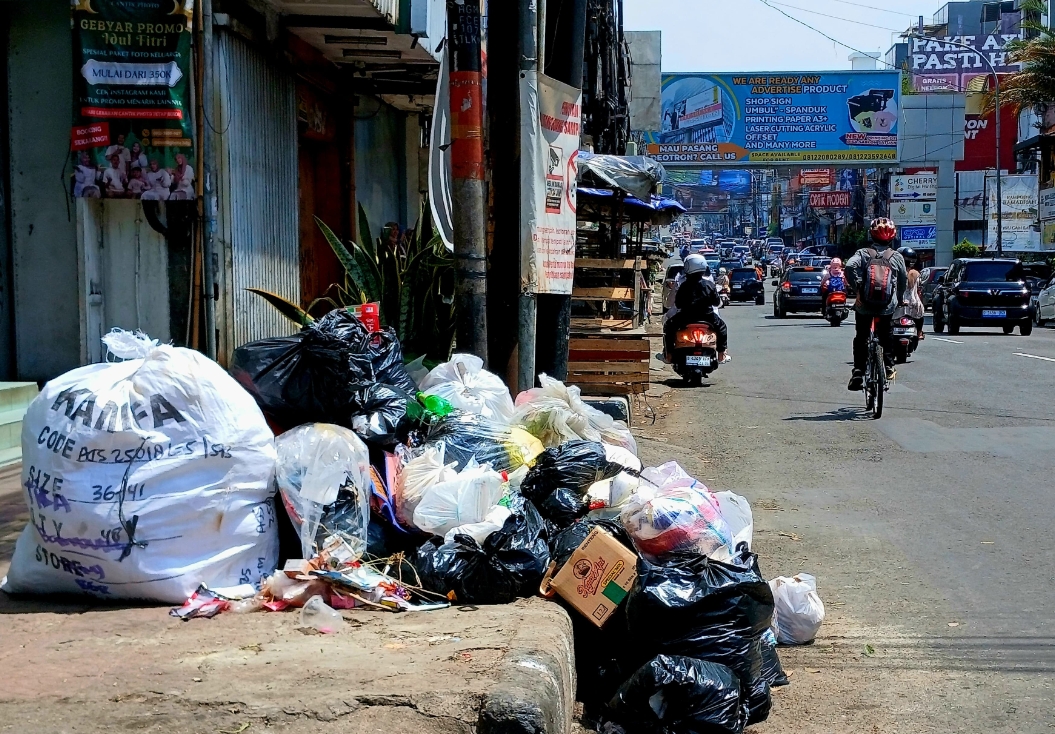
BANDUNG CITY – A waste surge of up to 20 percent during the Eid holiday has prevented daily piles in Bandung City from being significantly cleared. The Mayor of Bandung acknowledged that although collection routes and schedules have returned to normal, new waste production from the community continues to appear daily, causing piles to quickly re-form.
The Mayor explained that the accumulation condition has occurred in Bandung since the period of H-1 to H+4 of Eid 2026. During that time, waste volume increased quite sharply compared to normal days, so the normally operating collection system still could not keep up with the rate of new waste generation from various city areas.
Under normal conditions, Bandung City produces about 1,500 tons of waste per day. However, during the Eid holiday period, the amount surged to about 1,800 tons per day. The increase occurred alongside rising community activities, ranging from household consumption, return travel activities, to seasonal economic activities.
The Mayor further explained that the rapid accumulation phenomenon occurs due to the repetitive pattern of waste production within a single day. Waste collected in the morning often already refills temporary disposal points by the afternoon.
“The accumulation condition makes waste handling feel like it’s not decreasing even though officers continue to work every day. The newly emerging piles are almost equivalent to the amount of waste that was previously collected,” said the Mayor.
According to him, this situation is increasingly felt because daily collection capacity is still limited. Of the total increased waste production, about 980 tons can be collected daily by the available fleet.
“This means there are still about 500 to 600 tons of waste that must be handled through various other processing methods. The remaining waste is one of the factors causing piles at several points to not be fully resolved,” he said.
The Bandung City Government is now accelerating handling steps by strengthening the city’s internal waste processing system. One focus is increasing the capacity of sorting facilities by sorting officers and expanding processing technology.
In addition, processing development is also part of the short-term strategy to reduce the burden of waste accumulation. This effort is expected to reduce the volume of waste that must be disposed of at final processing sites.
“In several areas of Ciwastra and Gedebage, organic waste processing programs are being strengthened, so household waste can be processed closer to its source before entering the main collection system,” he said.
The Mayor also revealed plans to launch a new program in the second quarter of 2026. The program includes the development of Refuse Derived Fuel (RDF) technology and the addition of processing capacity, as part of strengthening the city’s waste management system.
On the other hand, the Mayor highlighted the existence of illegal waste disposal sites that worsen field conditions. Based on temporary data, there are about 60 illegal temporary disposal sites scattered across various city areas.
“24-hour patrols are conducted to identify, collect, and close illegal dumping locations. Investigations are being carried out against parties suspected of being responsible for waste disposal activities at illegal sites,” said the Mayor.
The Mayor emphasized that community participation is the key to overcoming waste problems in Bandung City. He appreciated residents who reported illegal disposal sites and encouraged the community to start reducing waste production from their respective households so the city’s burden does not continue to increase.
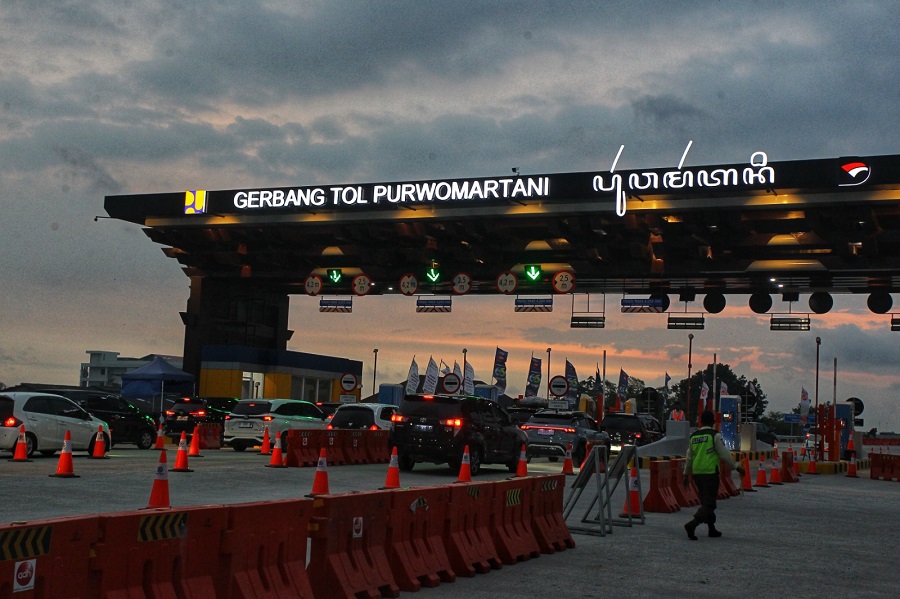
SLEMAN – If someone then finds themselves in the middle of a rice field area in Sleman, Yogyakarta, it’s not because they are looking for a “slow living” rural atmosphere. Nor is it in the context of finding a “hidden gem.”
But, simply because they got lost due to following directions while searching for a route to the Purwomartani Toll Gate. The Prambanan&ndash
Bandung City
Ciwastra
To provide an accurate summary, could you please double-check the spelling or provide any additional context, such as the country or region it’s located in?