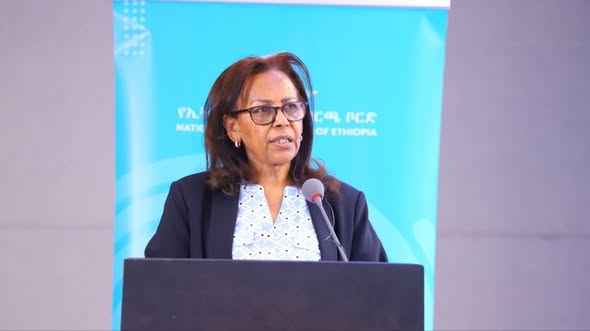
These ceremonies are considered a fundamental step in the preparations for the upcoming seventh general elections in Ethiopia.
The head of the National Election Board of Ethiopia confirmed that the Board is conducting comprehensive preparations to ensure the voting process proceeds smoothly.
It was clarified that the Board is working in close coordination with civil society organizations, political parties, media outlets, security institutions, and other relevant stakeholders throughout the process.
It was noted that election materials have been distributed to 46,757 polling stations across the country.
According to the Board, 47 political parties have been registered, and the total number of candidates is 10,934. Among these, 2,098 candidates are competing for seats in the House of Peoples’ Representatives, while 8,736 candidates are running for seats in the regional councils.
seventh general elections in Ethiopia
The “seventh general elections in Ethiopia” refers to the parliamentary and regional council elections held on June 21, 2021. These were significant as the first major electoral test for Prime Minister Abiy Ahmed’s government and were delayed from 2020 due to the COVID-19 pandemic and security concerns. The elections were marked by a boycott from major opposition parties in several regions, including Tigray, where a conflict was ongoing.
National Election Board of Ethiopia
The National Election Board of Ethiopia (NEBE) is the independent federal body responsible for administering and overseeing all elections and referendums in Ethiopia. It was originally established in 1995 following the adoption of the current constitution, with its mandate and structure aimed at ensuring democratic electoral processes. Throughout its history, the NEBE has managed several national and regional elections, though its operations and perceived independence have often been subjects of significant political debate and international scrutiny.
House of Peoples’ Representatives
The House of Peoples’ Representatives is the lower house of the Federal Parliamentary Assembly of Ethiopia, established following the adoption of the 1995 constitution which created the Federal Democratic Republic. It is the country’s primary legislative body, with members directly elected to represent constituencies for five-year terms.