Dyeing-Printing Mills and Processing Houses Concerned, Processing Charges May Increase After Holi
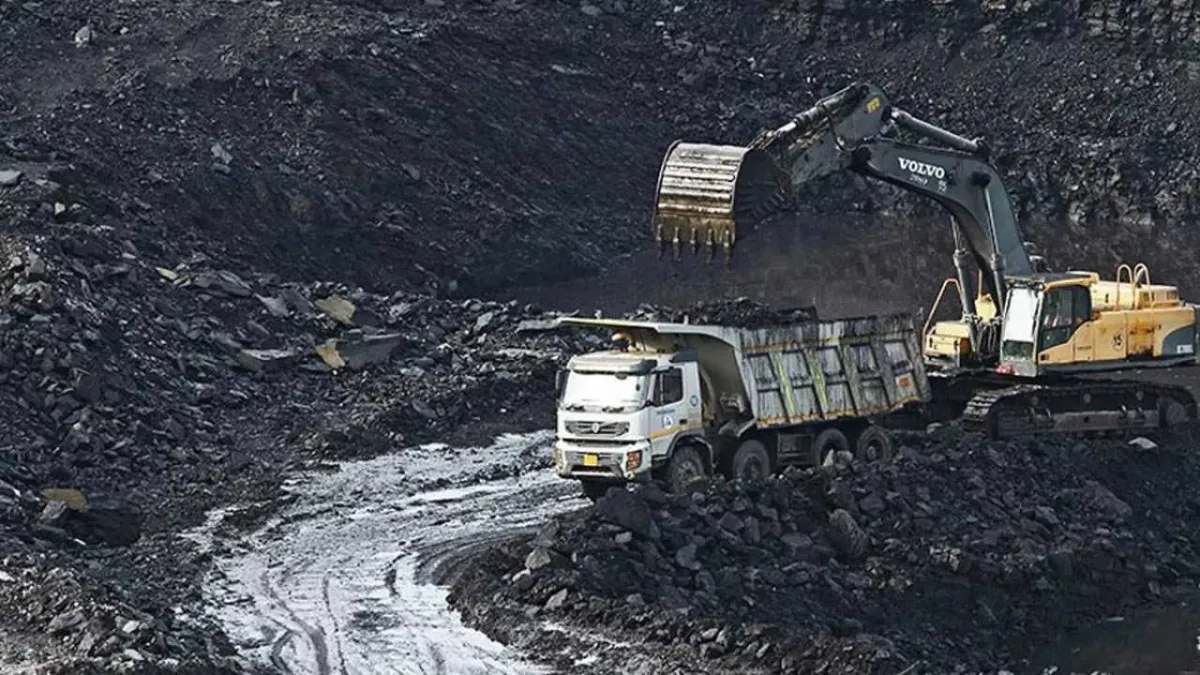
Surat. The ongoing conflict in the Middle East between Iran and Israel-America is now beginning to show its effect on the local industry. The rising prices of coal are starting to directly impact the industrial units of the textile hub Surat.
Prices of coal imported from Indonesia have recently recorded an increase of up to 15 percent, which has worried operators of dyeing-printing mills and processing houses.
According to industry sources, the textile industry in Surat consumes an average of 40 to 60 tons of coal per mill per day. In such a scenario, the price increase is certain to lead to a significant rise in production costs.
As per information, an additional increase of $5 per ton was made in coal transportation charges last Saturday, followed by another $3 per ton on Monday. In Indian currency, this increase amounts to approximately 720 rupees per ton.
It was said that as soon as the conflict began in the Gulf countries, reports of rising prices for specific quality coal started coming in. It is stated that if the situation remains like this, prices could increase further in the coming days.
Amid the ongoing war situation in the Gulf countries, coal distributors are imposing arbitrary artificial price hikes. Most coal in Surat comes from Indonesia and Australia, regions unaffected by the war. Nevertheless, due to global activity, distributors are increasing coal prices.
Considering the pressure of rising coal costs, operators associated with the dyeing and printing industry have indicated that processing charges may be increased after the Holi festival.
To discuss this issue, the South Gujarat Textile Processors Association may organize a general board meeting next week. The meeting will make a final decision on coal prices, transportation costs, and potential rate revisions.
Industry experts believe that if the cost of raw materials and fuel continues to rise in this manner, it could also affect the prices of finished garments.
Surat
Surat is a major port city in the Indian state of Gujarat, historically known as a key maritime trade hub since the Mughal era, particularly for textiles and diamonds. It was once the most important port of the Mughal Empire and a gateway for pilgrims to Mecca, earning it the nickname “the gate to Mecca.” While its prominence declined with the rise of British-controlled Bombay, it remains a vital economic center for diamond cutting and polishing.
Middle East
The Middle East is a transcontinental region centered on Western Asia and parts of North Africa, historically known as the “Cradle of Civilization” for the emergence of ancient cultures like Mesopotamia and Egypt. It is the birthplace of major world religions, including Judaism, Christianity, and Islam, and its history has been profoundly shaped by empires, trade routes, and, in the modern era, the discovery of vast petroleum reserves. Today, it is a region of immense geopolitical and cultural significance, home to diverse nations, languages, and traditions.
Iran
Iran, historically known as Persia, is a country in Western Asia with one of the world’s oldest continuous civilizations, dating back to the Elamite kingdoms of the 4th millennium BCE. It is home to numerous UNESCO World Heritage Sites, including the ancient ceremonial capital of Persepolis and the stunning Islamic architecture of Isfahan’s Naqsh-e Jahan Square. The nation’s rich cultural heritage reflects the influence of successive empires, such as the Achaemenid, Sassanian, and Safavid, and its profound contributions to art, science, and literature.
Israel
Israel is a country in the Middle East, established as a modern state in 1948, with a history deeply rooted in ancient times as the historic homeland of the Jewish people. It is a region of profound religious significance for Judaism, Christianity, and Islam, containing key cultural and historical sites like Jerusalem’s Old City, the Western Wall, and the Church of the Holy Sepulchre. Its contemporary history is marked by the complex Israeli-Palestinian conflict and its development into a technologically advanced nation.
America
“America” typically refers to the United States of America, a nation founded in 1776 after declaring independence from Great Britain. Its history spans from indigenous civilizations, through European colonization, to becoming a global power shaped by immigration, industry, and ideals of democracy. Culturally, it is known as a diverse “melting pot” whose global influence is seen in media, technology, and popular culture.
Indonesia
Indonesia is a Southeast Asian archipelago nation of over 17,000 islands, historically shaped by powerful Hindu-Buddhist kingdoms like Srivijaya and Majapahit, followed by centuries of Islamic influence and Dutch colonial rule. It is a culturally diverse country renowned for its ancient temples, such as Borobudur and Prambanan, vibrant arts like batik and wayang puppetry, and its rich natural landscapes. Gaining independence in 1945, modern Indonesia is the world’s largest Muslim-majority country and a vibrant democracy.
Australia
Australia is both a continent and a country, with a human history spanning over 65,000 years of continuous Indigenous cultures, most notably the world’s oldest living cultures of Aboriginal and Torres Strait Islander peoples. Modern Australia began with British colonization in 1788, evolving from a penal colony to a federated nation in 1901. Today, it is known for its unique biodiversity, iconic landmarks like Uluru and the Sydney Opera House, and a vibrant multicultural society.
Holi
Holi is a major Hindu festival celebrated primarily in India and Nepal, marking the arrival of spring and the victory of good over evil. Its history is rooted in ancient legends, most notably the story of Prahlad and his devotion to Lord Vishnu, which led to the defeat of the demoness Holika. Today, it is globally known for its vibrant public celebrations where people throw colored powders and water at each other in a spirit of joy and unity.