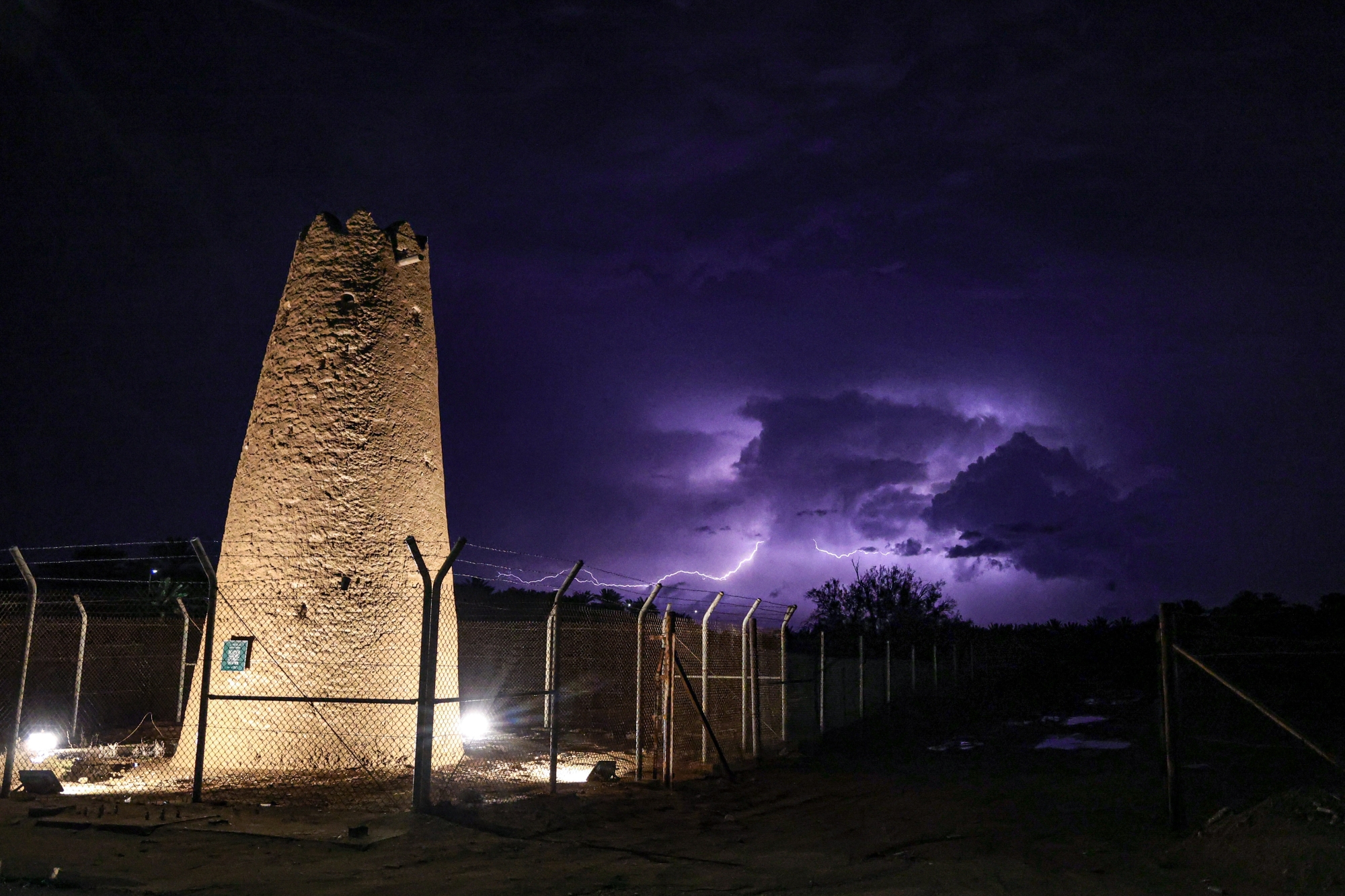
Al-Kharj Governorate in the Riyadh region, during its celebrations of Founding Day, evokes the glories of the First Saudi State and the foundations of unity, security, and stability it established. One of the most prominent historical landmarks in the governorate is Al-Kut Palace, located in the Al-Sulaimiyah center, also known as Kut Al-Jahl or Al-Kut Tower.
The construction of the palace dates back to the year 1195 AH (1781 AD), during the reign of Imam Saud bin Abdulaziz bin Muhammad bin Saud. It was built to be a defensive fortress protecting the area and enhancing its stability, due to the agricultural and strategic importance that Al-Kharj and the neighboring regions held during that phase of the First Saudi State’s history.
Al-Kut Palace is considered a model of defensive architecture from the 18th century. It was constructed with surrounding walls and watchtowers. Only parts of the walls remain from its original structure, with Al-Kut Tower standing out among them as a prominent archaeological witness to an important historical era. The site is an officially registered archaeological landmark and receives special care from the relevant authorities as part of efforts to preserve and protect the national heritage for future generations.
Al-Kut Palace
Al-Kut Palace, also known as Qasr Al-Kut, is a historic fort and palace located in the heart of Sharjah, United Arab Emirates. Originally built in 1823 as a defensive stronghold and the ruler’s residence, it served as the seat of government for the Al Qasimi ruling family. Today, it has been restored and functions as a museum showcasing Sharjah’s heritage and political history.
Al-Kharj Governorate
Al-Kharj Governorate is a region in central Saudi Arabia, historically significant as an agricultural hub due to its natural springs and fertile land. It was a key area for early Islamic settlement and later development, with its modern importance stemming from major agricultural projects and its strategic location south of Riyadh.
Riyadh region
The Riyadh region is the historic heart of Saudi Arabia, centered on the capital city of Riyadh. It was the seat of the First and Second Saudi States and is the modern political and administrative center of the kingdom, having transformed from a walled oasis settlement into a major global metropolis in the 20th century.
First Saudi State
The First Saudi State, also known as the Emirate of Diriyah, was founded in 1744 through an alliance between the religious reformer Muhammad ibn Abd al-Wahhab and the political leader Muhammad ibn Saud in central Arabia. It rapidly expanded its power and territory, establishing a strict Islamic governance based on Wahhabi principles until it was destroyed by the Ottoman Empire in the 1818 siege of Diriyah. This state laid the ideological and historical foundation for the later Second Saudi State and the modern Kingdom of Saudi Arabia.
Al-Sulaimiyah center
Al-Sulaimiyah Center is a major cultural and commercial complex located in the heart of Riyadh, Saudi Arabia. It was established in the early 1980s and quickly became a landmark, known for its distinctive modern architecture that blends traditional Najdi design elements. Historically, it has served as a key hub for business, shopping, and social gatherings, reflecting Riyadh’s rapid urban development during the late 20th century.
Kut Al-Jahl
“Kut Al-Jahl” is not a widely recognized historical or cultural site. The name appears to be a place in Iraq, but it lacks significant documentation as a major tourist or heritage landmark. Without more specific information, it is difficult to provide a detailed historical summary.
Al-Kut Tower
Al-Kut Tower is a modern landmark in the city of Al-Kut, Iraq, completed in 2008. It is a 35-story skyscraper and telecommunications tower, standing as one of the tallest structures in the country. Its construction symbolized a period of post-invasion redevelopment and ambition in Wasit Province.
Imam Saud bin Abdulaziz bin Muhammad bin Saud
Imam Saud bin Abdulaziz bin Muhammad bin Saud was a ruler of the First Saudi State (also known as the Emirate of Diriyah) from 1803 to 1814. His reign marked the peak of the state’s territorial expansion, but it ended with his death and the subsequent invasion and destruction of Diriyah by Ottoman forces in 1818. He is a significant figure in the history of the House of Saud and the establishment of Saudi rule in the Arabian Peninsula.