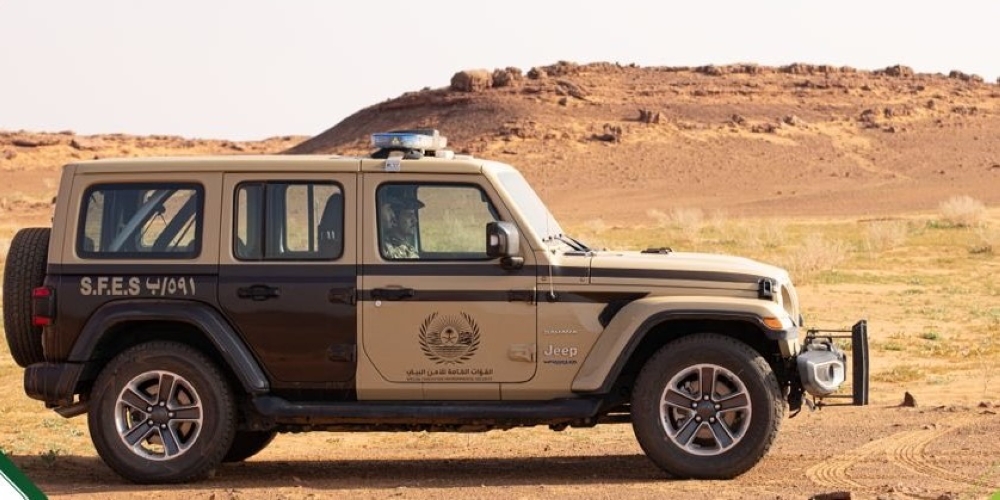
In separate operations in Al-Madinah Al-Munawwarah and royal reserves, the Special Forces for Environmental Security arrested violators of environmental regulations. In Al-Madinah Al-Munawwarah, two Yemeni residents were stopped after their involvement in the illegal exploitation of sediment was proven.
A citizen was also arrested in the Imam Abdulaziz bin Mohammed Royal Reserve on charges of grazing seven camels in prohibited areas, where the fine for this violation reaches 500 riyals per camel.
In the Imam Turki bin Abdullah Royal Reserve, two citizens were apprehended on charges of cutting the fences of protected areas and entering them without obtaining a license. These charges face penalties of up to 100,000 riyals, with the violator obligated to repair damages and pay compensation in case of cutting or damaging fences, and a fine of 5,000 riyals for unauthorized entry.
The necessary legal procedures have been applied to all those arrested.
Al-Madinah Al-Munawwarah
Al-Madinah Al-Munawwarah (often called Medina) is a city in western Saudi Arabia of profound religious significance in Islam. It is the city to which the Prophet Muhammad and his followers migrated in 622 CE (an event known as the Hijrah), marking the beginning of the Islamic calendar. It later became the capital of the early Muslim community and is the site of the Prophet’s Mosque, which contains his tomb and is one of the two holiest sites in Islam.
Imam Abdulaziz bin Mohammed Royal Reserve
The Imam Abdulaziz bin Mohammed Royal Reserve is a vast protected area in central Saudi Arabia, established in 2018 as part of the Saudi Green Initiative. It was historically a royal hunting ground and encompasses significant natural and cultural heritage, including parts of the ancient Tuwaiq escarpment. Today, it is a key site for ecological conservation, wildlife reintroduction (such as the Arabian oryx), and the development of sustainable tourism.
Imam Turki bin Abdullah Royal Reserve
The Imam Turki bin Abdullah Royal Reserve is a vast protected area in northern Saudi Arabia, established in 2018. It was historically a royal hunting ground and is part of the country’s ambitious environmental conservation initiatives under Vision 2030. Today, it serves as a crucial habitat for endangered species like the Arabian oryx and houbara bustard, while also promoting eco-tourism and sustainable development.