Vietnam affirms transparency and enhances international tax cooperation.
Currently, the Government of Vietnam is developing and implementing a National Action Plan to fulfill the recommendations of the OECD’s Global Forum on Transparency and Exchange of Information for Tax Purposes, while also strengthening international tax cooperation with partners, including the European Union, according to a representative from the Ministry of Foreign Affairs.
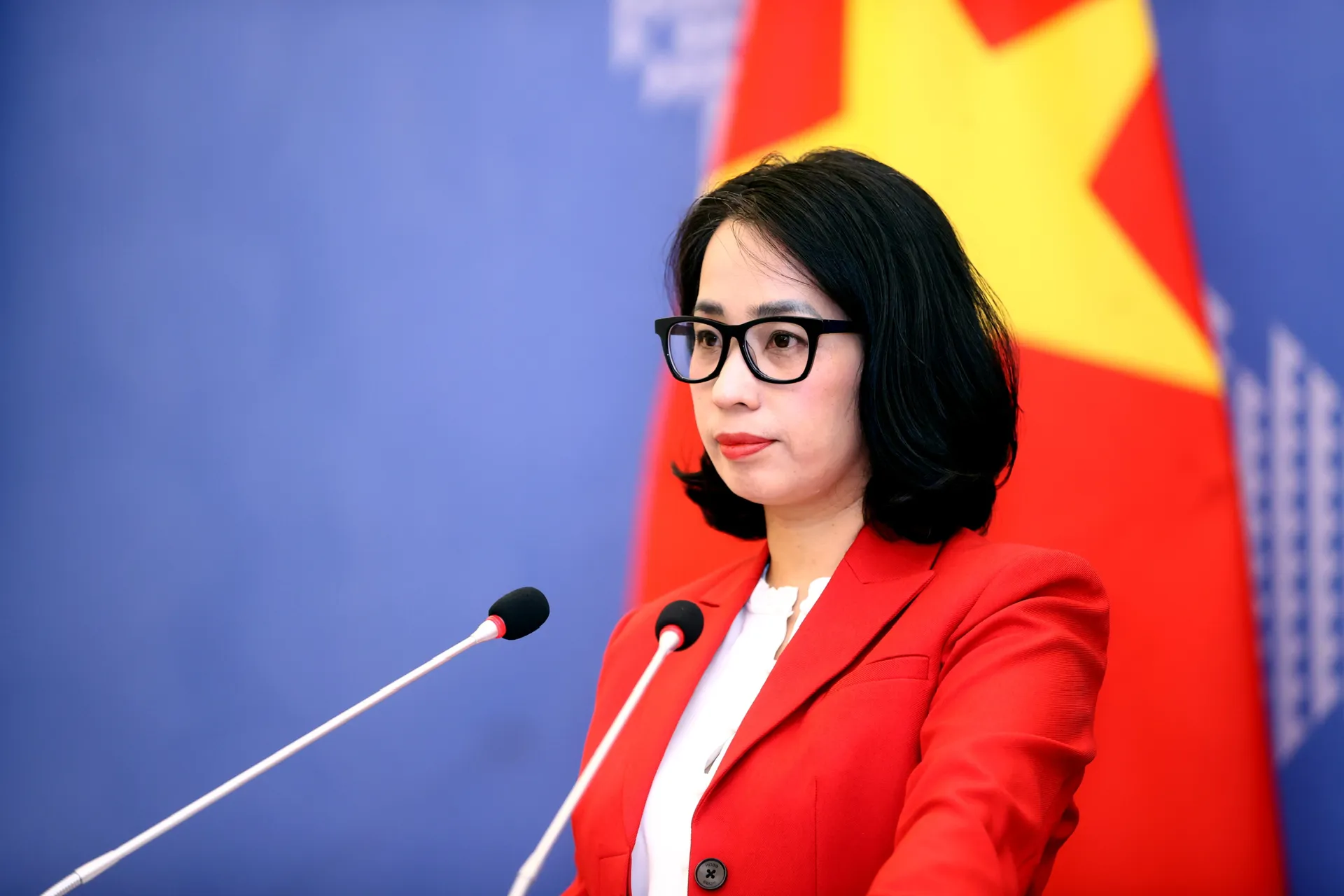
Image 1
In response to a question regarding Vietnam’s reaction to the European Union’s decision on February 17 to add Vietnam to its list of non-cooperative tax jurisdictions, based on the results of the OECD’s peer review on tax information exchange for the period 2021-2023, the following was emphasized:
“As an active and responsible member of the international community, Vietnam always values cooperation and exchange with the Organisation for Economic Co-operation and Development (OECD), particularly in ensuring the transparency and efficiency of the tax system, thereby creating a stable, transparent, and favorable investment and business environment for the business community, including foreign enterprises and investors.
During the OECD’s peer review process on tax information exchange, Vietnam has absorbed feedback, made amendments, and recently supplemented numerous legal documents in the fields of taxation, finance, and corporate governance, such as the Law on Tax Administration, the Enterprise Law, and Decree No. 168/2025/ND-CP on enterprise management. This has helped enhance compliance with international standards on tax transparency and information exchange. Currently, the Government of Vietnam is developing and implementing a National Action Plan to fulfill the recommendations of the OECD’s Global Forum on Transparency and Exchange of Information for Tax Purposes, while also strengthening international tax cooperation with partners, including the European Union.
In the spirit of the Vietnam – European Union Comprehensive Strategic Partnership, Vietnam is ready to engage in responsible exchange, sharing, and close cooperation with the European Council and EU member states regarding Vietnam’s achievements in perfecting its legal system, mechanisms, and policies towards greater consistency, transparency, fairness, and alignment with international standards and practices. This will contribute to a more objective and comprehensive assessment, as well as promote cooperation between Vietnam and its European partners for shared development and prosperity.”
Governments and businesses worldwide have begun to react to the latest moves concerning US tariffs.
An election victory has provided the Japanese government with greater fiscal space to advance its plan to suspend a food tax, aiming to support household spending and stabilize the economy.
Over the past year or so, it has become quite common for users to participate in affiliate marketing to earn commissions from promoting brands’ products. This trend has also raised significant financial risks related to tax obligations.
Organisation for Economic Co-operation and Development (OECD)
The Organisation for Economic Co-operation and Development (OECD) is an international intergovernmental organization founded in 1961 to stimulate economic progress and world trade. It originated from the Organisation for European Economic Co-operation (OEEC), which was established in 1948 to administer the post-World War II Marshall Plan for European reconstruction. Today, the OECD is best known for its research, policy analysis, and the setting of international standards, particularly through its widely cited economic reports and data.
OECD’s Global Forum on Transparency and Exchange of Information for Tax Purposes
The OECD’s Global Forum on Transparency and Exchange of Information for Tax Purposes is an international body established in 2000 to combat tax evasion by promoting and monitoring the implementation of global standards for tax transparency. It has grown to include over 160 member jurisdictions, which undergo peer reviews to ensure they effectively exchange information on request and, more recently, automatically. This framework is a cornerstone of modern international efforts to ensure fair taxation and integrity in the global financial system.
European Union
The European Union (EU) is a political and economic union of 27 European countries, founded to promote peace, stability, and cooperation after the devastation of World War II. Its origins trace back to the 1951 European Coal and Steel Community, which evolved through key treaties into today’s single market and shared institutions. It now functions as a major global entity with a common currency (the euro, used by 20 members) and policies spanning trade, climate, and law.
European Council
The European Council is the European Union’s highest political body, setting the bloc’s overall political direction and priorities. It was established informally in 1974 and gained formal status with the 1992 Maastricht Treaty, later becoming a full EU institution under the 2009 Lisbon Treaty. Composed of the heads of state or government of all EU member states, it meets quarterly to address major challenges and define strategic agendas.
Vietnam – European Union Comprehensive Strategic Partnership
The Vietnam – European Union Comprehensive Strategic Partnership is a diplomatic framework established in 2023, elevating the 30-year bilateral relationship to a higher level of cooperation. It builds upon the EU-Vietnam Free Trade Agreement (EVFTA) and focuses on deepening collaboration in trade, sustainable development, climate change, and security. This partnership reflects Vietnam’s growing strategic role in Southeast Asia and the EU’s commitment to strengthening ties with the Indo-Pacific region.
Law on Tax Administration
The “Law on Tax Administration” is not a physical place or cultural site, but a legal framework governing tax collection and compliance. It is a body of legislation, often codified and updated over time, that establishes the powers of tax authorities, the rights and obligations of taxpayers, and the procedures for enforcement. Its history typically reflects a country’s evolving economic policies and efforts to modernize its fiscal system for efficiency and fairness.
Enterprise Law
“Enterprise Law” is not a specific place or cultural site, but a field of law governing business entities and commercial activity. Its modern history is often traced to corporate and commercial codes developed in Europe and the United States from the 19th century onward, evolving to regulate companies, contracts, and market competition. Today, it forms the legal backbone for national and global economies.
Decree No. 168/2025/ND-CP on enterprise management
This is not a place or cultural site, but a legal document issued by the Government of Vietnam. Decree No. 168/2025/ND-CP provides detailed regulations and guidelines for implementing the 2020 Law on Enterprises, focusing on updated rules for the establishment, organization, management, and operation of different types of business entities in Vietnam.