Eastern Province Emir: Founding Day is an occasion to take pride in the nation’s history and its ancient heritage.
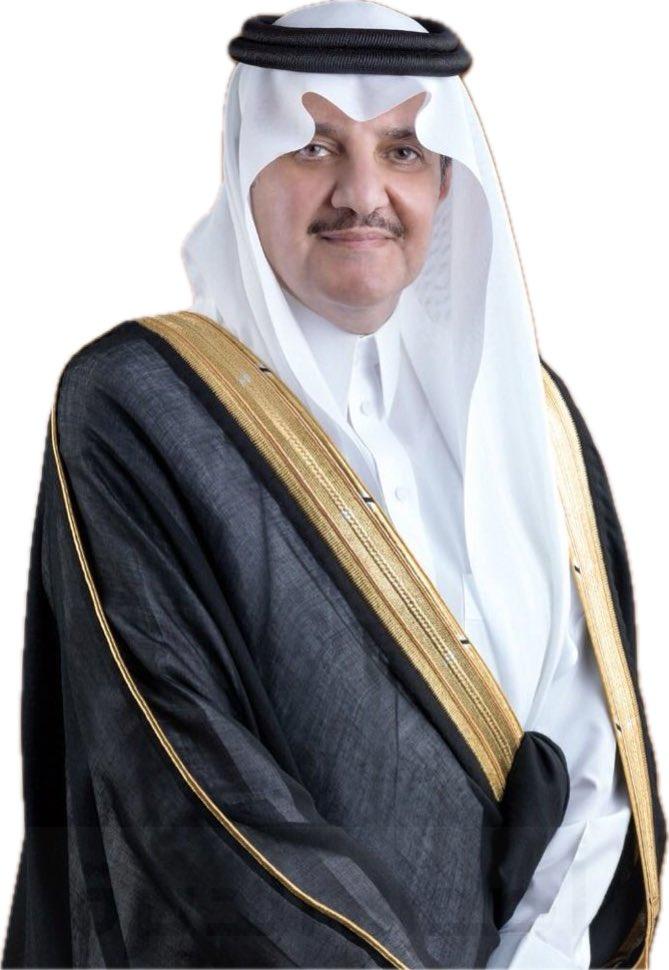
His Royal Highness Prince Saud bin Nayef bin Abdulaziz, Governor of the Eastern Province, extended congratulations on behalf of himself and the people of the Eastern Province to the Custodian of the Two Holy Mosques, King Salman bin Abdulaziz, and to His Royal Highness Prince Mohammed bin Salman bin Abdulaziz, Crown Prince and Prime Minister, on the occasion of the Founding Day anniversary of the Kingdom, which falls on the twenty-second of February each year.
His Highness stated: “Founding Day carries within it pride and honor in the history of our beloved nation. It is an opportunity to reflect on its profound historical legacy and authentic civilization, to commemorate the sacrifices of the forefathers who contributed to building the foundations of this nation, and to embody the values of loyalty and belonging, which remain a beacon guiding our generations towards a bright and prosperous future.”
The Governor of the Eastern Province added that the state, since its establishment three centuries ago, has taken great strides towards construction and progress, serving as a cradle for science and culture and a meeting point for human values. He affirmed that the history of the Kingdom is not merely pages of the past, but a living testimony to the efforts of generations who worked sincerely to build a cohesive and secure society, capable of facing challenges and advancing towards a prosperous future.
His Highness pointed out that the Kingdom, from the establishment of the First Saudi State by Imam Mohammed bin Saud, to our present era under the leadership of the Custodian of the Two Holy Mosques King Salman bin Abdulaziz and His Royal Highness Prince Mohammed bin Salman bin Abdulaziz, continues on the path of progress and prosperity, carrying messages of unity and belonging, and always aspiring to a future worthy of the nation’s greatness and its ancient history.
Prince Saud bin Nayef concluded by praying that God protect the beloved nation, perpetuate upon it the blessings of security and stability, and grant the Custodian of the Two Holy Mosques and his faithful Crown Prince His support and success in continuing the march of construction and elevating the future of the Kingdom.
Eastern Province
The Eastern Province is a key administrative region of Saudi Arabia, located along the Persian Gulf. It is historically significant as the heart of the kingdom’s oil industry, with the first commercial oil field discovered at Dammam in 1938, transforming the nation’s economy and global energy landscape. The area is also home to a rich cultural heritage, including the ancient Dilmun civilization and the modern, cosmopolitan city of Dhahran.
Two Holy Mosques
The Two Holy Mosques refer to **Al-Masjid al-Haram** in Mecca and **Al-Masjid an-Nabawi** in Medina, the two holiest sites in Islam. Al-Masjid al-Haram, which houses the Kaaba, has been a pilgrimage site since the time of Prophet Abraham, while Al-Masjid an-Nabawi was built by Prophet Muhammad in 622 CE and marks his burial place. Both mosques have been continuously expanded over centuries to accommodate millions of pilgrims, particularly during the annual Hajj and Umrah seasons.
Founding Day
“Founding Day” is a national holiday in Saudi Arabia, celebrated annually on February 22 to commemorate the founding of the First Saudi State in 1727 by Imam Muhammad bin Saud. The holiday, established in 2022, honors the country’s deep-rooted history and the beginning of its governance under the Al Saud dynasty, which has shaped the modern Kingdom. It is marked by cultural events and festivities that highlight national heritage and unity.
First Saudi State
The First Saudi State, also known as the Emirate of Diriyah, was founded in 1744 through an alliance between the religious reformer Muhammad ibn Abd al-Wahhab and the political leader Muhammad ibn Saud in central Arabia. It rapidly expanded its control through a combination of religious zeal and military conquest, establishing a strict interpretation of Islam as its governing principle. The state was ultimately destroyed in 1818 by an Ottoman-Egyptian military expedition, which captured and razed its capital, Diriyah.
Imam Mohammed bin Saud
Imam Mohammed bin Saud is the founder of the First Saudi State in 1744, which originated in the town of Diriyah, now a UNESCO World Heritage site near Riyadh. His historic alliance with the religious reformer Sheikh Mohammed ibn Abdul-Wahhab established a political and religious entity that became the foundation for the modern Kingdom of Saudi Arabia. Today, his legacy is honored through institutions bearing his name, such as the Imam Mohammed bin Saud Islamic University in Riyadh.
King Salman bin Abdulaziz
King Salman bin Abdulaziz is the current King and Custodian of the Two Holy Mosques of Saudi Arabia, not a physical place or cultural site. He ascended to the throne in 2015 after serving for decades as the Governor of Riyadh and then as Crown Prince. His reign is associated with the ambitious Vision 2030 program, which aims to diversify the Saudi economy and modernize its society.
Prince Mohammed bin Salman bin Abdulaziz
Prince Mohammed bin Salman bin Abdulaziz is not a place or cultural site, but the Crown Prince and Prime Minister of Saudi Arabia. Therefore, a summary about a location is not applicable. However, he is a key historical figure in modern Saudi Arabia, known for launching the Vision 2030 plan in 2016 to diversify the kingdom’s economy and transform its society.
Kingdom
“Kingdom” is too broad a term for a specific place or cultural site, as it could refer to many historical or modern nations (e.g., the Kingdom of Saudi Arabia), fictional realms, or even entertainment venues. If referring to a historical kingdom like the ancient **Kingdom of Kush** in Nubia, it was a major civilization along the Nile from around 1070 BCE to 350 CE, known for its wealth, ironworking, and pyramids. For a more accurate summary, please specify a particular kingdom or site.