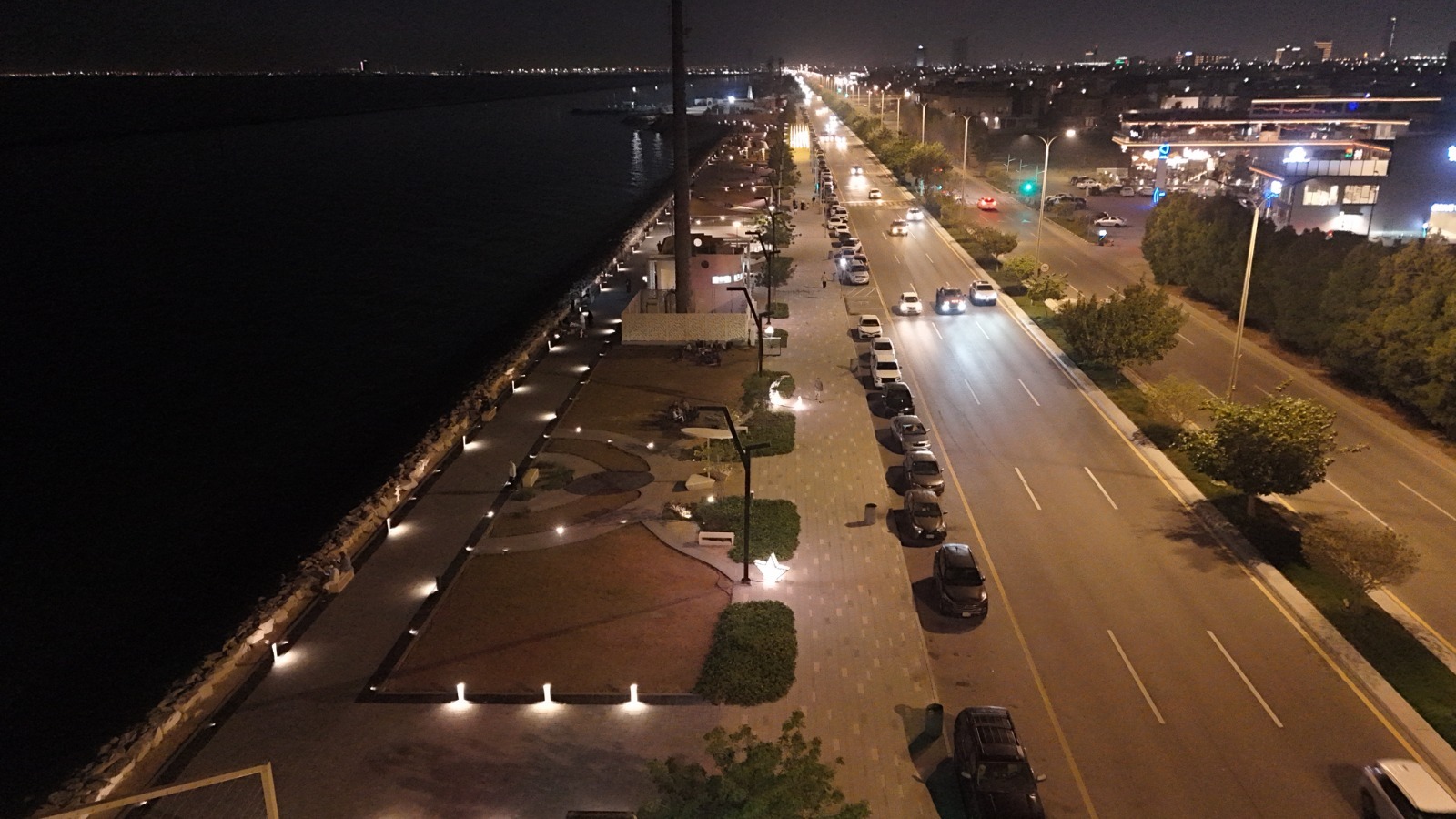
The Eastern Municipality adorns its capital in preparation for the blessed month of Ramadan 1447 AH.
The Eastern Region Municipality has completed its preparations to welcome the holy month of Ramadan for the year 1447 AH, through the implementation of an integrated operational and beautification plan that included Ramadan decoration works in the cities of the Dammam metropolitan area.
The decoration works included the installation of 100 double-sided welcome banners, each 12 meters long, bearing Ramadan greetings. Additionally, 200 decorative elements, each four meters high, were installed on lighting poles along main thoroughfares to unify the visual theme and highlight the Ramadan identity in public spaces.
The municipality also implemented 216 illuminated structures reflecting the atmosphere of the holy month, alongside the installation of 1,900 linear meters of hanging LED decorative clusters in the form of pergolas on vital roads and streets. This was complemented by 400 linear meters of multi-colored LED structures and 400 decorative elements with geometric and heritage-inspired designs drawn from Ramadan themes.
The plan also included the installation of 154 lighting poles equipped with light chains, the implementation of 48 illuminated pergolas, and 13 ground-based decorative structures carrying welcoming phrases for the holy month. This contributes to creating a spiritual and aesthetic atmosphere in various neighborhoods of the metropolitan area.
The decorative elements were distributed across a number of vital roads and locations, most notably Prince Mohammed bin Fahd Road, Prince Naif bin Abdulaziz Road, Gulf Road, Dammam Corniche, Al Rakah Corniche, and Al Hamra Corniche. They also included Al Salam and Al Faisaliyah districts, as well as Prince Turki Road, King Salman Road, Corniche Road, North Al Khobar, the Sandy Beach, Jawar Square, Al Shumouh, and the Corniche Square in Al Khobar. The decoration works in Dhahran covered Prince Sultan Road, Prince Faisal bin Fahd Street, and Jeddah Street, ensuring the Ramadan identity reaches a wide geographical area within the metropolitan area.
All decoration works were implemented according to technical standards that consider material quality and installation safety, ensuring the sustainability of the elements throughout the holy month without affecting traffic flow or general safety requirements.
These efforts are part of the municipality’s strategy to enhance the urban landscape and improve the quality of life, by preparing an attractive and integrated urban environment that reflects the stature of the holy month and provides festive and spiritual atmospheres for residents and visitors during the days and nights of Ramadan.
The Dammam Corniche is a scenic waterfront promenade along the Arabian Gulf in eastern Saudi Arabia, developed as part of the city’s modern urban expansion. It was historically a simple coastal area but has been transformed into a major recreational destination featuring parks, walkways, and landmarks like the iconic King Fahd Fountain.
Al Rakah Corniche
The Al Rakah Corniche is a scenic coastal promenade in the city of Al Khobar, Saudi Arabia, overlooking the Arabian Gulf. Developed as part of urban beautification projects, it offers recreational spaces, walking paths, and views of the iconic King Fahd Causeway, which connects the kingdom to Bahrain. While a modern development, its location is steeped in the region’s long history as a vital trading and pearling hub along the Persian Gulf coast.
Al Hamra Corniche
The Al Hamra Corniche is a scenic waterfront promenade located in the Al Hamra district of Ras Al Khaimah, UAE. Developed as part of a major tourism and residential project, it offers views of the Arabian Gulf and is lined with hotels, restaurants, and leisure facilities. Its history is modern, stemming from the early 21st-century development aimed at enhancing the emirate’s coastal appeal and hospitality sector.
Jawar Square
Jawar Square is a public square located in the city of Sulaymaniyah in the Kurdistan Region of Iraq. It is historically significant as a central gathering place for political demonstrations and cultural events, most notably as a focal point during the 1991 Kurdish uprising against the former Iraqi government. Today, it remains a symbol of Kurdish identity and a hub for social and civic life.
Corniche Square in Al Khobar
Corniche Square is a prominent waterfront public space along the Arabian Gulf in Al Khobar, Saudi Arabia. Historically, the city’s development was closely tied to the discovery of oil in the region, and the Corniche area has evolved from a simple coastal road into a major recreational and social hub. Today, it features landscaped walkways, fountains, and sculptures, offering views of the iconic King Fahd Causeway that connects Saudi Arabia to Bahrain.
Sandy Beach
Sandy Beach is a popular public beach located in Honolulu, Hawaii, known for its powerful shorebreak waves. Historically, it was a fishing and gathering site for Native Hawaiians before becoming a public recreation area in the 20th century. Today, it is famous for its dangerous yet alluring surf, attracting experienced bodysurfers and spectators.
Al Salam district
The Al Salam district is a modern residential and commercial area in Riyadh, Saudi Arabia, developed as part of the city’s rapid expansion in the late 20th and early 21st centuries. Its history is tied to the Kingdom’s urban planning initiatives, transforming previously undeveloped land into a thriving community to accommodate the capital’s growing population. Today, it is known for its contemporary infrastructure, shopping centers, and family-friendly amenities.
Al Faisaliyah district
The Al Faisaliyah district is a major commercial and residential area in central Riyadh, Saudi Arabia, named after and anchored by the iconic Al Faisaliyah Center, one of the city’s first skyscrapers completed in 2000. The district’s history is tied to the modern development boom of the late 20th century, transforming the area into a prestigious hub featuring luxury hotels, corporate headquarters, and high-end shopping. It stands as a symbol of Riyadh’s economic growth and contemporary architectural ambition.