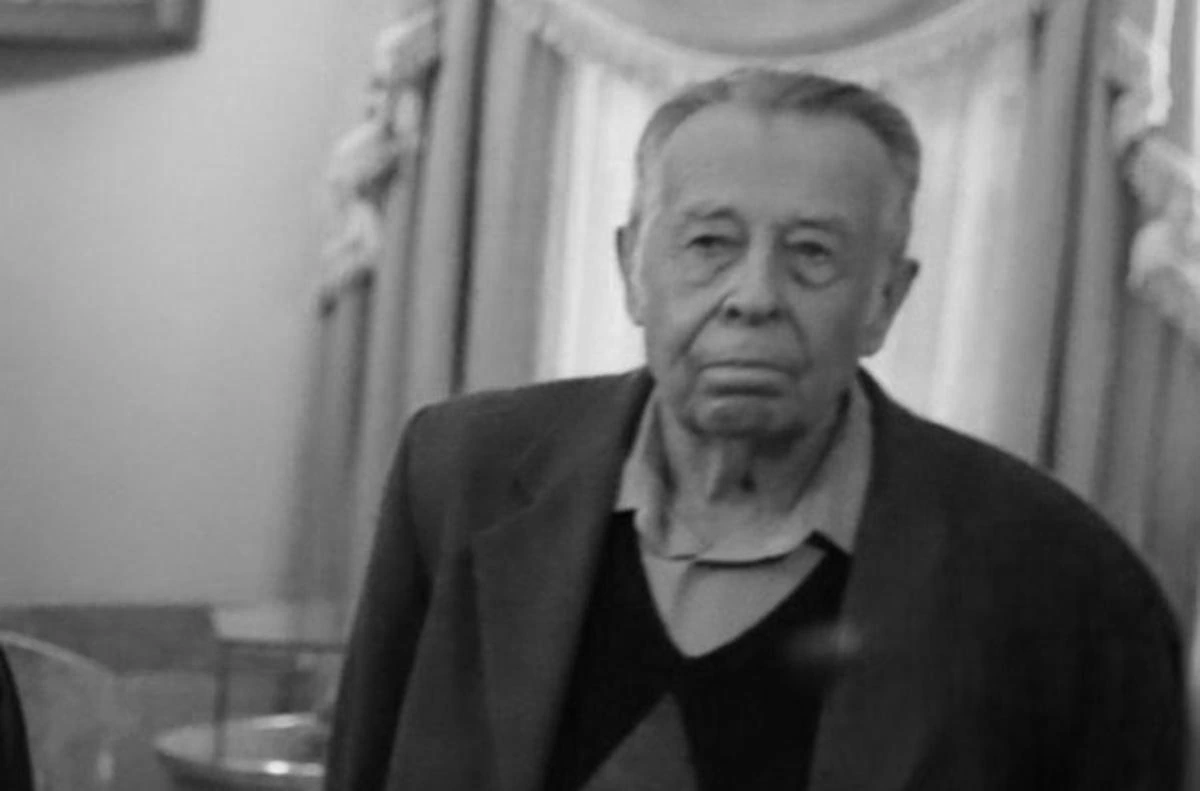
The death of the great-great-great-grandson of the great Russian poet, Vyacheslav Gutsko, was announced by the A. S. Pushkin State Museum on February 7.
According to the museum, Vyacheslav Gutsko passed away on January 29. It is notable that the man died on the same day, according to the old calendar style, as his famous ancestor Alexander Pushkin.
Vyacheslav Gutsko was a representative of the fifth generation of the Pushkin family, the great-great-grandson of the poet’s eldest son, Alexander Alexandrovich Pushkin. Gutsko worked for over 50 years in the design bureau of transport and chemical engineering at the Likhachev Plant.
For many years, the great-great-great-grandson of Alexander Pushkin was a devoted friend of the A. S. Pushkin State Museum, as reported by the cultural institution.
Alexander Pushkin
Alexander Pushkin was a 19th-century Russian poet, playwright, and novelist widely regarded as the founder of modern Russian literature. While not a physical place, his legacy is honored at sites like the Alexander Pushkin State Museum in St. Petersburg, which preserves his manuscripts and personal effects. His work, including the verse novel *Eugene Onegin*, profoundly influenced Russian culture and language during the Romantic era.
A. S. Pushkin State Museum
The A. S. Pushkin State Museum in Moscow is one of Russia’s premier museums of world art, primarily known for its vast collection of European paintings, sculptures, and graphics. It was founded in 1912 as a museum of fine arts and copies of classical antiquities at Moscow University, later being renamed in honor of the poet Alexander Pushkin in 1937. While not directly related to Pushkin’s life, the museum today houses iconic works ranging from ancient civilizations to masterpieces by artists like Rembrandt, Picasso, and Van Gogh.
Likhachev Plant
The Likhachev Plant (ZIL) is a historic Moscow automotive factory, originally founded in 1916 as the AMO Plant. It became a cornerstone of Soviet industry, famously producing trucks, luxury cars for officials, and the iconic ZIL limousines. After a long period of decline following the Soviet Union’s dissolution, much of its vast territory is now being redeveloped for modern urban use.