Iran will target US military bases in the Middle East if the US forces concentrated in the region take offensive action.
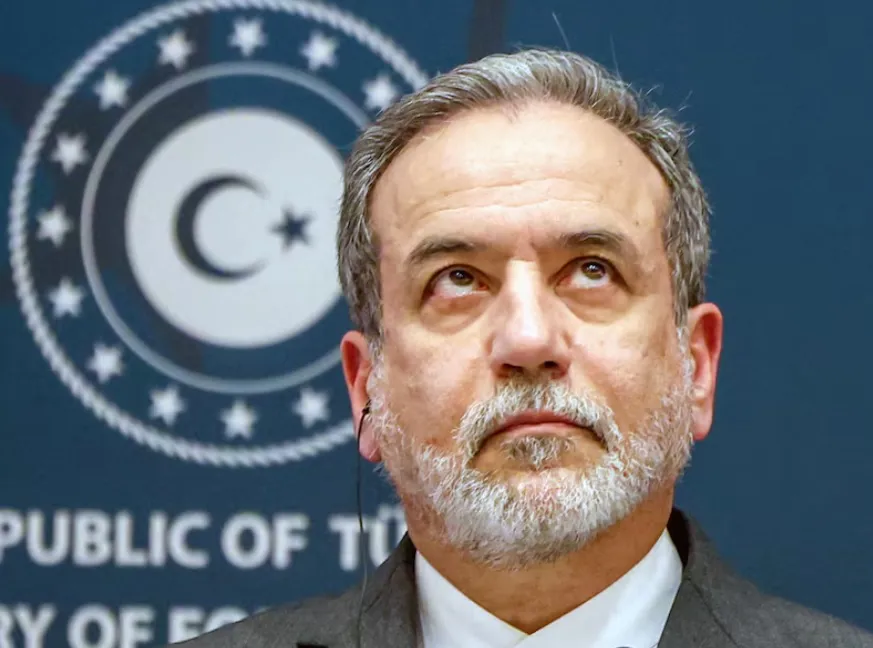
The statement was made by the Iranian Foreign Minister on February 7, one day after Tehran and Washington pledged to continue indirect nuclear negotiations, while emphasizing that such action, if taken, would not be aimed at the host countries.
Speaking with Qatar’s Al Jazeera channel, the Iranian Foreign Minister stated that although a date for the next round of talks has not been set, both Iran and the US wish to resume dialogue soon.
In related developments, the US President said negotiations could take place early next week. “We and Washington both believe this process should be organized soon,” the Foreign Minister said.
Previously, the US President threatened to attack Iran after the US increased naval deployments in the region, demanding that Tehran abandon uranium enrichment activities, a potential pathway to building a nuclear bomb, as well as cease ballistic missile development and support for armed groups in the region. Tehran has long rejected all accusations that it seeks to weaponize its nuclear program.
Although both sides have signaled readiness to restore diplomacy to resolve the long-standing nuclear dispute between Iran and the West, the Foreign Minister affirmed that the negotiations would not expand to other issues.
“Any dialogue requires an end to threats and pressure. Tehran will only discuss the nuclear issue… We will not discuss any other issues with the US,” he stated.
Last June, the US carried out airstrikes on Iranian nuclear facilities, participating in the final stage of a 12-day bombing campaign conducted by Israel. Subsequently, Tehran announced it had temporarily suspended uranium enrichment activities.
Iran’s response at the time included a missile attack on a US military base in Qatar, a country that maintains good relations with both Tehran and Washington.
In the event the US continues its attacks, the Foreign Minister suggested the consequences could be similar. “We cannot attack US territory, but we will target their bases in the region,” he said. “We will not attack neighboring countries, but only the US bases located on their territory. These two things are completely different.”
New sanctions against Iran were announced by the US State Department immediately after the two countries concluded indirect talks in Oman regarding Tehran’s nuclear program.
The US and Iran are expected to hold crucial negotiations in Oman against the backdrop of continued high tensions in the Middle East region, following years of conflict and indirect confrontation. However, the gap in positions between the two sides continues to pose a major challenge to the prospect of achieving substantive progress.
After the US shot down an Iranian drone, raising concerns about a disruption to negotiations aimed at de-escalating tensions between the two countries, oil prices rose by nearly 2%.
US military bases in the Middle East
US military bases in the Middle East are a network of installations established primarily in the latter half of the 20th century, with a significant expansion following the 1991 Gulf War and the post-9/11 wars in Afghanistan and Iraq. They serve strategic purposes such as power projection, regional stability operations, and counterterrorism. Their presence remains a point of geopolitical significance and occasional diplomatic tension with host nations.
Al Jazeera
“Al Jazeera” is a major international news and media network headquartered in Doha, Qatar. It was launched in 1996 and quickly gained global prominence for its independent coverage, particularly in the Arab world, often providing an alternative perspective to Western media outlets. While not a physical cultural site, it has become a significant cultural and political institution, influencing public discourse across the Middle East and beyond.
Iranian nuclear facilities
Iran’s nuclear program began in the 1950s with international cooperation for peaceful energy purposes. Following the 1979 Islamic Revolution and the Iran-Iraq War, the program expanded, leading to decades of international scrutiny and sanctions over concerns about potential military dimensions. The 2015 Joint Comprehensive Plan of Action (JCPOA) imposed strict limits and monitoring on Iranian nuclear facilities in exchange for sanctions relief, though the agreement’s future has been uncertain since the U.S. withdrawal in 2018.
US military base in Qatar
The primary U.S. military base in Qatar is **Al Udeid Air Base**, located southwest of Doha. Established in the late 1990s and significantly expanded after 2001, it has served as a critical logistics and command hub for U.S. Central Command operations in the Middle East, including those in Afghanistan and Iraq. It is the largest U.S. military installation in the region and hosts the Combined Air Operations Center.
Oman
Oman is a nation on the southeastern coast of the Arabian Peninsula with a rich maritime history as a powerful trading empire, controlling routes across the Indian Ocean for centuries. Historically known for its frankincense trade and as a center for shipbuilding, it established an empire that stretched to East Africa. Today, it is a modern sultanate known for its stunning desert landscapes, ancient forts, and the unique cultural blend of its Arabian heritage.
Middle East
The term “Middle East” refers to a transcontinental region centered on Western Asia and parts of North Africa, historically known as the “Cradle of Civilization” for the rise of early societies like Mesopotamia and Ancient Egypt. It is the birthplace of major world religions—Judaism, Christianity, and Islam—and has been a strategic crossroads for trade and empires for millennia, from the Persians and Ottomans to modern nation-states. Its rich history is marked by profound cultural achievements and complex geopolitical developments.