North Maluku Human Resource Transformation: Austria Offers Link-and-Match Vocational Education Model for Global Industry Needs
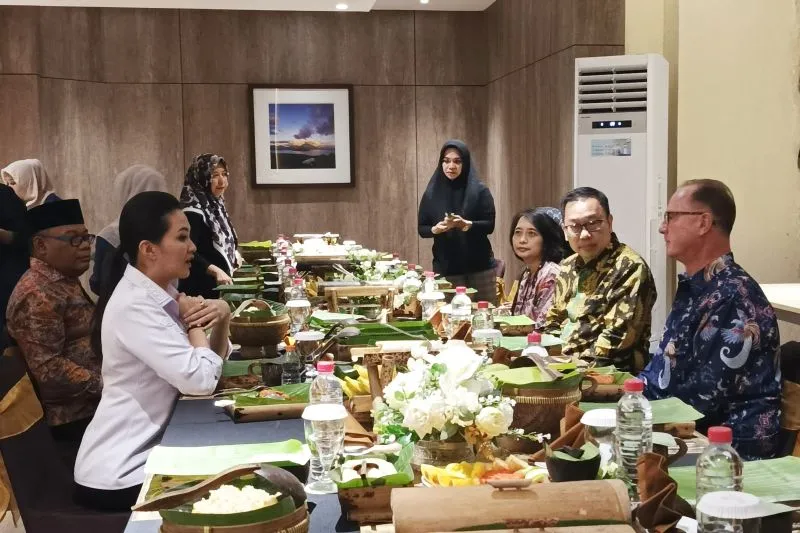
Depok – The Austrian government is taking proactive steps to strengthen its partnership with eastern Indonesia. The Austrian Ambassador to Indonesia, Thomas Loidl, conducted a working visit to North Maluku (Malut) to explore strategic cooperation in vocational education and socio-cultural fields.
This visit, which involved meetings with the Deputy Governor of Malut, Samsuddin A. Kadir, and the Sultan of Ternate, Hidayatullah Sjah, is expected to lay the foundation for producing superior Human Resources (HR) and increasing local community income.
Vocational Model Based on 200 Years of Experience
The Head of the Indonesian Representative Office for Austria, Alvin Saadi, explained that the cooperation model offered by Austria focuses on intensive training in technical fields such as woodworking and mechanical engineering, tailored to the future needs of Malut’s industry.
Austria’s vocational education model—known to have a history of over 200 years—promotes the concept of “link and match”. The Deputy Governor of Malut, Samsuddin A. Kadir, welcomed this offer, seeing it as an important momentum.
“Austria, known for having a history of a vocational system for approximately 200 years, offers the link and match concept to ensure graduates possess appropriate skills that match the needs of the global industry,” said Samsuddin.
This model aims to equip local human resources to be able to operate the latest technology and be ready to face global industrial challenges, which directly impacts increasing worker income. The Sultan of Ternate even cited successes in other cities, such as Medan and Makassar, where workers (particularly sailors) certified under the Austrian system experienced significant income increases.
Diplomacy Rooted in History
This cooperation initiative has a strong emotional foundation, especially for the Sultanate of Ternate. The Sultan of Ternate Hidayatullah Sjah welcomed this visit, noting that Ternate-Austria relations have been established since the year 1621, marked by the appointment of an Austrian citizen named Cornelis in Ternate who later wrote a book about spices.
The Sultan of Ternate, who is also a member of the Regional Representative Council for the Malut electoral district, provided full support but emphasized the importance of the Provincial Government’s readiness.
“The success of this program highly depends on the readiness of regulations and the proactive attitude of the local government in following up on technical offers from the Austrian side,” he stressed.
It is hoped that the implementation of this cooperation will not only improve the quality of education in North Maluku but also concretely open access to international employment for the younger generation in the Land of Moloku Kie Raha.
Depok
Depok is a city in West Java, Indonesia, originally established in the 18th century as a private agricultural estate by Cornelis Chastelein, a Dutch colonial administrator. Historically, it was a Christian settlement and later evolved into a major educational and university hub. Today, it is a bustling part of the Jakarta metropolitan area, known for its mix of modern development and historical heritage.
North Maluku (Malut)
North Maluku (often abbreviated as Malut) is an Indonesian province comprising hundreds of islands, historically known as the Spice Islands. It was the original and fiercely contested source of cloves and nutmeg, drawing European colonial powers like the Portuguese, Spanish, Dutch, and British from the 16th century. Today, its rich cultural tapestry reflects this history through a blend of indigenous traditions and colonial influences.
Ternate
Ternate is a historically significant volcanic island in eastern Indonesia, renowned as the center of the powerful Ternate Sultanate that dominated the lucrative spice trade, particularly cloves, from the 13th to the 17th centuries. Its strategic location made it a key port for European colonial powers, including the Portuguese, Spanish, and Dutch, who vied for control over the region’s valuable resources. Today, the island features remnants of colonial forts and remains an important cultural and historical site in the Maluku Islands.
Sultanate of Ternate
The Sultanate of Ternate is a historic Islamic kingdom located in the Maluku Islands of eastern Indonesia, founded in the 13th century. It rose to prominence in the 15th and 16th centuries as a major power in the spice trade, particularly clove, and played a pivotal role in spreading Islam in the region. Today, it continues to exist as a cultural institution, with the Sultan’s palace (*Kedaton*) in Ternate City serving as a museum and symbol of its enduring legacy.
Medan
Medan is the capital and largest city of Indonesia’s North Sumatra province, historically a key trading hub due to its strategic location. Its modern development began in the late 19th century with the establishment of tobacco and rubber plantations by Dutch colonists, which transformed it into a major economic center. Today, the city is known for its diverse cultural heritage, visible in landmarks like the Maimun Palace, a remnant of the Deli Sultanate, and its vibrant culinary scene.
Makassar
Makassar is a major port city on the Indonesian island of Sulawesi, historically known as the capital of the powerful Gowa Sultanate from the 16th century. It became a dominant center for the spice trade, attracting European powers like the Portuguese and Dutch, with Fort Rotterdam standing as a key colonial-era legacy. Today, it remains a vibrant economic and cultural hub, famous for its seafaring traditions and cuisine like Coto Makassar.
Land of Moloku Kie Raha
“Land of Moloku Kie Raha” is not a widely recognized historical or cultural site. The phrase appears to be a poetic or local name, possibly referring to a region in the Maluku Islands (the historic “Spice Islands”) of eastern Indonesia. These islands have a long history as the original and coveted source of nutmeg and cloves, leading to centuries of colonial competition and trade.
Cornelis
“Cornelis” likely refers to the historic Cornelis railway station in Brussels, Belgium, which was named after the 17th-century Flemish painter Cornelis Schut. The station, opened in 1952, served as a major transport hub until its closure in 1984, and the surrounding district retains the name. Today, the area is known for its multicultural atmosphere and is a gateway to the city’s Anderlecht municipality.