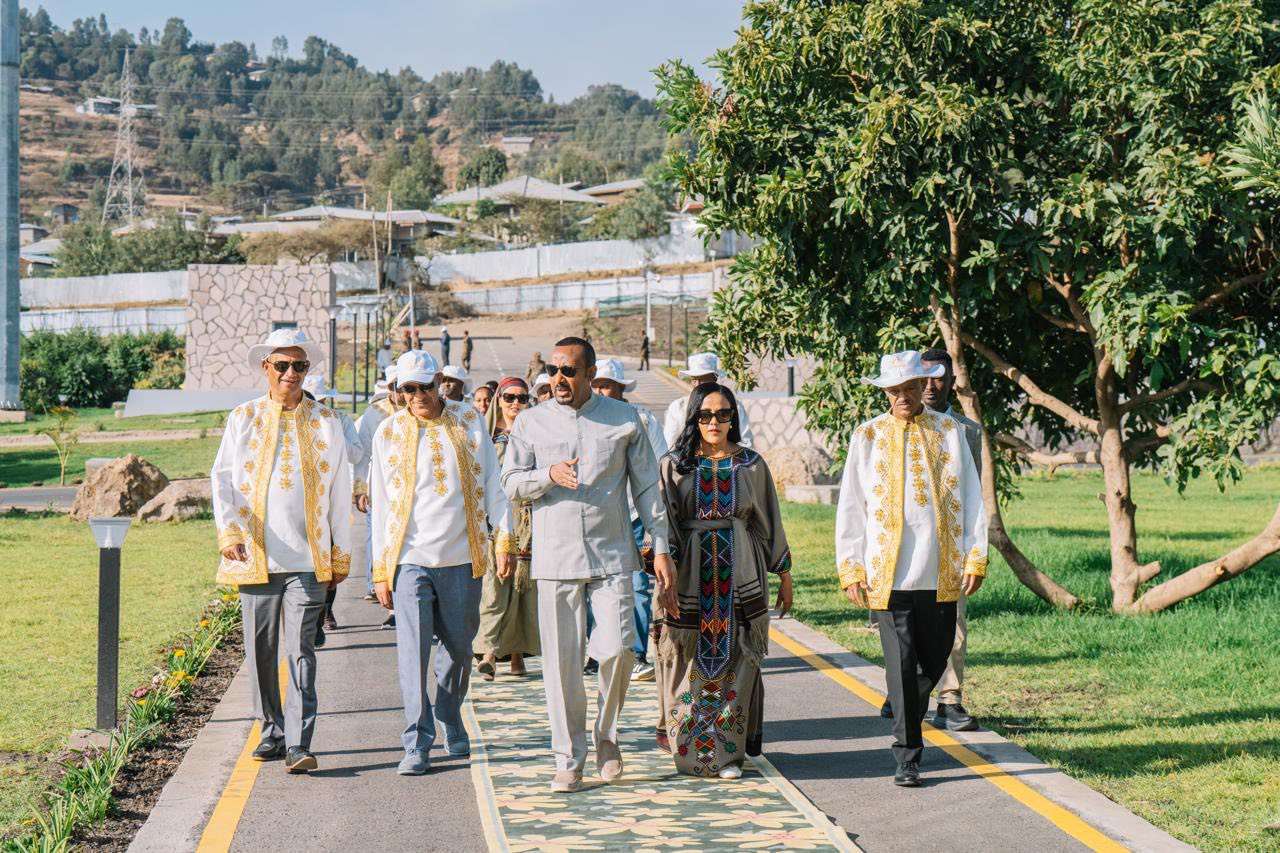
Addis Ababa — The Lugu Haik Resort, a flagship project within the “Table for Generations” initiative, officially opened its doors today. Spanning 13.3 hectares, the resort represents a significant boost to Ethiopia’s tourism infrastructure.
The resort was described as a harmonious blend of Wollo’s natural beauty and world-class modern infrastructure, emphasizing its importance as a landmark in Ethiopia’s tourism and economic development efforts.
Featuring the latest technology, the resort includes luxurious facilities such as multiple restaurants, swimming pools, paved internal roads, and a helipad.
Located amidst diverse fruit farms and meticulously designed green spaces, the resort offers visitors a tranquil and immersive environment crafted to provide a unique and unforgettable experience.
Alongside its modern amenities, the Lugu Haik Resort reflects Ethiopia’s commitment to becoming a leading tourist destination in Africa. By integrating tourism development with environmental conservation, sustainability, and social inclusion, the project provides a platform for the people of Wollo to showcase their rich cultural and natural heritage to the global community.
Lugu Haik Resort
Based on available information, Lugu Haik Resort appears to be a modern luxury resort and residential development located on the coast of Oman, near Muscat. It was developed as part of Oman’s broader tourism and economic diversification strategy, with its construction and opening phases occurring in the 2010s. The resort is designed to offer high-end accommodations, leisure facilities, and waterfront living, capitalizing on the natural beauty of the Gulf of Oman.
Table for Generations
“Table for Generations” is a contemporary public art installation, often a long communal table placed in a significant urban or natural setting, designed to symbolize unity and shared heritage. Its history is rooted in community-building projects of the 21st century, where such installations are created to invite people of all backgrounds to gather, share stories, and foster intergenerational connection. The specific history varies by location, but the concept universally celebrates collective memory and the passing of traditions.
Ethiopia
Ethiopia is a historically rich nation in the Horn of Africa, widely considered one of the oldest sites of human existence and home to the ancient Aksumite Kingdom. It is unique as one of the few African countries to avoid long-term colonization, maintaining its sovereignty and ancient Christian traditions. Its cultural heritage includes rock-hewn churches in Lalibela, medieval castles in Gondar, and the walled city of Harar.
Wollo
Wollo is a historic province in northern Ethiopia, known for its central role in the country’s political and cultural development. It was the seat of several medieval kingdoms and later became a focal point during the 19th-century struggles for imperial power. The region is also renowned for its diverse ethnic communities, Islamic heritage, and the ancient city of Lalibela with its famous rock-hewn churches is located within its historical boundaries.
Africa
Africa is a vast continent, not a single place or site, with a history as the cradle of humankind, where some of the earliest human fossils have been discovered. It is home to countless diverse cultures and historic sites, from the ancient pyramids of Egypt and the medieval empires of West Africa to the natural wonders of its landscapes and wildlife. Its modern history is deeply shaped by colonialism and the subsequent movements for independence and nation-building.