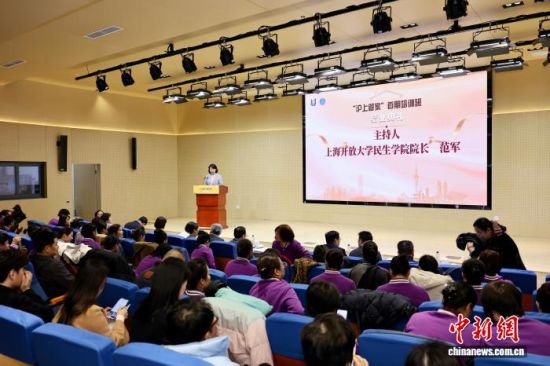
The graduation ceremony for the first cohort of the “Shanghai Butler” program, Shanghai’s inaugural specialized high-skills training project for domestic service personnel, was held at the Shanghai Open University. Over 60 trainees from the frontline of the industry successfully completed the program after 432 hours of systematic training and will provide higher quality domestic services to residents.
During the more than 200-day learning cycle, the trainees underwent comprehensive development from professional awareness to skill training. The 432-hour curriculum covered 13 core modules including service etiquette, dietary nutrition, home management, health care, and specialized services for the elderly and children. The 288 hours of in-person concentrated teaching and 144 hours of online resource learning complemented each other, ensuring genuine learning and practical application.
Statistics show that 56% of the trainees achieved significant professional growth or skill improvement during the training. Specifically, 18 individuals obtained higher vocational skill levels, 7 won awards in specialized skill competitions, 12 enrolled in vocational or undergraduate degree programs in domestic service for further study, and another 18 obtained industry-recognized certificates. Notably, 56 individuals received salary increases or praise from clients due to significantly improved service quality. Overall course satisfaction exceeded 96%, with core courses like “Dietary Nutrition and Exquisite Cuisine” and “Guidance on Shaping Children’s Multiple Abilities” achieving satisfaction rates over 98%, demonstrating the precise design and solid effectiveness of the teaching content.
At the ceremony, trainee representative Chen Yongli, a childcare domestic worker, shared her transformation from relying on “experience” to applying “science.” She stated that the training taught her to design activities based on child development psychology, plan menus according to nutritional science, and better understand systematic planning and professional communication. Now, she is transforming from a passive service provider into an active “life service specialist” who provides solutions and is trusted by families.
The training utilized a “four-dimensional mentor pool” composed of university scholars, industry experts, corporate mentors, and model workers. National Model Worker Wu Eryu, as the etiquette course teacher, delivered a vivid first lesson. “You have proven with your actions that domestic service is a warm-hearted profession full of expertise and compassion,” Wu Eryu said to the trainees at the graduation ceremony.
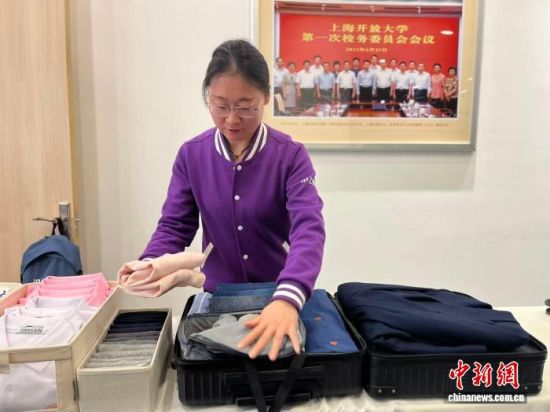
With the continuous improvement in living standards, Shanghai residents have an increasingly urgent demand for professional, high-skilled, and branded domestic services. To address long-standing industry issues such as insufficient supply of quality services and low professionalization of personnel, the Shanghai Municipal Commission of Commerce launched the “Pilot Project for Specialized Training of High-Skilled Domestic Service Personnel” in early 2025. Shanghai Open University, in collaboration with the Shanghai Household Service Industry Association, jointly conducted systematic training for frontline domestic service workers, aiming to build a team of domestic service personnel with “strong skills, excellent service, and brand recognition.”
Leveraging over a decade of experience in domestic service education and the flexible teaching model of open education, the university’s School of People’s Livelihood specifically organized the first training session. The project lasted over seven months, starting in June 2025 and concluding in January 2026. It was stated that the university will continue to leverage the advantages of open education, deepen talent cultivation in areas critical to people’s livelihoods, and contribute to enhancing the quality of life in Shanghai.
During the ceremony, five well-known domestic service companies actively responded to the policy direction of promoting employee-based domestic service enterprises in Shanghai, signing employment agreements on-site with 13 training graduates.
It was noted that the “Shanghai Butler” project sets a new benchmark for talent cultivation in the industry. It cultivates high-quality, high-skilled domestic service personnel with professional skills, work ethic, and humanistic care, which is the core support for the industry’s move towards professionalization and branding.