Before coming to Vietnam, I knew it was a rapidly growing country, but only through statistics in the press and academic studies.
The impression of Vietnam’s development became vivid when I set foot on the S-shaped land, witnessing that Vietnam has demonstrated significant resilience and adaptability in the context of unprecedented global fluctuations.
Conversations with Vietnamese students made me feel that they are not just growing up as passive beneficiaries of development, but also as active agents of innovation and growth. And because of that, I am even more optimistic when thinking about Vietnam’s future.
Domestically, politics is generally characterized by stability and reform-oriented governance.
It maintains political stability, pursues organizational reforms aimed at enhancing governance efficiency through administrative streamlining and institutional strengthening, while the legal framework for digital transformation and technology development is also being refined.
Economically, Vietnam maintained relatively stable growth during the 2021-2025 period despite unfavorable global conditions, recording an average annual GDP growth rate of about 6.2%.
By 2025, Vietnam’s GDP is estimated to reach about 514 billion USD, with GDP growth reaching 8.02%. GDP per capita rose to about 5,026 USD, marking Vietnam’s entry into the upper-middle-income threshold.
The trade results are particularly noteworthy: total trade turnover reached a record 930 billion USD in 2025, an increase of 18.2% compared to the previous year.
From the perspective of economic actors, growth is mainly driven by the foreign-invested sector, accounting for about 77% of total export value, showing Vietnam’s deep and broad integration into global value chains.
However, Vietnam’s growth model still relies heavily on export-oriented manufacturing and foreign-invested enterprises.
Productivity growth remains limited and the transition to growth based on services, technology, and innovation is slower than expected.
The spillover effects from foreign direct investment to domestic enterprises are still modest, reflecting institutional constraints in skills development, technological capacity, and supporting industries.
Vietnam has recently made significant progress in poverty reduction and human development. The multidimensional poverty rate dropped sharply from 4.4% in 2021 to about 1.3% in 2025, accompanied by improved access to education, healthcare, housing, and basic services.
The Human Development Index (HDI) increased to 0.766, placing Vietnam in the “high human development” group, while health insurance coverage expanded to about 95% of the population.
Despite many major achievements, Vietnam still faces several challenges, including regional and income disparities, youth unemployment, declining birth rates, and an increasingly aging population.
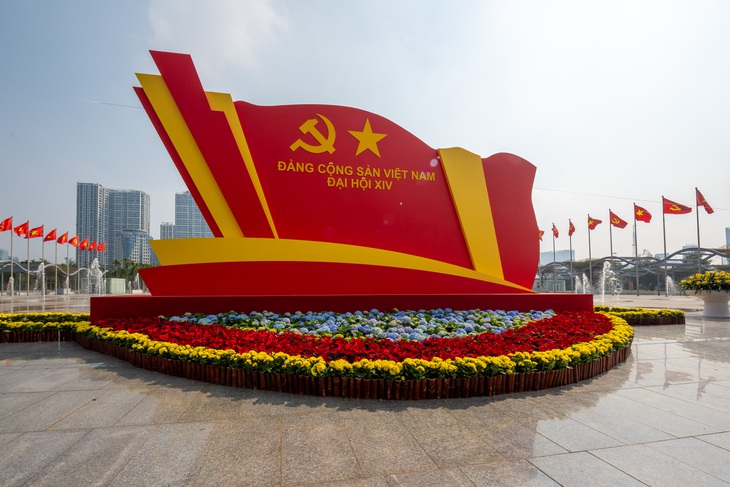
Looking ahead, the 14th National Party Congress is expected to set out strategic directions for the country towards sustainable, comprehensive, and high-quality development.
Based on what I have observed and followed about Vietnam over time, I believe this congress will be evaluated not only on the vision presented, but also on the effectiveness of translating long-term goals for 2030 and 2045 into credible institutional reforms and broad social consensus.
An article titled “Economic Diplomacy Transforms Strongly for the Nation’s Prosperous Development” is presented.