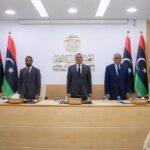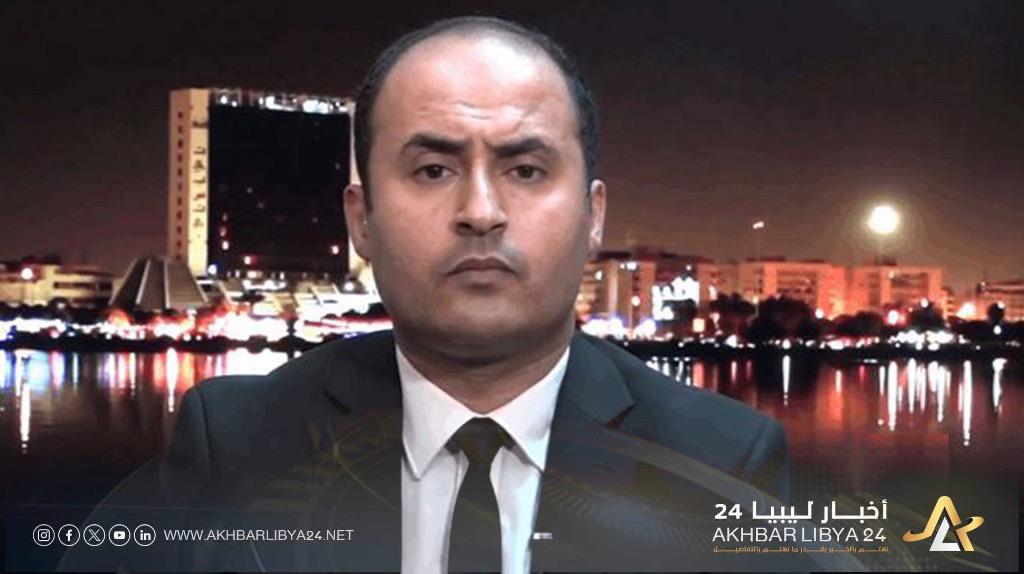
Al-Farsi holds the Dbeibah government fully responsible for the comprehensive deterioration and describes its performance as catastrophic.
The professor of political science described the rapid deterioration of the situation in Libya as a “natural result” of the failure of the government of Abdul Hamid Dbeibah, stressing that the country has not lived “a single day of real stability” under its leadership.
He explained in televised remarks that the past period witnessed “widespread waste of public funds” and a depletion of resources without any of that positively reflecting on the life of the Libyan citizen or on building state institutions. He pointed out that the government spent huge sums without any tangible improvement in the basic services it provides to citizens, at a time when there is a lack of a “clear national vision” for reform and construction.
Proliferation of Security Chaos and Collapse of Services in the Regions
The criticism was not limited to the economic and administrative aspects, but extended to include the security file, where he pointed to the continued spread of armed militias and security chaos whose “effects were not limited to thefts only, but extended to the lives of citizens.” He also highlighted the deteriorating conditions in the eastern and southern regions of Libya, considering that they reflect the “weakness of the government” and its inability to provide the simplest services and capabilities to those areas.
“Serious” Economic Deterioration Fuels Popular Resentment
The political expert warned that the economic deterioration has reached “very dangerous” levels, adding that the unprecedented rise in prices, the decline in the exchange rate of the local currency, and the delay in salary payments are all factors that have led to “confusion of the general scene.” He confirmed that these harsh conditions are what drive the wave of popular protests witnessed in a number of cities, including the capital, believing that “the street has become more prepared to demand the overthrow of the government after the situation began to directly affect the citizen’s livelihood.”
Accusations of Corruption and Unjustified Clinging to Power
In sharp language, he described the government as “corrupt” and its performance as “catastrophic and bad,” pointing out that it has “reached a dead end.” He accused it of seeking to buy time through political steps that do not address the essence of the crisis, but rather contributed to deepening the political division and increasing the prevailing “state of institutional confusion,” especially in the west of the country.
Praise for the Army and Sharp Criticism of the UN Mission
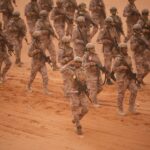
On the other hand, he praised the role of the General Command of the Army in providing social support and assisting citizens, describing it as a “safety valve.” He also pointed to an improvement in the military situation in the eastern and southern regions.
On the other hand, he directed sharp criticism at the role of the United Nations Support Mission in Libya, accusing it of pursuing an “exclusionary” path that does not bring all parties together, and of supporting specific political parties, which – in his opinion – increases the complexity of the scene and serves international interests at the expense of a national solution.
Warning of Escalating Protests and Potential Suppression
He expected an escalation of popular movements in the coming period, while at the same time warning of their expansion in the capital, Tripoli, and the west of the country. He expressed fears that some armed groups, benefiting from the continuation of chaos, would seek to “thwart any popular movement,” or even resort to “suppressing or forcibly arresting protesters.”