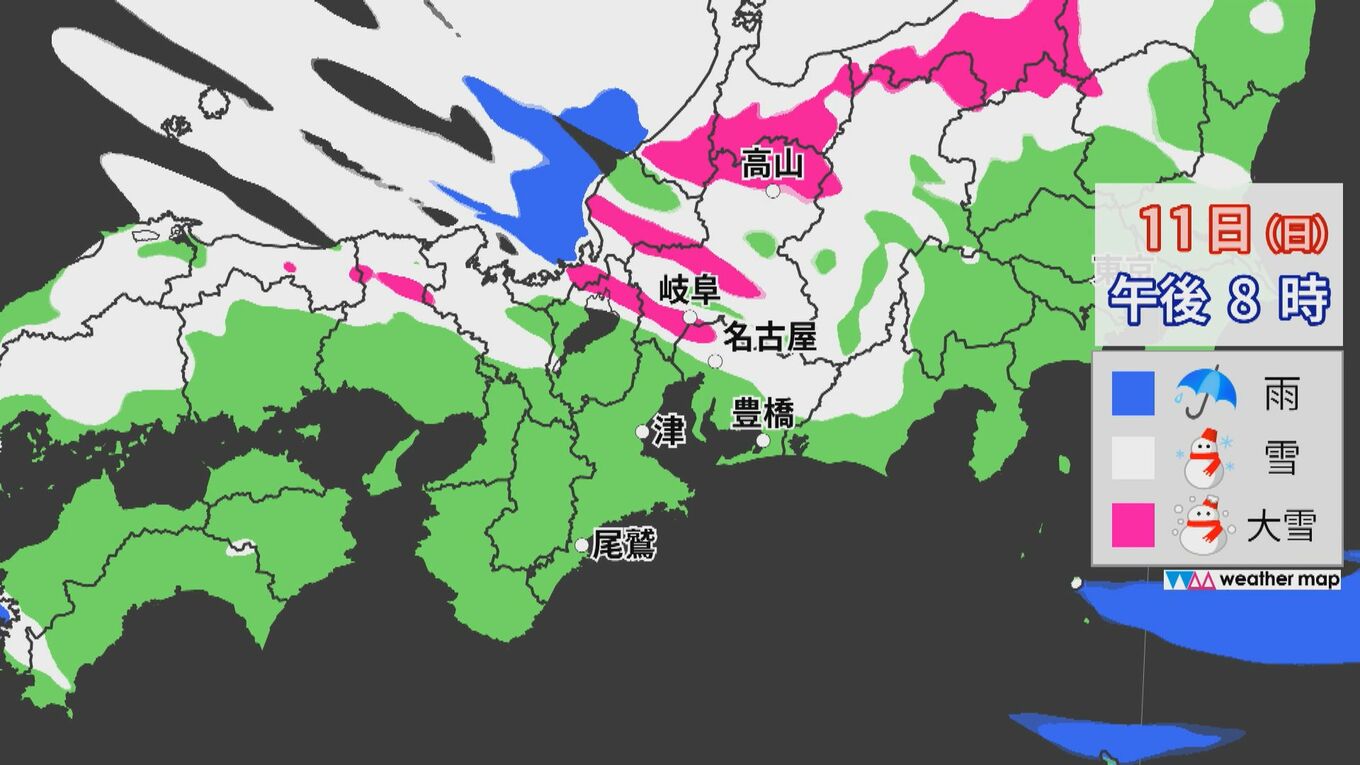
The Tokai region faces the possibility of heavy snow, primarily in the mountainous areas of Gifu Prefecture but also in flatlands, from the 11th to the 12th. The meteorological observatory is calling for caution regarding traffic disruptions and other impacts.
Due to the influence of cold air aloft, the Tokai region is expected to experience heavy snow reaching warning levels, centered on the mountainous areas of Gifu Prefecture, from the night of the 11th until the morning of the 12th. There is also a possibility of heavy snow in flatland areas.
Furthermore, in Aichi Prefecture, some areas are also expected to see heavy snow from the night of the 11th until the morning of the 12th.
Gifu Prefecture
Gifu Prefecture, located in central Japan, is a region rich in history and traditional culture, historically part of the ancient Mino Province. It is renowned for the historic village of Shirakawa-gō, a UNESCO World Heritage site known for its traditional gasshō-zukuri farmhouses, and the city of Gifu, which flourished under the warlord Oda Nobunaga in the 16th century. The prefecture is also famous for its centuries-old cormorant fishing (ukai) on the Nagara River and its role as a center for high-quality Japanese paper (washi) and cutlery, particularly in the city of Seki.
Aichi Prefecture
Aichi Prefecture, located in central Japan, is historically significant as the heart of the powerful Owari Domain and the birthplace of the Three Unifiers of Japan (Oda Nobunaga, Toyotomi Hideyoshi, and Tokugawa Ieyasu) in the 16th-17th centuries. Today, it is a major industrial and economic hub, best known as the home of Toyota Motor Corporation and the cultural treasures of Nagoya, including Nagoya Castle.
Tokai region
The Tokai region is a central coastal area of Japan’s Honshu island, encompassing Aichi, Mie, Gifu, and Shizuoka prefectures. Historically, it was a vital transportation corridor known as the **Tōkaidō**, linking the old capital of Kyoto with the political power center of Edo (modern Tokyo). The region is culturally significant as the home of the Tokugawa shogunate in Nagoya, major Shinto shrines like Ise Jingu, and traditional industries such as ceramics and tea production.